

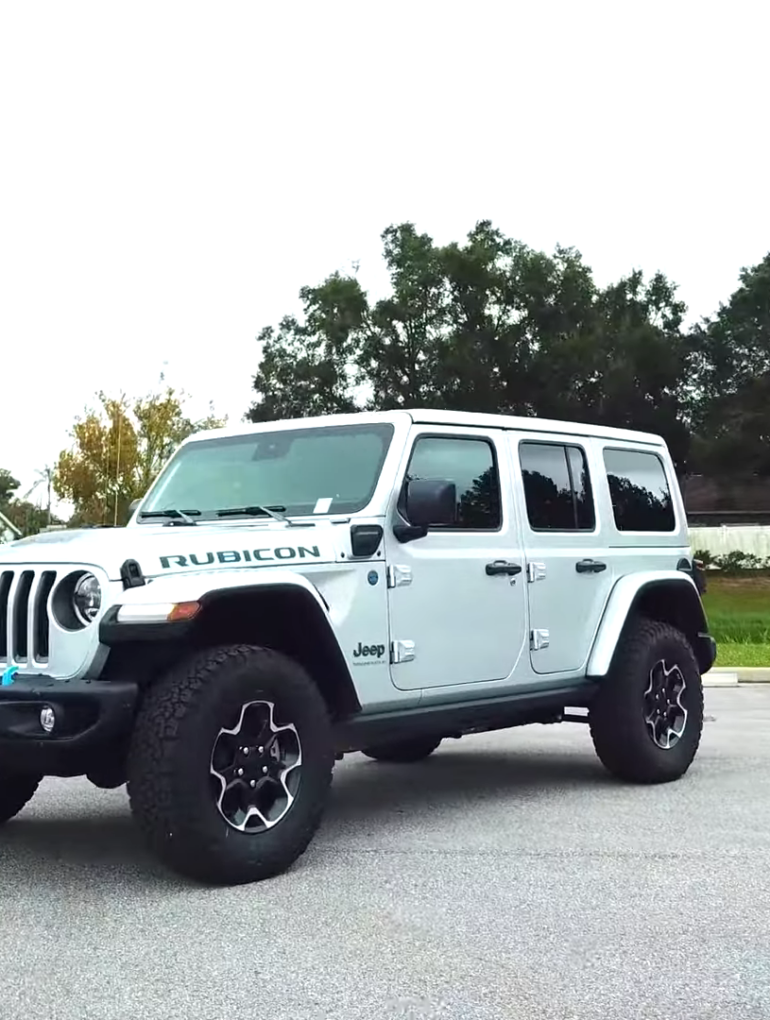
You are looking at a Jeep that blends electric power with real trail strength. I am walking you through a Wrangler Rubicon 4xe that drives on pavement with speed and control, yet still handles dirt, rocks, and water without concern. This setup gives you strong torque, sealed electric parts, and flexible drive modes that fit daily use and weekend trips.
You get a vehicle that runs quiet in electric mode, switches to hybrid when needed, and still feels solid at highway speed. I focus on how this Jeep fits your life, from comfort inside to how it reacts when you press the pedal or leave the road behind.
Key Takeaways
- You get strong power with electric and gas working together.
- You can drive comfortably on roads and confidently off-road.
- You gain modern tech, usable space, and clear trade-offs.
Powertrain and Performance
Gas Engine and Electric Drive
You get a 2.0-liter turbocharged inline-four paired with two electric motors and a 17 kWh battery. The battery stays fully sealed, so you can still drive through deep water without concern. You can travel up to about 21 miles on electric power alone.
Output and Pulling Force
This setup delivers 375 horsepower and 470 lb-ft of torque. That torque matches the Jeep 392, even though this uses far less fuel. You feel strong pull right away, especially at low speeds.
| Specification | Figure |
|---|---|
| Horsepower | 375 hp |
| Torque | 470 lb-ft |
Gearbox Setup
Power flows through a ZF 8-speed automatic transmission. The shifts feel smooth and controlled, both on pavement and off-road. The system works with full-time four-wheel drive.
Speed and Measured Results
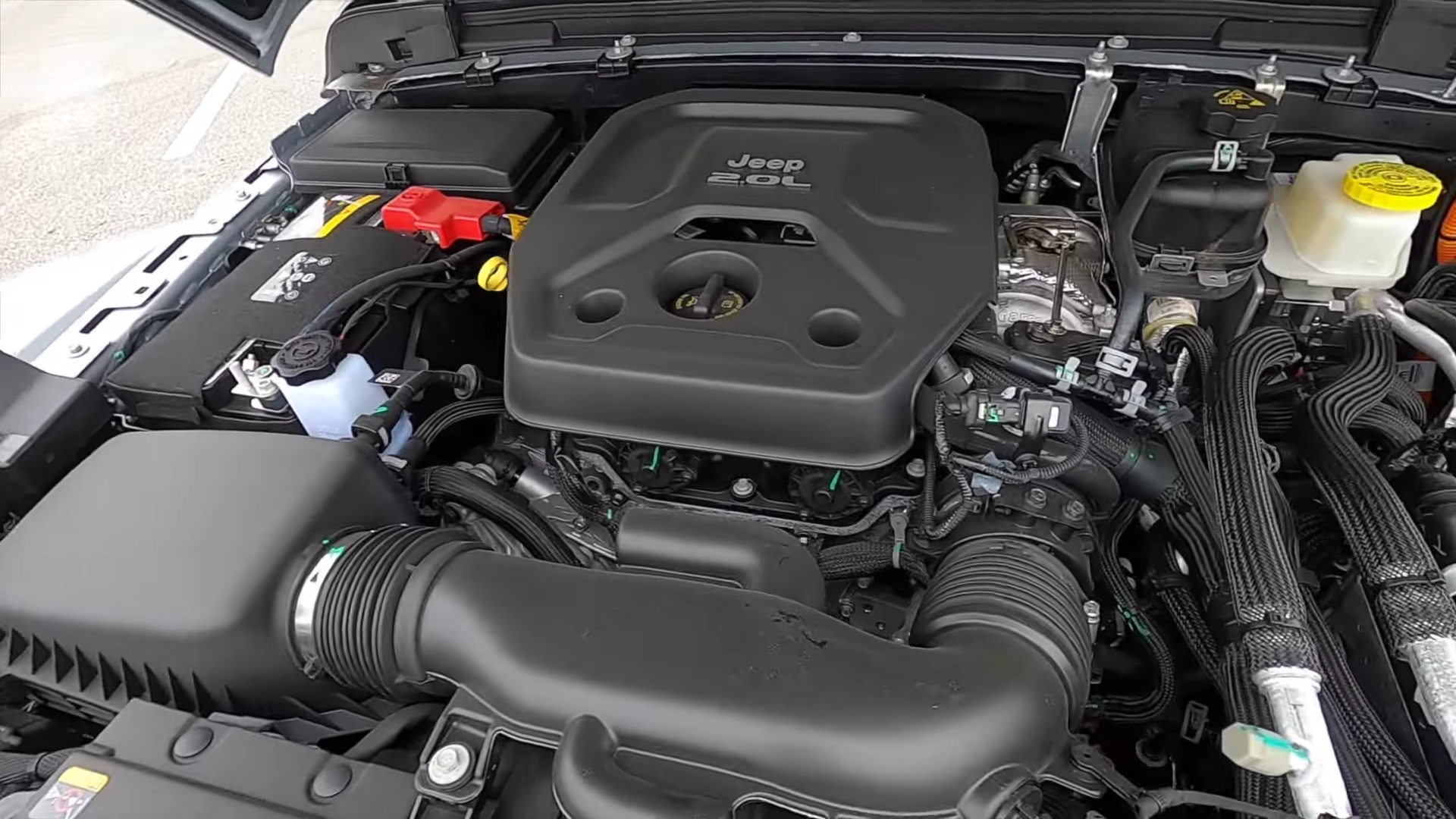
You reach 0–60 mph in about 5.5 seconds, making this the second quickest Jeep ever built. The quarter mile runs in around 14.1 seconds. On the road, it accelerates faster than a Bronco Raptor.
- 0–60 mph: ~5.5 seconds
- Quarter mile: ~14.1 seconds
Selectable Drive Settings
You control how the power works with three drive modes.
- Electric: drives only on battery power
- Hybrid: blends gas and electric for balance
- Gas-only: uses the engine for full response
You can switch modes while driving, but you need a light pedal since the torque comes on fast.
Off‑Road and On‑Road Strength
### Ride Height and Trail Angles
You sit nearly 11 inches off the ground, which helps on rocks and ruts.
You get a 47.4‑degree approach angle, letting you climb steep terrain without scraping.
| Spec | Value |
|---|---|
| Ground clearance | ~11 inches |
| Approach angle | 47.4° |
### Water Crossing Depth
You can drive through water up to 31.5 inches deep.
The battery and electrical parts stay sealed, so you do not worry about damage during crossings.
### 4WD Hardware and Drive Modes
You get front and rear locking differentials with a Rock‑Trac full‑time 4WD system.
You can choose three drive modes: electric only, hybrid, or gas only, depending on the surface and speed.
- Locking front and rear axles
- Heavy‑duty full‑time 4WD
- Three selectable power modes
### Towing Limits and Carrying Capacity
You can tow 3,500 pounds with the factory setup.
You carry over 1,000 pounds of payload, and cargo space starts at 27.7 cubic feet, expanding to 67.4 cubic feet with the rear seats folded.
| Capability | Rating |
|---|---|
| Towing | 3,500 lbs |
| Payload | 1,000+ lbs |
| Cargo space | 27.7–67.4 cu ft |
Exterior Features
Wheels and Tire Setup
You get 17-inch wheels with a machined finish and black pockets. Jeep pairs them with all-terrain tires built for mixed surfaces.
Behind the wheels, you see ventilated disc brakes measuring 12.9 inches up front and 13.6 inches in the rear.
| Item | Detail |
|---|---|
| Wheel size | 17 inches |
| Tire type | All-terrain |
| Front brakes | 12.9-inch ventilated |
| Rear brakes | 13.6-inch ventilated |
Standout Exterior Details
Ground clearance sits at nearly 11 inches, giving you room for rocks and uneven trails.
The body measures 188.4 inches long, which makes it shorter than a Bronco Raptor by over two inches.
You also get front and rear locking differentials and a 47.4-degree approach angle.
These features support off-road driving without changing the exterior layout.
Lights, Emblems, and Visual Cues
New for this year, American flag decals sit on both front fenders near the Wrangler badge.
Blue accents mark this as the plug-in hybrid model and highlight the 4xe identity.
Reverse parking sensors and a rear camera come standard.
These features add visibility without altering the rugged look.
Cargo and Exterior Storage
Cargo space starts at 27.7 cubic feet behind the rear seats.
You can fold the rear bench in a 40/60 split to expand storage to 67.4 cubic feet.
Under the cargo floor, you get a hidden area for items like the charging cable.
Payload capacity reaches over 1,000 pounds, which supports gear-heavy trips.
Interior Comfort and Space
Seats and Upholstery
You sit in leather bucket seats with blue contrast stitching. The front seats heat up, and I get manual controls with six-way adjustment for you up front and four-way for the passenger. Soft-touch areas rest your elbows, and the grab handle carries Wrangler badging.
Head and Leg Space
You get generous room in both rows, even if you are tall. I fit at six-foot-three without trouble.
Cabin space
| Position | Headroom | Legroom |
|---|---|---|
| Front | 42.8 in | 40.8 in |
| Rear | 42.6 in | 38.2 in |
Storage and Load Area
You start with 27.7 cubic feet behind the rear seats. I lift the floor to show hidden storage for your charging gear. You fold the rear bench in a 40/60 split to reach 67.4 cubic feet, though you give up a bit of underfloor space.
Audio Setup
You listen through an Alpine premium system. The speakers sit close to ear level, which helps block wind noise when the cabin is open. The sound stays clear while you drive on-road or on trails.
Technology and Infotainment
Central Touch Display and Interface
You use an 8.4-inch touch screen with the latest Uconnect system. You pinch, swipe, and tap to move through navigation, apps, and settings. The screen responds quickly and stays easy to read while driving.
Media and Device Connections
You connect your phone without trouble and keep audio simple. The system supports the options below:
| Feature | Availability |
|---|---|
| Apple CarPlay | Yes |
| Android Auto | Yes |
| Bluetooth audio | Yes |
| SiriusXM | Yes |
| AM/FM radio | Yes |
| Streaming audio | Yes |
Trail Data and Camera Views
You can pull up off-road pages right on the screen. These show drivetrain status, accessory gauges, pitch and roll, and the trail camera. Both the front and rear cameras show full path lines, and the front camera includes a washer you can activate while driving.
Digital Driver Readouts
You view key data in the center of the gauge cluster. You can cycle through off-road details here, so you do not need to rely on the main screen. This setup keeps your eyes closer to the road.
Power Outlets and Switches
You get USB-A and USB-C ports, plus a 12-volt outlet up front. The cabin includes controls for dual-zone climate, axle disconnects, and four auxiliary switches for added gear. Rear passengers also get USB ports and a household-style plug.
Safety and Ease of Use
Driver Support and Camera Tools
You get reverse parking sensors and a rear camera with moving guide lines to help you back up with control.
The front trail camera shows your path on the screen, and it includes a washer so you can clear mud while driving.
An off-road display shows drivetrain data, roll and pitch, and other live readings to help you stay aware.
Battery Protection and Water Readiness
The hybrid battery pack stays fully sealed, so you do not need to worry about water exposure during trail use.
You can drive through water up to 31.5 inches without risking the battery or electric parts.
This setup lets you use electric driving modes without changing how you approach rough terrain.
Underbody Guards and Trail Hardware
You still get skid plates underneath, just like a standard Wrangler built for off-road use.
Front and rear locking differentials and heavy-duty four-wheel drive stay part of the package.
These parts protect key components and help you move over rocks without damage.
Driving Experience
On-the-Road Test Drive
You feel strong pull as soon as you press the pedal. The setup delivers 375 horsepower and 470 lb-ft of torque, which helps you reach 0–60 mph in about 5.5 seconds.
- Transmission: 8-speed automatic
- Turning radius: about two and a half lanes
- Braking: confident stops during hard braking tests
On pavement, the power comes on fast and steady, and passing feels easy.
Hybrid and Electric Driving Modes
You control how the power works through three drive settings. You can run in full electric, hybrid, or gas-only mode.
| Mode | What You Notice |
|---|---|
| Electric | Near-silent driving and smooth response |
| Hybrid | Strong push as gas and electric work together |
| Gas Only | Traditional engine feel with full power |
You can drive up to about 21 miles on electric power, and a Level 2 charger fills the battery in roughly two hours.
Ride Comfort and Noise Levels
You notice a quieter ride than a standard gas Wrangler, especially at low speeds. The electric drive cuts engine noise, which helps during daily driving.
All-terrain tires add some road feel, but the cabin stays controlled. The sealed battery and skid plates let you drive with confidence, even when water reaches nearly 32 inches.
How It Stacks Up Against the Bronco Raptor
Power, Speed, and Drive Feel
You get 375 horsepower and 470 lb-ft of torque from the plug-in hybrid setup. That torque number beats the Bronco Raptor’s 440 lb-ft, even though the Raptor makes close to 420 horsepower.
On pavement, you feel the difference. You hit 0–60 mph in about 5.5 seconds, while the Raptor takes over six seconds. You also get three drive modes: full electric, hybrid, or gas only.
| Metric | Wrangler Rubicon 4xe | Bronco Raptor |
|---|---|---|
| Horsepower | 375 | ~420 |
| Torque | 470 lb-ft | 440 lb-ft |
| 0–60 mph | 5.5 sec | 6+ sec |
Towing and Everyday Work
You give up towing capacity with this Jeep. It pulls 3,500 pounds, while the Bronco Raptor handles 4,500 pounds.
Payload stays strong at over 1,000 pounds. You still get skid plates and sealed batteries, so you can drive through water up to 31.5 inches without worry.
Cabin Room and Cargo
You sit higher, but you also get more room inside than the Raptor, even though this Jeep is shorter at 188.4 inches. At 6’3″, you fit fine in both rows with solid head and leg room.
Cargo space starts at 27.7 cubic feet. You can fold the rear seats 40/60 to reach 67.4 cubic feet. You also get under-floor storage for your charging gear.
Screens, Tech, and Controls
You use an 8.4-inch touchscreen with Uconnect 4. It supports Apple CarPlay, Android Auto, navigation, and off-road pages. You see live pitch, roll, drivetrain data, and trail cam views.
The Bronco Raptor offers a larger screen and a digital gauge cluster. You do get better infotainment software here, but you work with fewer drive modes and less screen space.
Upsides and Downsides
Key Advantages
- You drive the only plug-in hybrid in this class that handles trails and daily roads with ease.
- You get 375 horsepower and 470 lb-ft of torque, which matches the 392 for torque and beats the Bronco Raptor in acceleration.
- You can choose three drive modes: full electric, hybrid, or gas-only, giving you flexibility for city or trail use.
- You travel up to 21 miles on electric power, which helps cut fuel use during short trips.
- You still ford water up to 31.5 inches because the battery system stays sealed and protected.
- You gain strong off-road hardware, including front and rear locking differentials, skid plates, and heavy-duty four-wheel drive.
- You sit in a cabin with more headroom and legroom than the Bronco Raptor, even though this Jeep is shorter.
Noted Drawbacks
- You tow less weight, with a 3,500-pound limit, while the Bronco Raptor pulls 4,500 pounds.
- You miss a full digital gauge cluster, which the Bronco Raptor includes.
- You use a smaller infotainment screen, even though the system itself works better than Ford’s.
- You only get three drive modes, unlike Ford’s GOAT system, so throttle control takes more care due to the strong power delivery.
Conclusion
You get a plug-in hybrid that still handles trails, rocks, and daily driving without extra steps. You can run it in full electric, hybrid, or gas-only, and you keep the same torque level as the 392 while using less fuel.
You benefit from strong performance on pavement. The 0–60 time of 5.5 seconds, quick throttle response, and quiet ride stand out, even compared to the Bronco Raptor.
You also gain practical strengths that matter off-road and in daily use:
- Sealed battery system for water crossings up to about 32 inches
- Front and rear locking differentials with full skid plate protection
- More headroom and legroom than the Bronco, despite the shorter body
You should also weigh the trade-offs before choosing it:
| Area | What You Get |
|---|---|
| Towing | 3,500 lbs, less than the Raptor |
| Displays | Smaller gauge screen and infotainment |
| Drive Modes | Three modes instead of a wider off-road selector |
You still get full Wrangler capability, fast charging with Level 2 power, and up to 21 miles of electric range. If you want power, efficiency, and trail confidence in one setup, this combination delivers without changing how you drive day to day.