

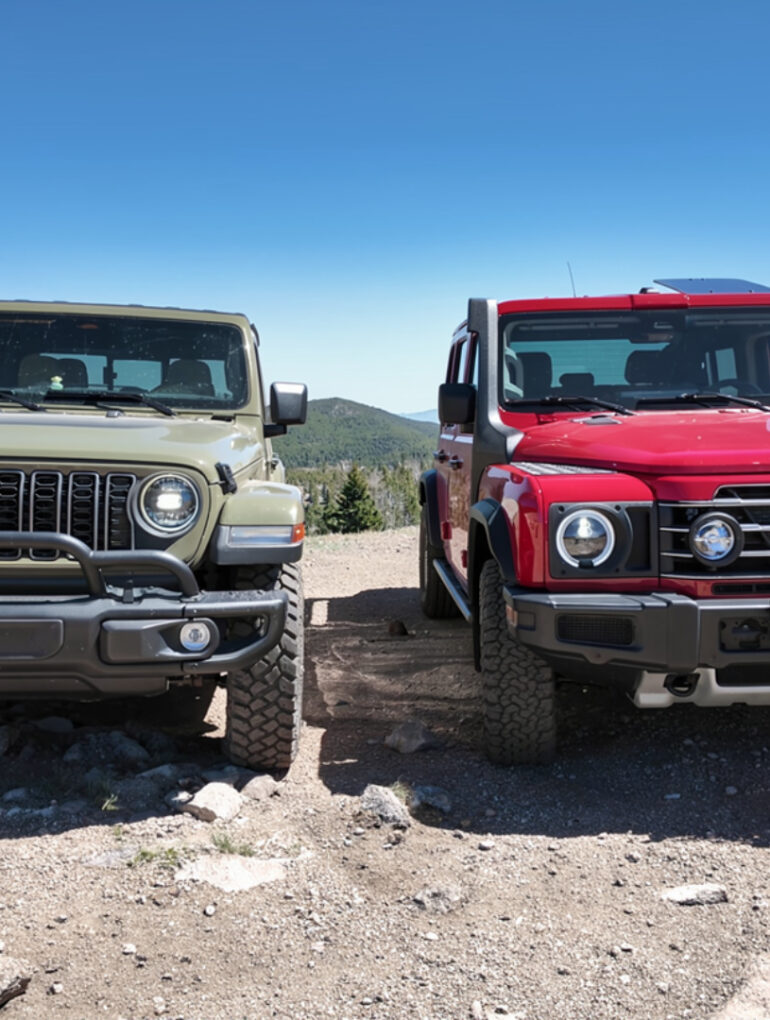
When it comes to brand-new trucks that feel defiantly old-school—solid axles, mechanical four-wheel drive, and a no-nonsense approach to off-roading—two stand out in 2026: the Jeep Gladiator and the Ineos Grenadier Quartermaster. Pitted against the brutal Cliffhanger 2.0 trail, these rugged machines prove that analog capability is far from dead. But which one truly delivers the ultimate off-grid experience?
Old-School DNA Meets Modern Engineering
Both trucks stick to a traditional body-on-frame construction with solid axles and coil spring suspension—an increasingly rare formula in today’s tech-heavy market. Under the hood, however, they diverge.
The Gladiator runs the long-serving 3.6L Pentastar V6, producing 285 horsepower and 260 lb-ft of torque. It’s proven, reliable, and straightforward. The Grenadier counters with a BMW-sourced 3.0L turbocharged inline-six (B58), delivering similar horsepower (around 282 hp) but a significantly stronger 332 lb-ft of torque, available lower in the rev range. This gives the Grenadier a more “truck-like” low-end grunt—ideal for crawling.
Yet, weight tells another story. The Grenadier tips the scales near 6,000 lbs, while the Gladiator is roughly 700–800 lbs lighter. On loose, shifting terrain like Cliffhanger 2.0, that difference matters.
Off-Road Performance: Lockers vs. Ingenuity
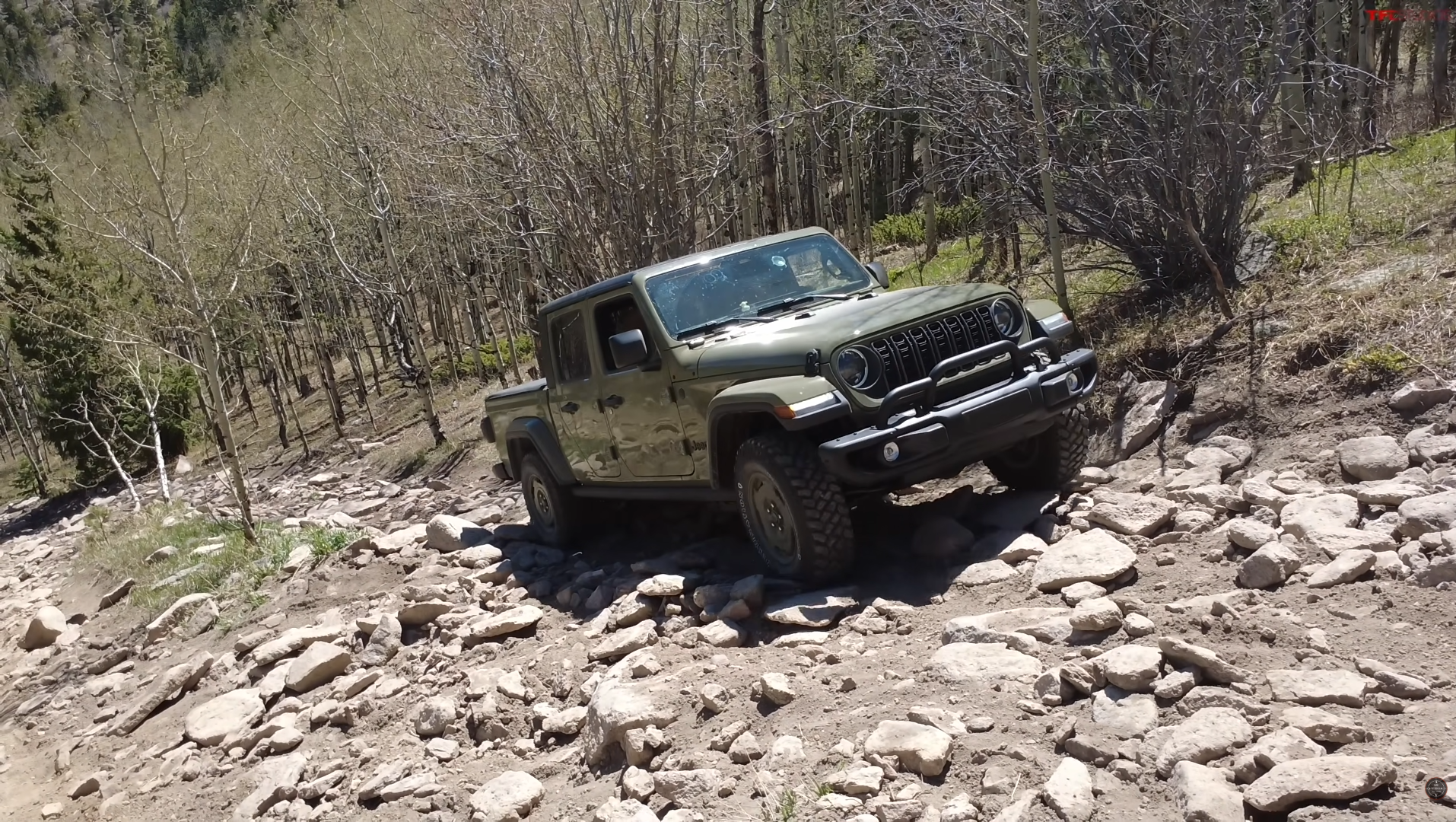
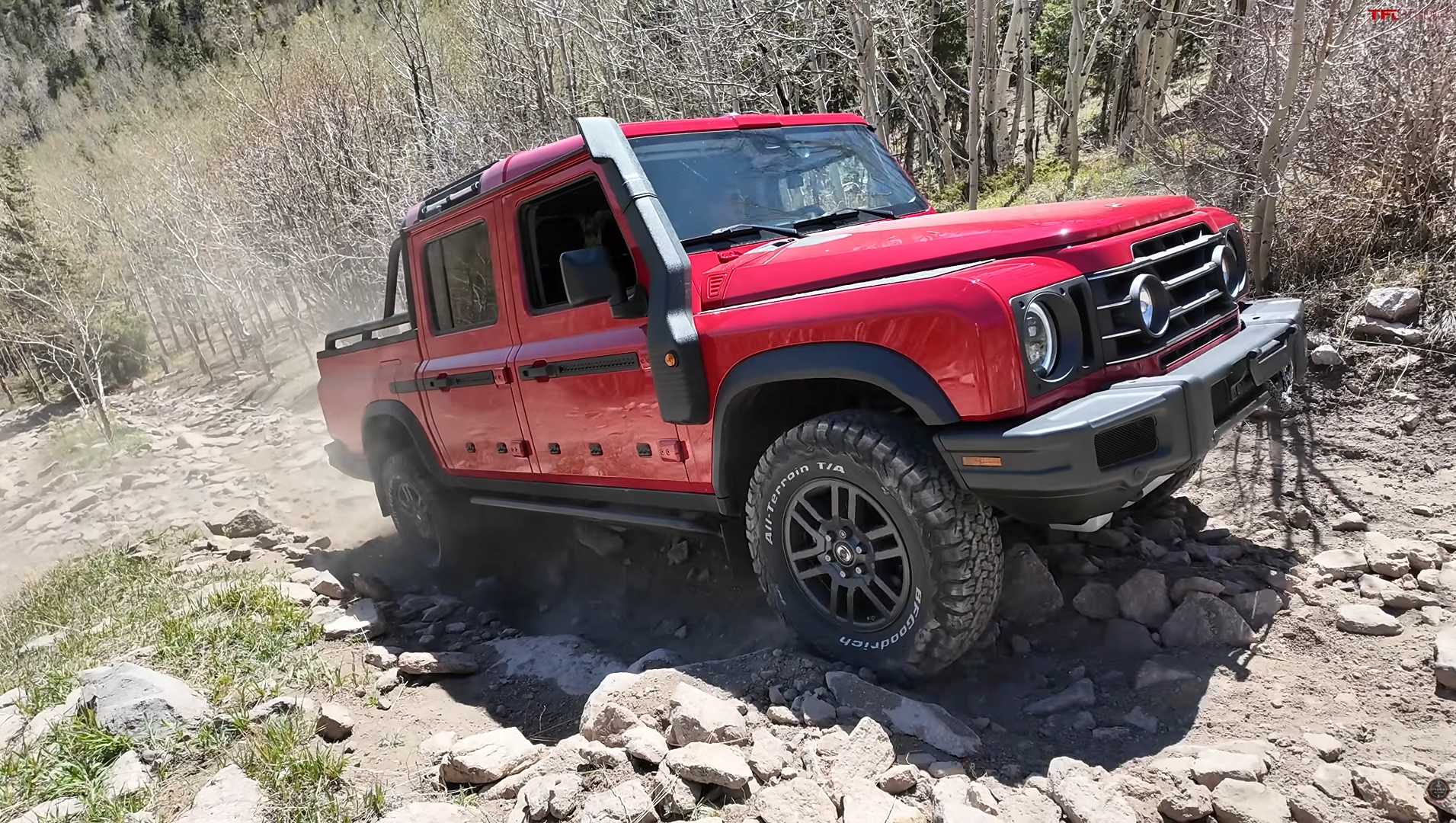
Cliffhanger 2.0 is no joke—a steep, loose rock ascent that tests traction, control, and durability. Both trucks were aired down to around 18–20 PSI to maximize grip.
The Grenadier, especially in Trialmaster trim, brings serious hardware: front, rear, and center locking differentials. This triple-lock setup allows for exceptional control and traction. On the climb, it methodically clawed its way upward, even through the most technical sections. The steering, while vague on-road, proved perfectly suited for slow, precise rock crawling.
The Gladiator, in this configuration, featured only a rear locker but relied heavily on Jeep’s advanced brake-based traction control. Despite lacking a front locker, it performed impressively—navigating the same obstacles with a mix of throttle control and clever torque distribution. Its lighter weight and aggressive factory mud-terrain tires gave it a fighting chance.
Still, physics wins: the Grenadier’s locking differentials provided superior composure and control in the toughest moments.
Features and Practicality
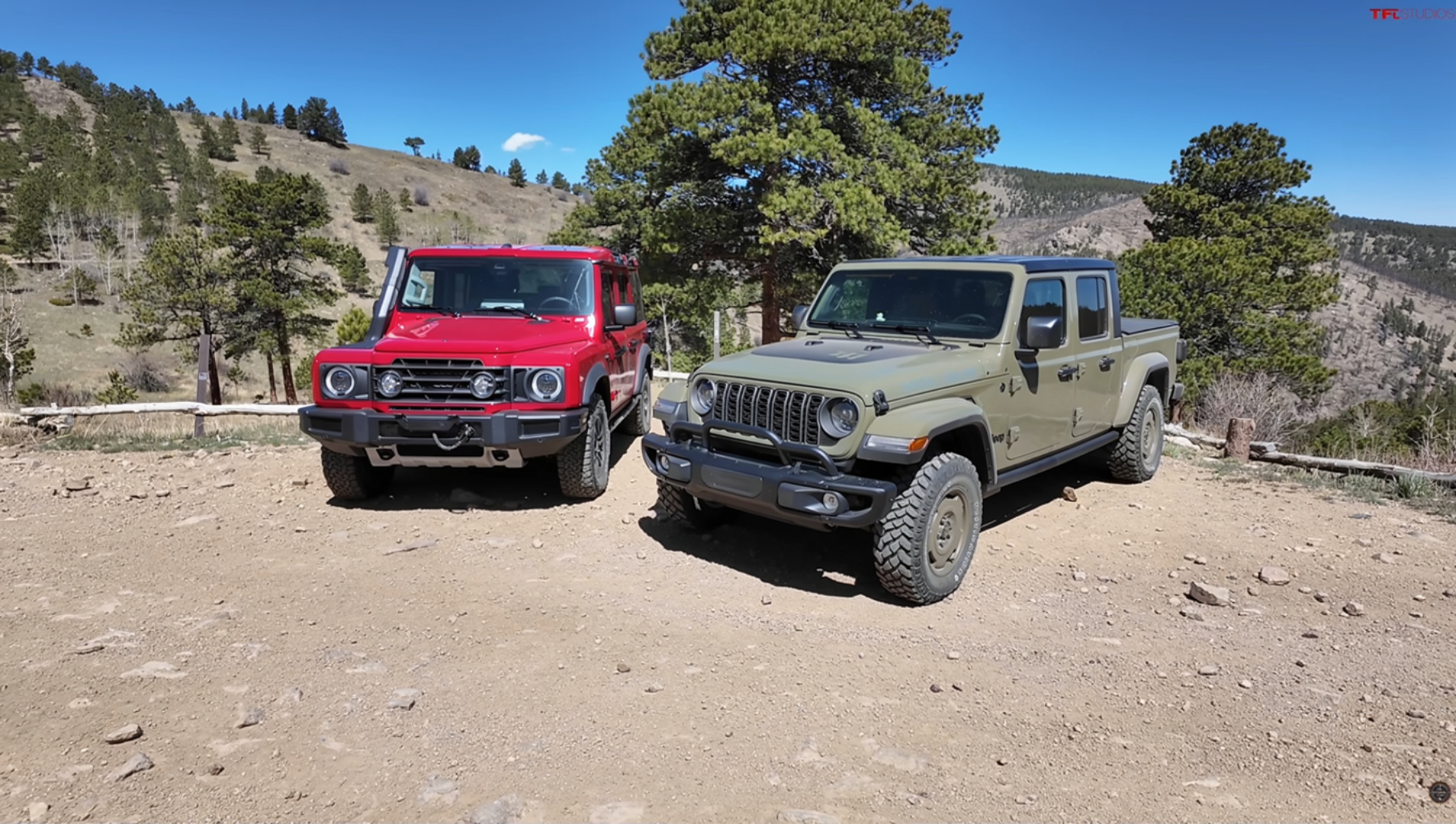
The Grenadier leans into its utilitarian ethos with integrated off-road tools—steel bumpers, a factory winch option, snorkel, and external mounting points. Its interior features aircraft-style overhead switches and a central screen packed with off-road data.
The Gladiator counters with classic Jeep charm: removable roof panels, intuitive controls, and a more familiar cabin layout. It may not feel as exotic, but it’s highly functional and arguably better assembled.
Pricing
Here’s where the gap widens dramatically. A well-equipped Gladiator comes in around $57,000. The Grenadier Quartermaster? Easily over $100,000 when optioned.
That price difference is influenced by import tariffs and premium components, but it’s hard to ignore. You’re paying nearly double for the Grenadier’s added capability and uniqueness.
Verdict: Capability vs. Value
If ultimate off-road control and uniqueness are your priorities, the Ineos Grenadier Quartermaster stands tall. Its triple-lock system and torque-rich engine make it a beast on extreme terrain. But for most buyers, the Jeep Gladiator is the smarter choice. It delivers nearly the same capability at half the price, with unmatched aftermarket support and everyday usability. In the end, both trucks prove that “they don’t make them like they used to”—unless you know exactly where to look.
Source: TFLoffroad