

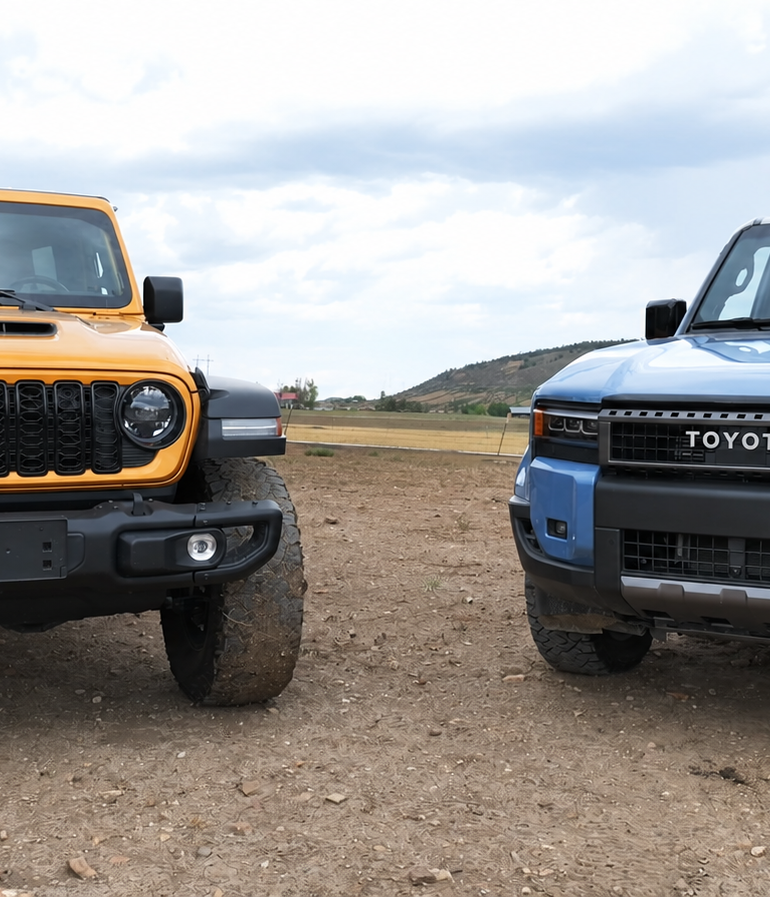
For buyers with roughly $70,000 to spend on a serious four-wheel-drive vehicle, the latest Toyota Land Cruiser 250 Series and Jeep Wrangler 392 Willys present two compelling—but fundamentally different—answers. One prioritizes refinement, technology and everyday usability; the other embraces mechanical simplicity, extreme hardware and the unmistakable character of a V8-powered Wrangler.
The folks from TFLoffroad put the two vehicles through a series of controlled slip tests before taking them onto a challenging off-road course. The results demonstrate that neither vehicle is simply “better” across every category. Instead, their strengths reflect fundamentally different engineering philosophies.
Four-Wheel-Drive Systems Under Pressure
The Wrangler 392 Willys begins with an unusual advantage over many conventional Wranglers: its four-wheel-drive system operates in an automatic mode that can direct torque to the front axle when rear-wheel slip is detected. On the rear-wheel slip test, the Jeep was able to drive away without requiring the driver to manually select four-wheel drive.
The Wrangler also performed strongly in the diagonal slip test, where opposite wheels were placed on rollers. Its traction-control programming quickly transferred usable torque to the wheels with traction, allowing the Jeep to escape without requiring specialized drive modes.
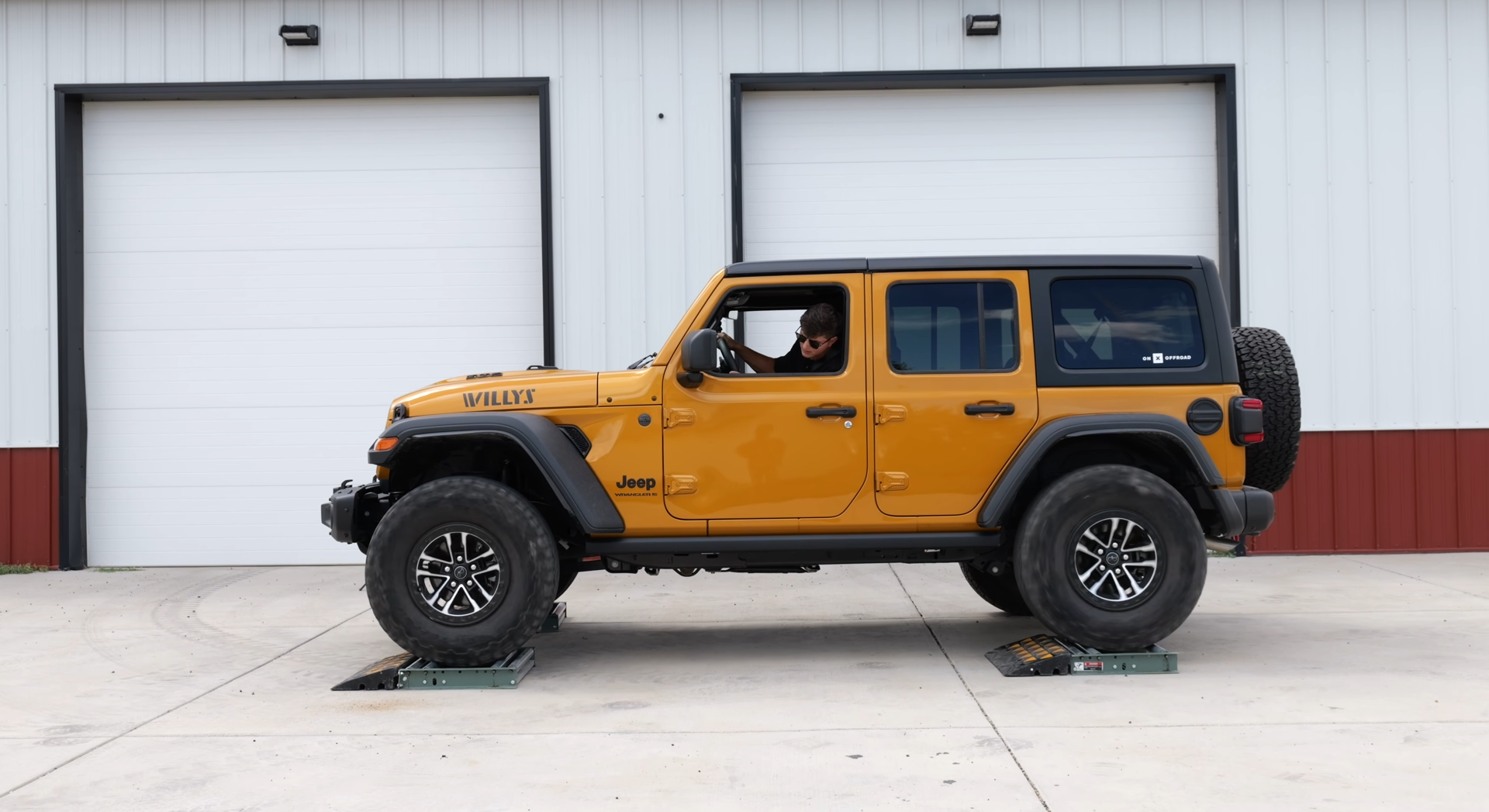
The three-wheel tests exposed a more important distinction. In high range, the Wrangler’s traction-control system eventually generated enough torque at the wheel with traction to escape, although low range made the process easier and more controlled. Engaging the rear differential locker transformed the test further, allowing the Jeep to roll off the rollers with minimal throttle.
The final configuration, with both rear wheels deprived of traction, demonstrated the limitation of the Willys specification: it does not have a factory front locker. Nevertheless, its electronic traction control was capable of directing torque to the remaining front wheel and extracting the vehicle from the rollers. Off-Road Plus made only a marginal improvement, reinforcing the conclusion that the Jeep’s basic traction-control calibration is already highly effective.
The Land Cruiser’s Full-Time 4WD Philosophy
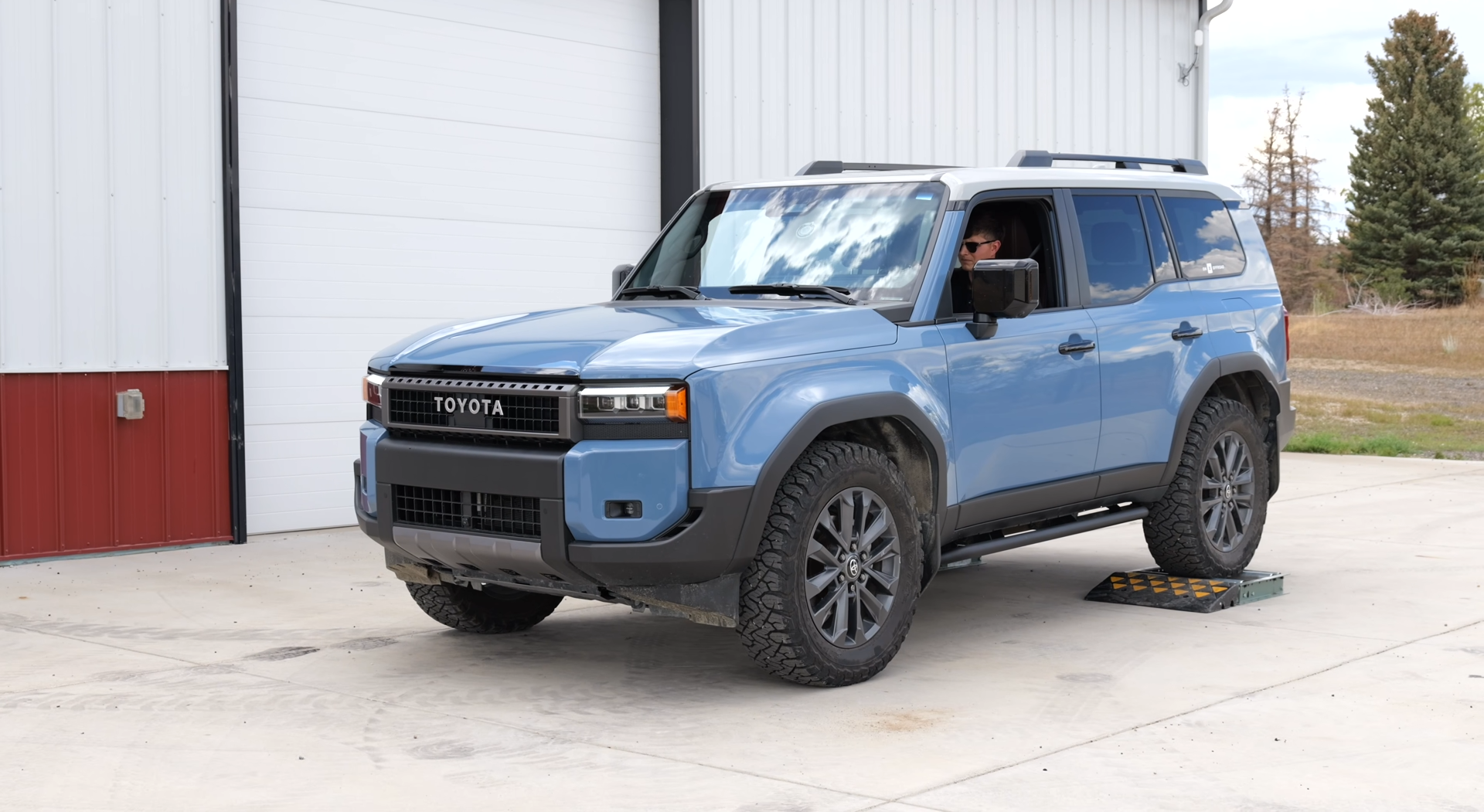
The Land Cruiser takes a different approach. Unlike traditional part-time systems, the 250 Series uses full-time four-wheel drive, meaning there is no conventional two-wheel-drive setting. A center differential lock is available to establish a more direct 50/50 torque split between the axles.
On the initial slip test, the Land Cruiser’s traction-control system appeared sensitive to the difference in wheel speeds and reduced power. Engaging the center differential lock immediately improved its performance, allowing the vehicle to drive away.
The Land Cruiser subsequently handled the diagonal slip test with little drama. With the center locker engaged, it quickly directed usable torque toward the wheels with traction. The three-wheel test again highlighted the importance of selecting the appropriate configuration: low range produced a substantial improvement in traction-control performance compared with high range.
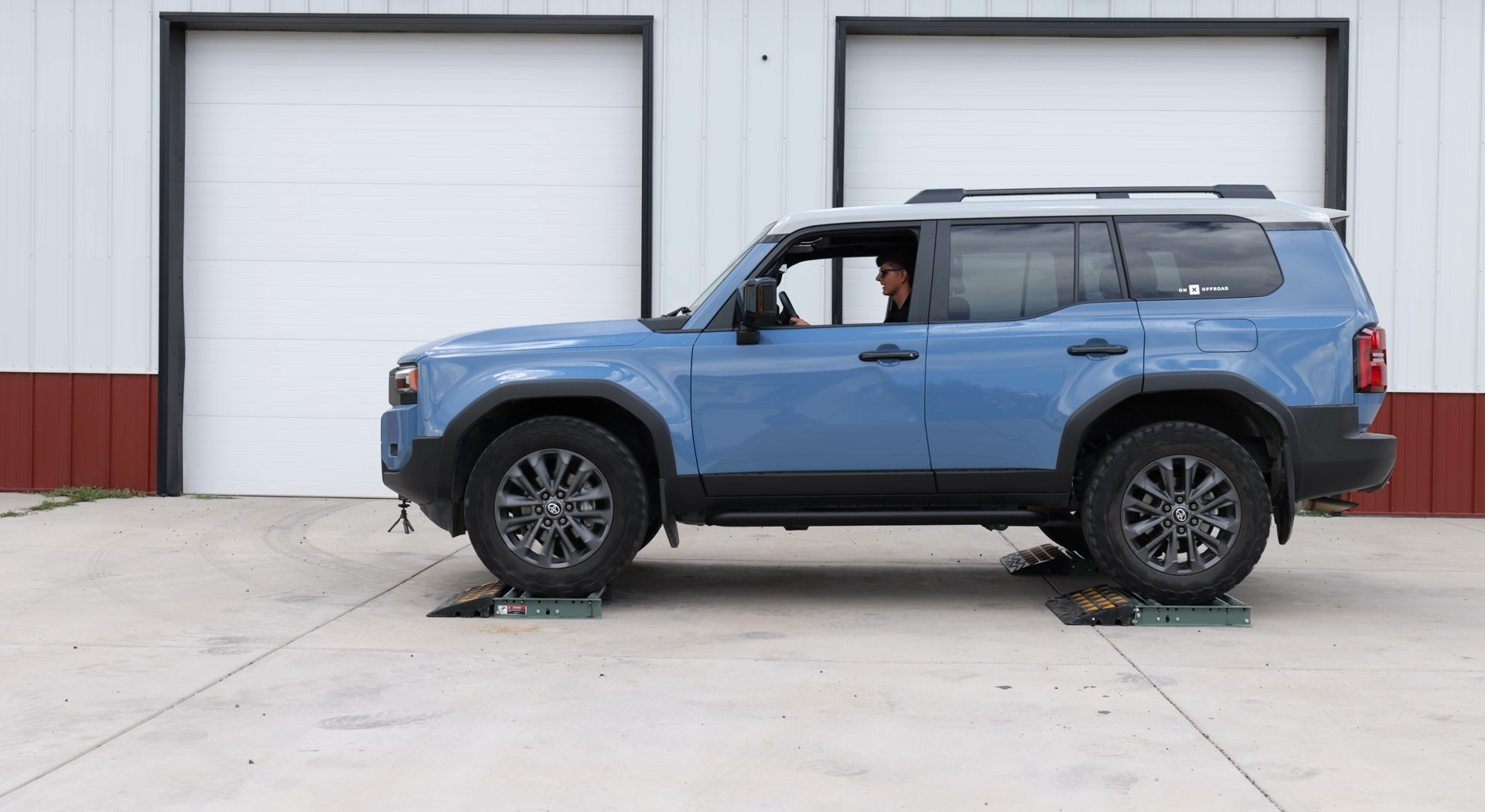
Like the Jeep, the Toyota benefited significantly from its rear differential locker. Once engaged, the Land Cruiser walked off the rollers with ease.
Where Toyota has an advantage is in its sophisticated electronic off-road toolkit. The Land Cruiser’s Multi-Terrain Select system offers dedicated terrain settings, while Crawl Control actively manages vehicle speed and wheel slip. In the most difficult three-wheel test, selecting Rock mode dramatically accelerated the vehicle’s escape, while Crawl Control made the process even more controlled by continuously managing wheel speed at all four corners.
Real-World Terrain Reveals the Bigger Difference
Controlled roller tests are useful for isolating drivetrain behavior, but they cannot fully replicate what happens on an actual trail. On the Tumbleweed Ranch course, the Land Cruiser initially struggled when driven in high range with its standard settings and no lockers engaged. With the accelerator fully applied, the sensitive traction-control calibration limited progress.
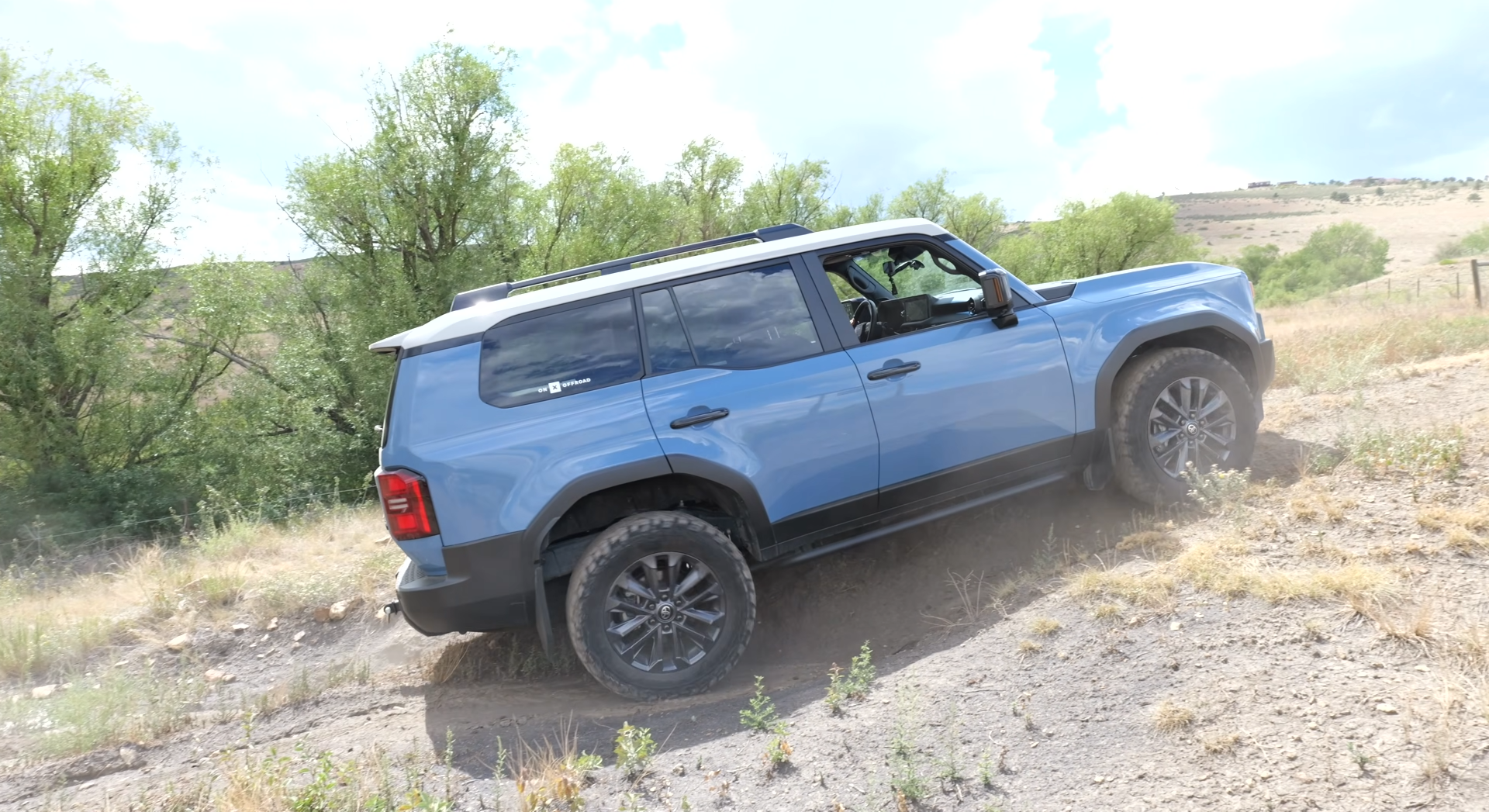
Engaging the center differential lock, however, was enough to get the Land Cruiser up the muddy incline. The lesson is significant: while the Toyota can be exceptionally capable, the driver needs to understand and use its electronic systems when conditions become genuinely difficult.
Adding low range, the rear locker, Multi-Terrain Select’s Rock mode and Crawl Control transformed the vehicle’s behavior. The combination substantially reduced unwanted wheelspin and allowed the Land Cruiser’s electronics to operate with an off-road-specific calibration.
The Wrangler approached the same terrain with a different character. Even in high range without special settings, the Jeep’s traction-control system quickly found a way to distribute torque and climb the hill. With low range, the rear locker and Off-Road Plus engaged, the Wrangler became almost effortless to drive up the obstacle.
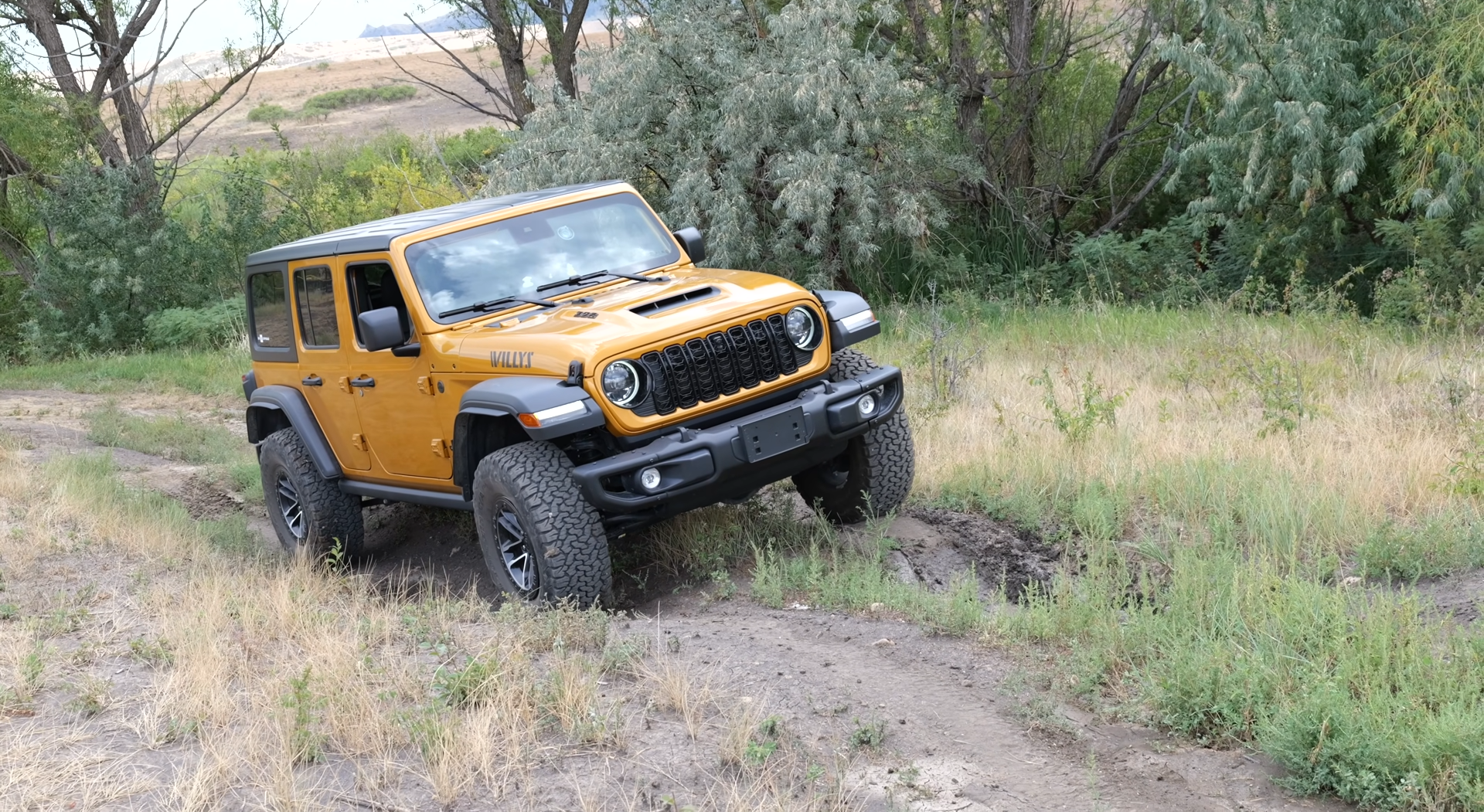
The Jeep’s solid front axle also gives it an important mechanical advantage in demanding terrain. Although the Willys tested did not feature a factory front sway-bar disconnect, its solid-axle architecture provided substantial articulation. That configuration compromises on-road refinement but remains exceptionally effective when the wheels need to maintain contact with uneven ground.
Daily Driver vs. Dedicated Trail Machine
The fundamental difference between these vehicles becomes clearest away from the trail.
The Land Cruiser is the more comfortable and practical machine. Its suspension is better suited to pavement, its steering is more refined and its cabin offers greater everyday comfort. Its 2.4-liter turbocharged four-cylinder hybrid powertrain produces 326 hp and 465 lb-ft of torque, providing strong performance while delivering better efficiency than the V8-powered Jeep.
The Wrangler 392 Willys is almost the philosophical opposite. Its 6.4-liter V8 produces 470 hp and 470 lb-ft of torque, and the engine’s character is central to the vehicle’s appeal. Fuel economy is poor, but the V8 provides enormous low-end authority and a soundtrack that reinforces the Jeep’s personality.
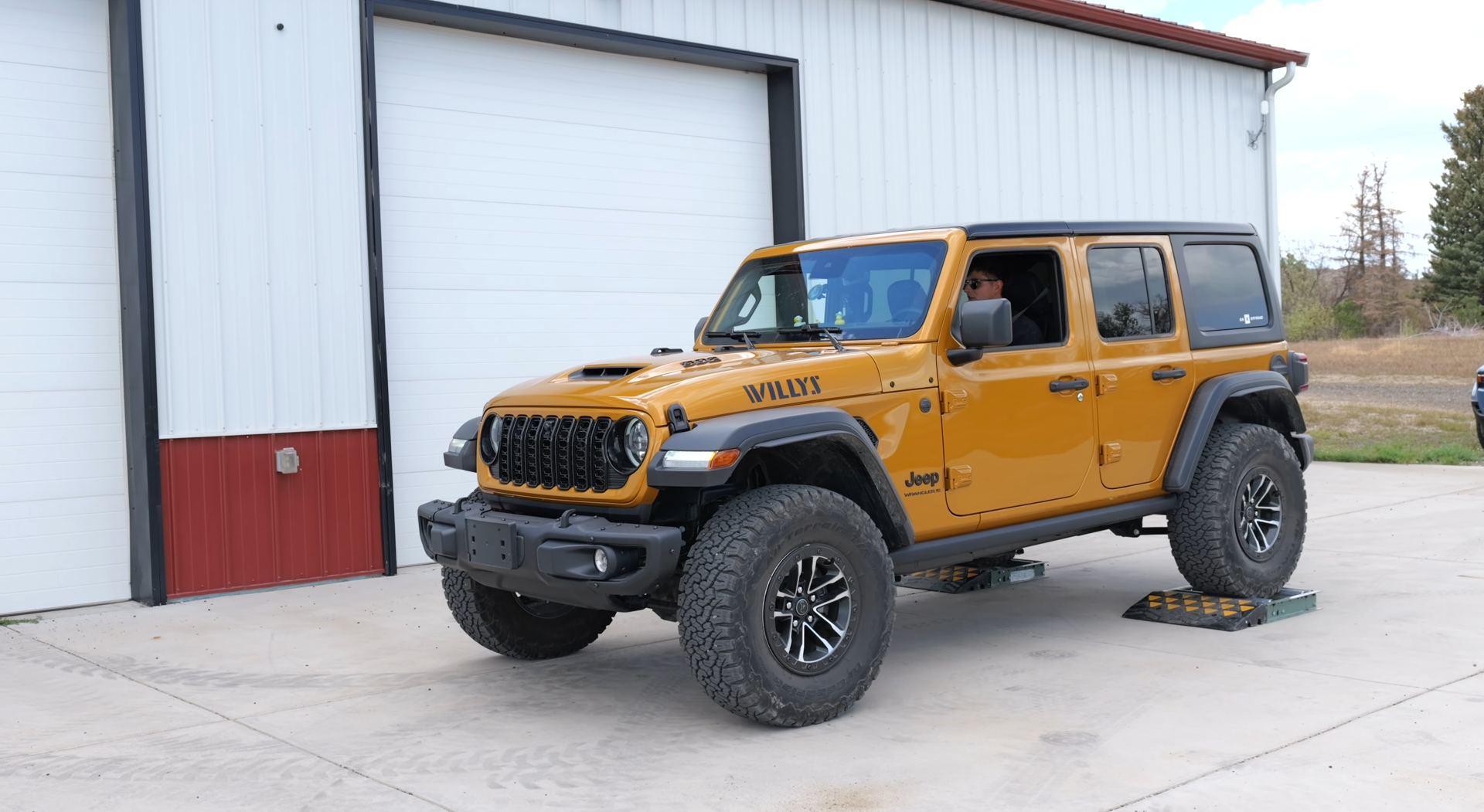
That personality comes with compromises. The Wrangler’s ride, steering and general road manners cannot match the Land Cruiser’s refinement. Even at roughly $70,000 to start, the Willys offers a relatively basic cabin, while the tested example cost closer to $76,000. The Land Cruiser, by comparison, provides more comfort-oriented equipment and a more polished driving experience.
Two Excellent 4x4s, Two Different Priorities
The testing ultimately produces a surprisingly nuanced conclusion. The Land Cruiser is arguably the better all-around vehicle because it combines genuine off-road capability with a level of comfort and usability that makes it far easier to live with every day.
The Wrangler, however, is the more specialized off-road tool. Its solid axles, 35-inch tires, substantial ground clearance, rear locker and effective traction-control system give it a significant mechanical and geometric advantage when the pavement ends. Even without a front locker, the Willys demonstrated that it can approach much of the capability of more heavily equipped Wrangler variants.
That distinction is ultimately what makes the comparison so interesting. The Land Cruiser is engineered to make off-road capability compatible with modern daily transportation. The Wrangler is engineered to make off-road performance a defining part of the vehicle’s identity.
For buyers who spend most of their time commuting, carrying passengers and covering long highway distances, the Land Cruiser’s comfort, efficiency and sophistication make it the more rational choice. For drivers who see the trail as the primary reason to own a 4×4—and who are willing to accept the compromises that come with that mission—the Wrangler 392 Willys offers something the Toyota cannot quite replicate: the visceral experience of a big V8, solid axles and serious trail hardware working together.
In the final assessment, the Land Cruiser is the better daily driver, while the Wrangler is the more compelling dedicated off-roader. The choice comes down to whether practicality or trail-focused character matters more.
Source: TFLoffroad