

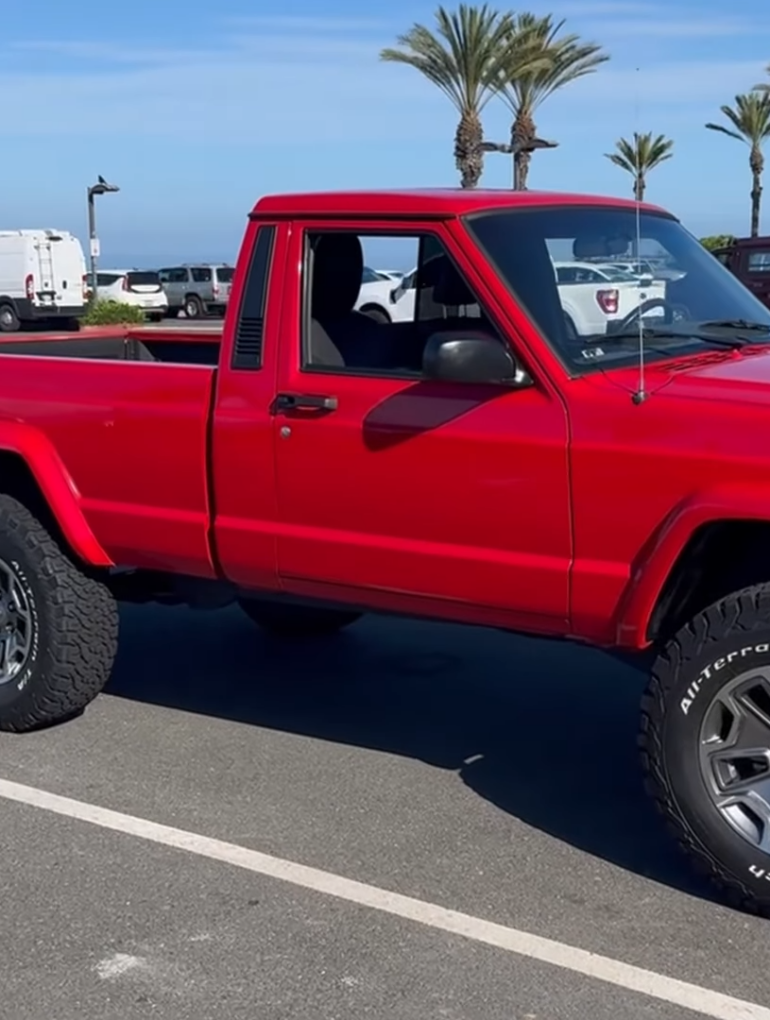
After years of steady work, the owner’s 1988 Jeep Comanche has transformed from a worn-out farm truck into a fully restored and upgraded off-road vehicle. When purchased, it showed its age with faded paint, cracked rubber, and a weak engine. Over time, nearly every part was repaired, rebuilt, or customized to improve performance, reliability, and comfort while maintaining the truck’s classic design.
The project now features a rebuilt stroker engine, a manual transmission swap, and upgraded suspension that improves handling and ride height. Inside and out, many components were replaced or modernized, from the newer Cherokee body panels and LED lighting to updated seating and controls. The finished result reflects both careful planning and a clear goal of keeping the truck practical yet true to its heritage.
Key Takeaways
- The truck was restored from a severely aged condition to a finished build.
- Major upgrades include a stroker engine, manual transmission, and lifted suspension.
- Modern touches improve comfort, lighting, and interior usability.
Jeep Comanche History and Acquisition
Condition When Purchased
He found the 1988 Jeep Comanche in the desert of Southern California. The paint was faded and the surfaces were sunburned, showing heavy patina. Rubber and plastic parts had broken down, and the engine ran poorly. The truck had logged over 200,000 miles doing farm work. Despite its rough shape, it was solid enough to rebuild and had no major structural rust.
Key problems identified at purchase:
- Misfiring engine
- Exhaust leak
- Failing rubber and seals
- Interior wear
Yet, on the two-hour drive home after pickup, it surprised him by running straight with no steering wobble.
Factory Highlights and Rare Features
The truck came as a short-bed 4×4 with a 4.0-liter inline-six engine. Most notably, it included a Dana 44 rear axle, a desirable option that adds strength and reliability. These components made it an ideal base for a build project.
| Feature | Detail |
|---|---|
| Bed Style | Short Bed |
| Drive | Four-Wheel Drive |
| Engine | 4.0L Inline-Six |
| Rear Axle | Dana 44 |
| Origin | Southern California |
| Initial Condition | High mileage, weathered, but solid frame |
These original elements gave the truck an authentic start and justified the effort to restore and modify it rather than seek another platform.
Build Process and Progress Over Time
The rebuild stretched over about seven years. During that period, the owner handled nearly every system on the Comanche. Major changes included a 4.6L stroker engine, AX-15 manual transmission swap, and extensive upgrades to suspension and interior.
Notable upgrade phases:
- Mechanical and drivetrain work – Engine rebuild, transmission and transfer case installation, re-geared axles.
- Body and exterior refinishing – Paint job, bumper replacements, new lighting, and bed liner application.
- Interior restoration – Updated seats, wiring improvements, and custom switches.
By the end of the process, nearly every part of the truck had been reconditioned or replaced while retaining its core Jeep character.
Engine and Drivetrain
4.6L Stroker Setup
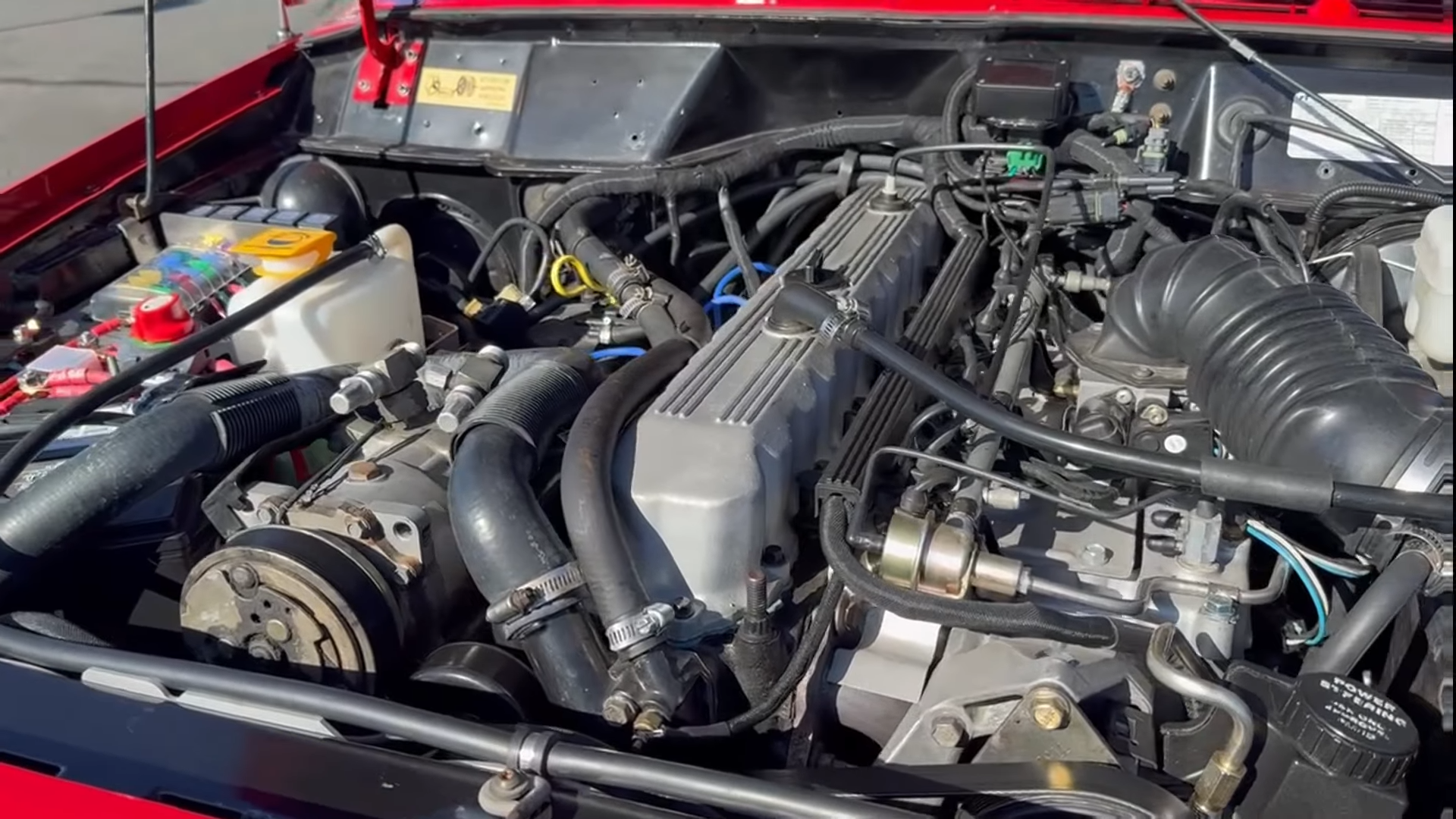
The 1988 Comanche runs a 4.6-liter stroker inline-six, built by combining a 4.0L block with a 4.2L crankshaft and larger pistons. This gives the engine more displacement and torque. Wiring has been redone, and a new fuse system replaces the original fusible links for easier maintenance. The setup includes a master power cutoff, inline fuse, and a marine-grade fuse panel with labeled relays for reliability.
Engine Mounts:
- Brand: Stinky Fab
- Type: Engine and transmission mounts
- Notes: Provides stable support with less vibration compared to Brown Dog mounts.
Manual Gearbox Conversion
Originally equipped with an automatic transmission, the truck now uses an AX15 five-speed manual. This change improves control on and off the road. A center-console mounted parking brake and three-pedal setup accompany the manual system.
Transmission Details:
| Component | Model | Notes |
|---|---|---|
| Transmission | AX15 | Manual 5-speed swap |
| Mount | Stinky Fab | Reduced vibration |
| Clutch Setup | Stock linkage | Smooth engagement |
Transfer Case and Driveshaft System
The truck uses an NP231 part-time 4WD transfer case with a slip-yoke eliminator. This setup connects to Adams custom driveshafts front and rear, built for precise fitment and durability. The transfer case has been rebuilt, and the underside remains clean and rust-free.
Underbody Components:
- Transfer Case: NP231 (rebuilt)
- Driveshafts: Adams Custom units
- Exhaust: Flowmaster with legal catalytic converter
- Skid Plate: OE-style gas tank skid
Differential and Axle Modifications
Both axles are upgraded for strength and traction. The rear keeps the Dana 44, now with 4.56 gears and a Yukon limited-slip differential. The front features a high-pinion Dana 30 from a late-1990s Jeep XJ, equipped with WJ knuckles, brakes, and an Eaton electronic locker.
Axle Setup Overview:
| Location | Model | Gearing | Locker Type | Notes |
|---|---|---|---|---|
| Front | Dana 30 (High Pinion) | 4.56 | Eaton E-Locker | WJ knuckles/brakes |
| Rear | Dana 44 | 4.56 | Yukon Limited Slip | Spring-over with ~5″ lift |
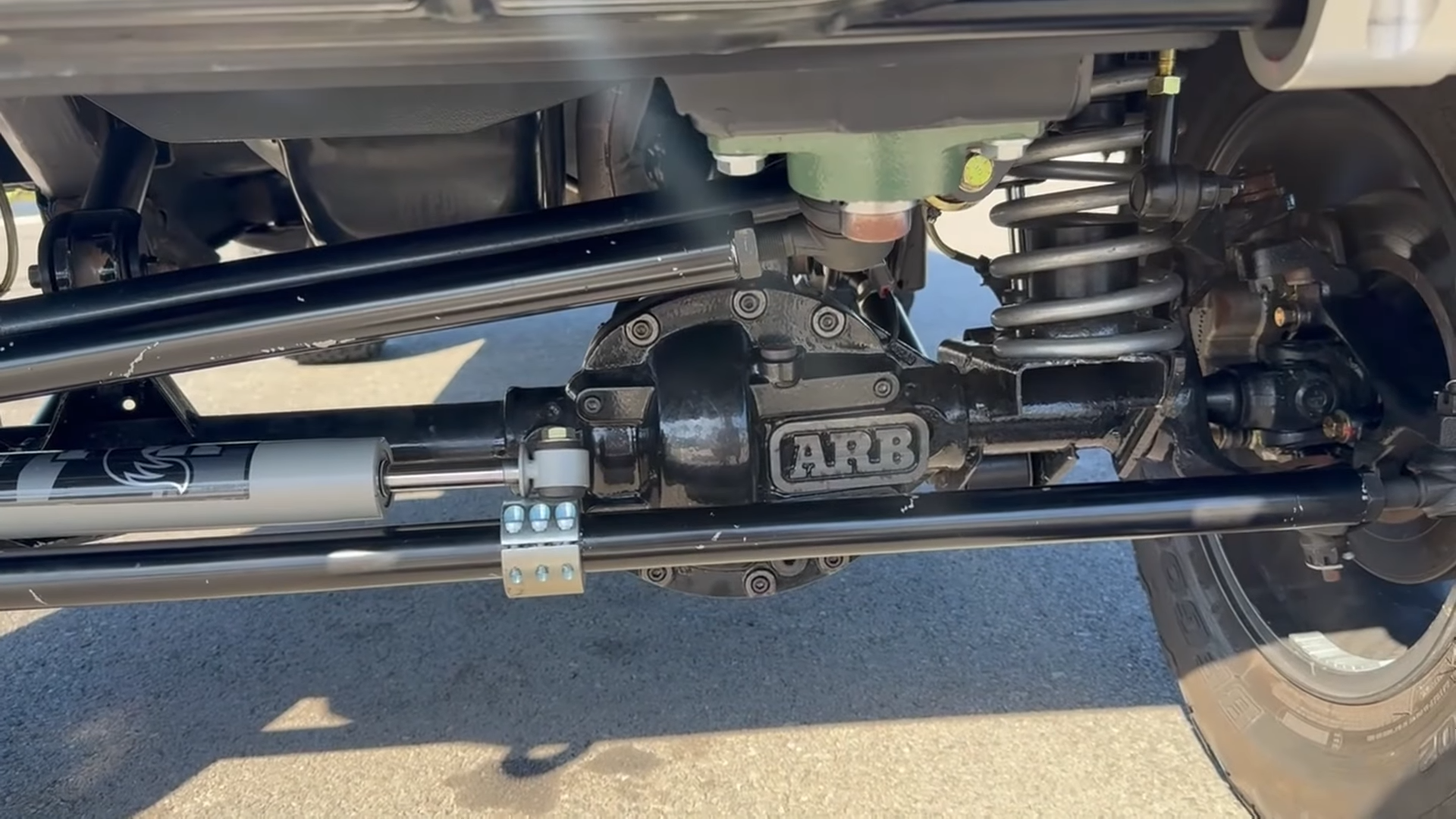
Suspension components include Fox shocks at all corners and a Cab Fab over-axle track bar. One-ton steering links and tie rods in aluminum improve strength and alignment precision.
Suspension and Steering
Lift Setup and Spring-Over Conversion
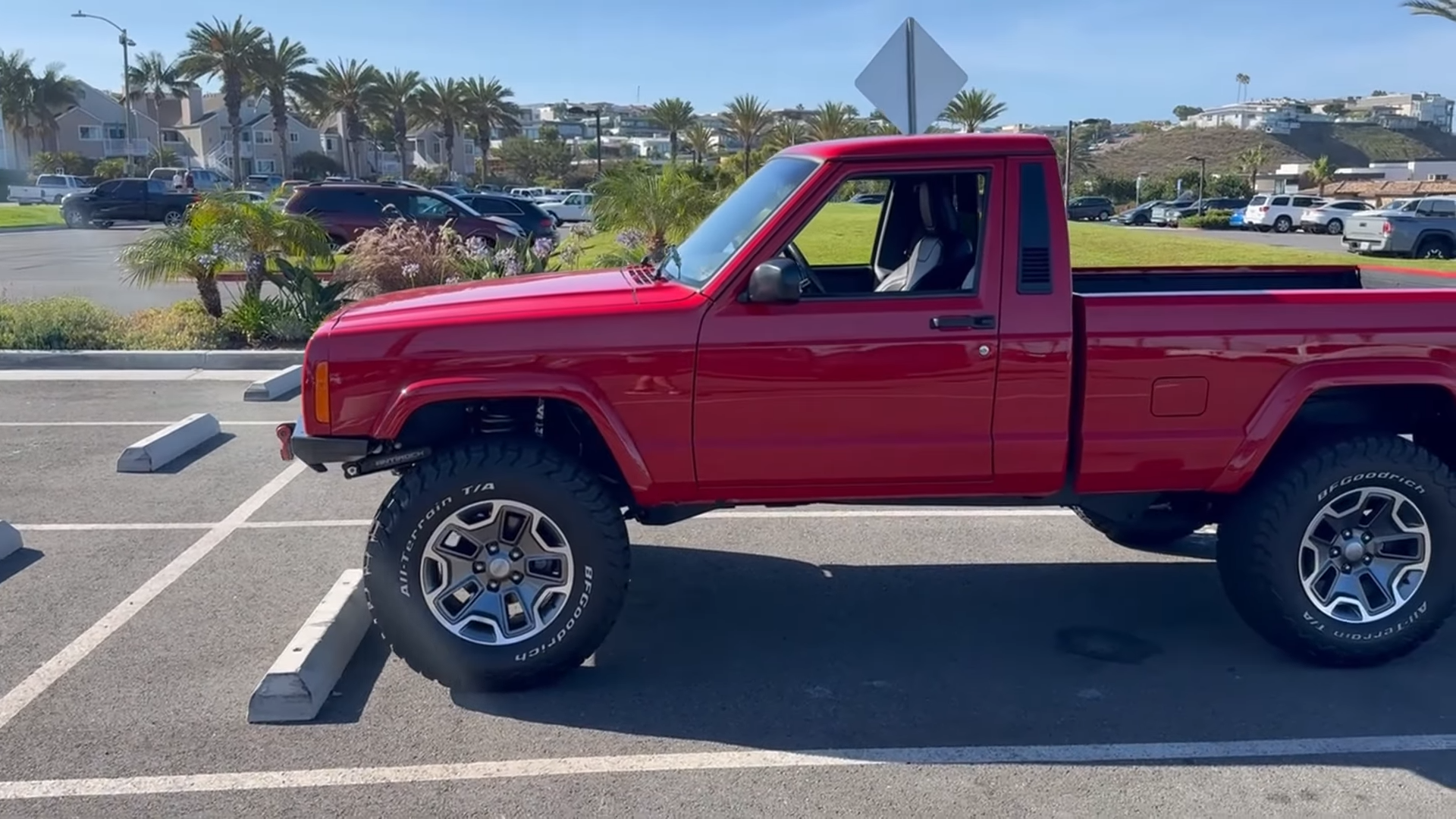
He converted the rear suspension to a spring-over-axle layout, which raised the truck about 5–6 inches higher than stock. This change improved ground clearance and allowed space for 33-inch (285/70R17) tires on 17-inch wheels. The ride feels a little stiff, but it stays stable on the road. He has considered adding long-arm control arms from Core 4×4, though that would require modifying the frame.
Front Knuckle and Brake Upgrade
The front axle now uses WJ (Grand Cherokee) steering knuckles, along with WJ unit bearings and disc brakes. This setup removed the need for spacers or adapters and improved overall steering precision. The axle housing came from a 1998 Jeep Cherokee (XJ) with a high-pinion Dana 30 configuration, replacing the original unit that had a vacuum disconnect system.
Steering System Components
A Cab Fab over-the-axle track bar helps reduce bump steer and improve alignment. He assembled a one-ton steering linkage using aluminum rods paired with one-ton tie-rod ends, adding strength and reliability. The front differential uses 4.56 gears to match the rear and includes an Eaton electronic locker, controlled from inside the cab.
Shock Absorbers and Mounting
Front and rear Fox shocks handle suspension travel and provide a firm, controlled ride. They look durable and perform well off-road, though they ride somewhat firm on pavement. The shocks fit cleanly with the lifted suspension and keep the Jeep stable at highway speeds and on rough terrain.
Exterior Modifications
Body and Paint
He restored the truck’s body from its faded, sunburned condition to a clean, polished look. The exterior now wears a fresh dark blue paint job that replaced the worn factory finish. Newer panels from a 1997–2001 Jeep Cherokee (XJ) include updated fenders, doors, and a front header panel, giving the truck a more modern appearance. All rubber trim and seals were replaced to remove dry, cracked originals.
Exterior Swaps
He swapped many exterior parts with later-model Jeep components for both style and function. The conversion added the newer body-style panels before painting. He kept the Comanche’s original short bed but refinished every exterior surface for uniform color and fit.
| Component | Replacement Source | Note |
|---|---|---|
| Doors | 1997+ Jeep XJ | Updated window seals |
| Fenders | 1997+ Jeep XJ | Better alignment |
| Header Panel | 1997+ Jeep XJ | Modern front look |
Lighting Upgrades
All signal and tail bulbs were replaced with LED units, adding brightness and reliability. He installed rigid-brand fog lights for reverse illumination, improving night visibility. The wiring supports both automatic reverse activation and manual control through a switch inside the cab.
Bumpers and Bed Liner
Both front and rear JCR bumpers replaced the fragile factory ones, increasing protection. The truck bed received a spray-on liner for durability and resistance to scratches and rust.
- Front bumper: heavy-duty steel, winch-ready
- Rear bumper: includes recovery points
- Bed liner: textured coating, color matched
Tailgate and Windows
The tailgate was refinished to match the new body color, and replacement taillights from Key Parts completed the rear. He also restored the window seals and fitted power window switches modified to match the two-door interior layout. All glass and trim now align smoothly with the newer body panels, creating a uniform, finished exterior.
Interior Upgrades
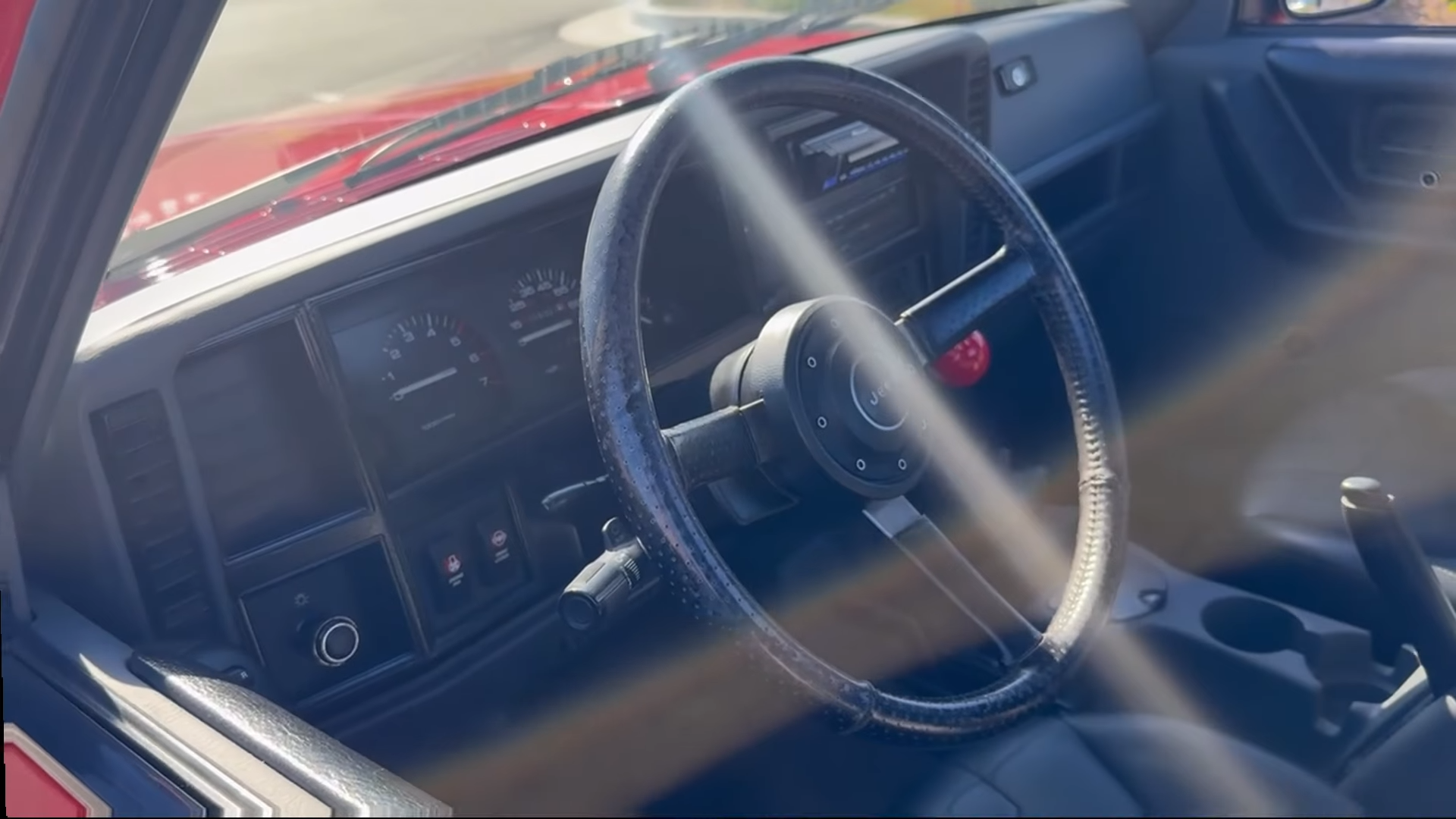
Seats and Interior Panels
He replaced the original seats with power and heated ones from a 2018 Jeep Cherokee Limited. Installing them required heavy modification to the brackets and seat buckets to fit the narrow cabin space. The door panels and trim came from a late-model Cherokee and were refinished in dark gray with matching paint. New seals and repainted panels give the cabin a clean and consistent look.
Dashboard and Center Console Refresh
The dashboard came from a mid-1990s Cherokee and was refinished to match the updated interior color. It includes an electronic speedometer adapter that delivers smoother readings than the old mechanical cable. A newer center console from the 1997‑plus models houses the relocated emergency brake and the heated seat controls, making the setup look factory-installed.
Carpet and Headliner Replacement
Fresh black carpet and a new headliner replaced the worn materials. Both help reduce cabin noise and give a newer, finished appearance. The darker tones also match the gray and black trim used throughout the cabin.
Electrical Controls and Switches
He added custom‑labeled switches for key systems:
- Engine fan override
- Front locker control
- Backup light override
- Fog light power
Each switch integrates cleanly with the console layout. The truck also uses an aftermarket electronic monitor to track engine functions and assist with diagnostics.
Audio and Speaker Improvements
Rear speaker brackets from Boxy Jeep hold 6.5‑inch speakers, while upgraded front speakers provide better clarity. An iPhone mount keeps navigation and music easily accessible, completing a modern but functional setup inside the older truck.
Engine Bay Details
Electrical Setup and Fusing
He replaced the original wiring harness with new and organized looms. The outdated fusible links were removed, and a marine-style fuse panel was installed for easier maintenance. A main power cutoff switch allows the battery to disconnect during storage. Inline fuses and relays are clearly labeled for quick identification.
| Component | Type | Purpose |
|---|---|---|
| Main Switch | Manual cutoff | Disconnects battery power |
| Fuse Panel | Marine 6-circuit | Simplifies troubleshooting |
| Relays | Labeled group | Controls fans and accessories |
Cooling Assembly
The cooling system uses electric fans controlled by both a thermostat and a manual override switch in the cab. The setup improves airflow in tight engine bay spaces and provides flexibility for hot weather or heavy use. The relays for these fans sit near the main fuse panel for organized routing.
Fuel and Air System Updates
The 4.6L stroker engine uses modified fuel and air routing to handle the larger displacement. Updated injectors and a tuned intake ensure steady fuel delivery and improved throttle response. Combined with the proper ECU configuration, the system runs smoothly and keeps idle consistent even under load.
Identification and Markings
Each relay, fuse, and control module has printed labels in durable, heat‑resistant material. This labeling helps track wiring changes and confirm fuse ratings quickly. The clean layout and tidy cable paths make visual inspection easy during maintenance or troubleshooting.
Final Thoughts and Driving Experience
He describes the 1988 Jeep Comanche as a dependable truck that feels solid after years of restoration. The 4.6L stroker engine delivers smooth and steady power, paired with the AX-15 manual transmission that shifts cleanly. With the NP231 transfer case and Dana 44 rear axle, the drivetrain feels tight and responsive both on and off the road.
The suspension sits about five inches higher than stock due to the spring-over conversion. He notes the ride feels firm but manageable, especially with Fox shocks and Stinky Fab mounts that provide stability without harsh vibration. Steering remains controlled thanks to the one-ton steering setup and WJ knuckles.
Inside, the cabin feels more modern and comfortable. Heated, power-adjustable seats from a 2018 Cherokee fit snugly after custom modifications. New carpet, trim, and door panels match the truck’s fresh exterior paint. The dashboard retains a classic look but works cleanly with upgraded electronics, including a Boxy Jeep speedometer adapter for smooth readings.
A few thoughtful controls add function:
- Engine fan override switch
- Front locker control
- Backup light override
- Fog light switch
On the road, the truck starts easily, drives straight, and feels balanced. The engine pulls strongly across gears, and braking remains consistent with the WJ brake setup. Though the suspension rides a bit stiff, he finds it steady and reliable, giving him confidence behind the wheel.