

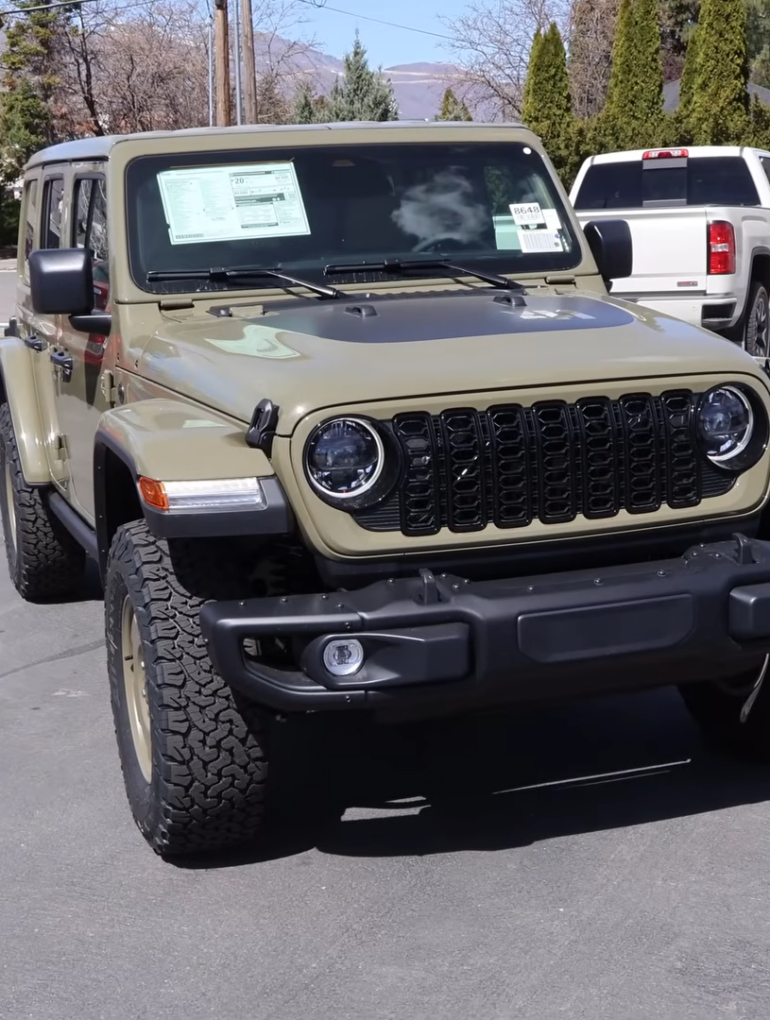
You’re looking at the Jeep Wrangler 41 Special Edition, and this is the kind of package Jeep needs to keep building. You get a 3.6-liter V6 with an 8-speed automatic, making 285 horsepower and 260 lb-ft of torque. It delivers 18 mpg in the city and 23 mpg on the highway, and it keeps things simple with a naturally aspirated setup and part-time four-wheel drive.
You also get unique styling, upgraded axles front and rear, and solid off-road hardware like all-terrain tires, a steel front bumper, and rear diff lock. Inside, you have modern tech, heated features, an Alpine sound system, and practical controls that are easy to use. At $57,770 as tested, this package adds visual appeal and useful equipment without changing what makes a Wrangler feel special.
Key Takeaways
- You get proven V6 power, solid axles, and real four-wheel-drive capability.
- You gain unique styling, upgraded hardware, and useful off-road features.
- You pay a premium for added value that strengthens its place against rivals.
Powertrain and Performance
3.6L V6 Engine Details
You get a 3.6-liter V6 under the hood. This engine runs without a turbo or hybrid system. It uses a natural setup that delivers steady and smooth power.
I find it refined in daily driving. It may not be perfect, but it avoids the complexity of many newer turbo engines.
8-Speed Automatic Gearbox
Jeep pairs the V6 with an 8-speed automatic transmission. It shifts through the gears smoothly and keeps the engine in its power range.
You also get a part-time four-wheel-drive system with a two-speed transfer case. That setup gives you better control when you leave the pavement.
Gas Mileage
Fuel economy ratings are:
- 18 mpg in the city
- 23 mpg on the highway
These numbers stay in line with what you expect from a V6-powered Wrangler.
Output: Horsepower and Torque
The 3.6L V6 produces:
- 285 horsepower
- 260 lb-ft of torque
That output gives you solid performance for daily use and trail driving. The power feels smooth and predictable when you press the throttle.
On-Road Feel and Handling
You drive on solid axles front and rear with coil springs at both ends. Even with this body-on-frame setup, it handles well for what it is.
The all-terrain KO2 tires ride softer than mud-terrain tires. You lose some off-road grip compared to mud tires, but you gain better comfort on the road. The steering and overall feel stay controlled and stable for a vehicle built like this.
Trail Performance
This package upgrades you to Dana axles front and rear. You also get a rear locking differential and Off-Road Plus, which improves traction in tough conditions.
The Wrangler includes:
- Solid axles front and rear
- Coil-spring suspension
- All-terrain tires (285/70R17)
- Two-speed transfer case
You also get steel front bumpers with recovery points. These features support serious trail use while keeping everyday driving manageable.
Exterior Design and Features
41 Special Edition Appearance
You get a large “41” graphic across the hood that stands out right away. It gives the Jeep a more unique look than a standard Willys.
On the side, you also have a subtle 4×4 Willys marking, which keeps the theme going without being too loud.
This package costs $7,200, and the total MSRP comes in at $57,770.
Wheels and Tire Setup
This model rides on 285/70R17 tires with a special wheel design that looks sharp. The satin-finished wheels match the body color well and make the Jeep feel more upscale.
You get BFGoodrich KO2 all-terrain tires. They ride softer than mud-terrain tires, but they may not grip as well off-road and can wear faster over time.
The Jeep keeps its solid axles front and rear, and it uses coil springs on both ends. This setup helps it handle well for a body-on-frame SUV.
Updated Lighting
You get upgraded daytime running lights and improved turn signals up front.
In the rear, this package also adds upgraded tail lights, which give it a more modern look.
Fog lights come standard with the steel front bumper setup.
Front Grille and Bumper Details
The grille features a blacked-out design, while the surrounding areas match the body color.
Up front, you get a steel bumper, which adds strength. It also includes recovery hooks for off-road use.
In the rear, Jeep uses a plastic bumper instead of steel. You still get rear parking sensors for added safety.
Exterior Graphics and Identification
The bold hood decal makes this edition easy to spot.
You will also notice the Jeep badge at the rear and special trim details like the “41” marking on top of the shifter inside.
These touches make it feel more special than a regular trim.
Rear Cargo Access and Swing Gate
You access the cargo area through the side-hinged swing gate, followed by the glass hatch. You have to close them in order.
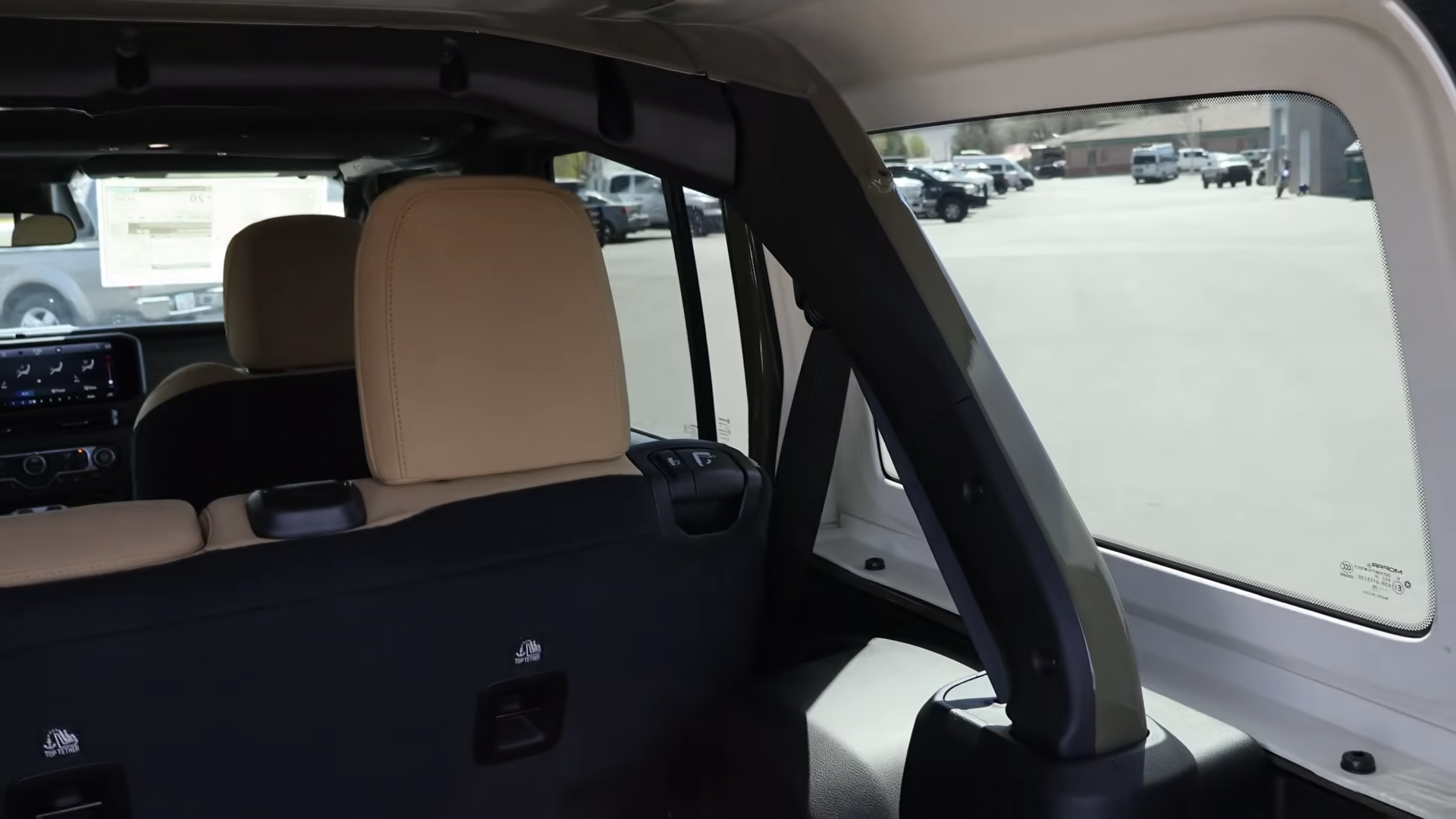
Inside the rear area, you get extra storage underneath, a 12-volt outlet, and a painted rear roll cage.
A full-size spare tire mounts to the back, and this model includes the Alpine sound system. The rear axle comes upgraded as standard, and this package also upgrades the front axle, so you get stronger axles at both ends.
Cabin Comfort and In-Car Tech
Seat Design and Interior Finishes
You get cloth seats up front with manual controls. The seats add color, so the cabin does not feel plain or all black.
Soft-touch material covers the armrests, while other areas use hard plastic. The doors include net storage, and you see clean stitching and trim around the center console and grab handle.
The steering wheel feels soft in your hands. Controls sit on the front and back, so you can manage settings without taking your hands off the wheel.
Passenger Space Front and Rear
You have solid legroom in the back seat. Headroom also feels strong, even without added roof insulation.
Rear passengers get air vents, cup holders, and a small storage pocket. Window controls sit in the center area, within easy reach.
Up front, you sit high with clear visibility. Blind spot monitoring adds extra awareness while you drive.
Premium Alpine Audio Setup
You get an Alpine sound system, which adds stronger and clearer audio. Speakers sit throughout the cabin, including overhead areas.
The infotainment screen handles media, and you also have physical buttons for quick control. This setup makes it easy to adjust volume and settings while you drive.
Rear Storage and Utility Features
The rear cargo area uses a swing gate and fold-down tailgate. You also get extra storage space under the cargo floor.
A 12-volt outlet sits in the back, which helps when you power small gear. The rear also includes a full-size spare tire mounted outside.
Inside, you have cup holders, a center console, and added net storage. Payload capacity reaches 850 pounds, so you can carry a fair amount of gear.
Heating and Climate Functions
The infotainment system includes built-in climate controls. You can also use physical buttons for faster changes.
You get heated front seats and a heated steering wheel, which help in cold weather. Rear passengers have dedicated air vents to keep airflow moving through the cabin.
Auto stop-start comes standard, and you can switch it off when you prefer.
Infotainment and Connectivity
Center Display and Media Interface
You use a central touchscreen to manage media, climate settings, and comfort features. The system includes heated seats and a heated steering wheel within the screen menu.
The display looks improved compared to older versions. Response time still feels a bit slow, but it works well for daily use.
The gauge cluster combines analog dials with a small digital screen. You can scroll through vehicle data and view drivetrain information in the center display.
Dedicated Buttons and Switchgear
You get real buttons for audio, climate control, and seat heating, which makes quick changes easy. You do not need to rely only on the screen.
You also have:
- An off-road cruise control
- A button to turn auto stop/start off
- A rear differential lock
- Off-Road Plus for added traction control
- Four auxiliary switches
The window controls sit in the center stack. The layout keeps everything within reach.
Rearview Camera Display
When you shift into reverse, the backup camera shows a clear image on the screen. The resolution looks sharp and makes parking easier.
Rear parking sensors add extra support when you back up.
Charging Ports and Power Access
You get multiple ways to power your devices:
- USB ports
- An auxiliary input area
- A 12-volt outlet up front
- Another 12-volt outlet in the rear cargo area
These options let you charge phones or power small devices while you drive.
Safety and Driver Assistance
Blind Spot Alerts
You get blind spot monitoring to help you change lanes with more confidence. The system watches the areas you cannot easily see in your mirrors.
It uses standard side mirrors up front and gives you added awareness when another vehicle moves into your blind zone.
Rear Parking Aids
You have rear parking sensors built into the back bumper. These sensors help you judge distance when you back into a space.
The system works with the backup camera, which shows a clear image on the center screen. The camera view has good resolution, so you can see what is behind you.
Together, these features help you park and maneuver in tight areas.
Crash Protection Detail
You will notice a small component mounted low at the front. It relates to impact rating requirements.
It sits below the rock rails, so it may scrape during serious off-road use. Its purpose focuses on meeting safety standards rather than improving trail performance.
Off-Road Enhancements
Reinforced Dana Axles Front and Rear
You get upgraded Dana axles on both ends with this package. The rear axle comes standard, and this setup adds the stronger front axle too.
That means both the front and rear are built to handle tougher trails. Solid axles and coil springs at each corner give you the classic Wrangler setup with better durability.
All-Terrain Tires Compared to Mud Tires
This setup runs 285/70R17 BFGoodrich KO2 all-terrain tires. They ride softer than mud-terrain tires and feel smoother on the road.
Mud tires usually grip better in deep dirt, but these all-terrains still look aggressive. Keep in mind:
- They can wear faster.
- They do not perform well in snow.
- They trade some off-road grip for better comfort.
If you drive on pavement often, you will notice the smoother ride.
Advanced Grip Features
You get a rear locking differential, which helps when one rear wheel loses traction. It sends power to both rear wheels to keep you moving.
This model also includes Off-Road Plus, an enhanced traction setting. It adjusts the system for better control in loose conditions.
You also get:
- Off-road cruise control
- Driveline info in the gauge cluster
- The ability to disable auto stop/start
These tools help you stay focused when the trail gets rough.
Auxiliary Power Controls
You have four auxiliary switches built in from the factory. That makes it easier to add lights or other accessories later.
Jeep places the switches within easy reach. You also get USB ports and a 12-volt outlet up front, plus another 12-volt outlet in the rear cargo area.
This setup saves you from messy aftermarket wiring.
Part-Time 4WD with Low Range
You control a part-time four-wheel-drive system with a two-speed transfer case. That gives you:
- 2H for normal driving
- 4H for slippery surfaces
- 4L for low-speed, high-torque situations
The system stays simple and mechanical. You shift it yourself, which gives you direct control when conditions change.
Ease of Use and Everyday Function
Remote Key and Access Tools
You get a key fob with lock, unlock, and remote start. The Jeep logo sits on the back.
Remote start helps on cold or hot days. You can start the vehicle before you step inside.
Rear Cargo Door Design
You open the rear with a side-hinged swing gate. Close the glass first, then secure the tailgate.
Inside the cargo area, you get:
- A 12‑volt outlet
- Extra storage under the floor
- A full-size spare tire mounted on the back
You also have parking sensors in the rear and upgraded tail lights. The rear bumper is plastic, not steel.
Detachable Roof Setup
You remove the hard top using a front latch system. Jeep now includes this setup without limiting it to higher trims.
The painted roll cage shows in the back. The roof panels come off so you can drive open-air when you want.
Carrying Strength and Storage
This model supports a payload of 850 pounds.
Inside, you get:
- Rear seat storage pocket
- Cargo netting
- Cup holders
- Center console storage
- USB ports and a 12‑volt outlet
You also have auxiliary switches and space for small items. The layout keeps controls and storage within easy reach.
Pricing and Value Proposition
41 Edition Package Inclusions
You pay $7,200 for the 41 special edition package.
That price adds more than just decals.
You get:
- Upgraded Dana rear axle standard, plus a matching upgraded front axle
- Unique 41 hood graphic
- Special wheel design with 285/70R17 KO2 all-terrain tires
- Steel front bumper with recovery hooks and fog lights
- Upgraded lighting, including daytime running lights and tail lamps
- Alpine audio system
- Rear differential lock
- Off-Road Plus traction system
- Four auxiliary switches
You also keep the 3.6L V6 with 285 horsepower and 260 lb-ft of torque, paired to an 8-speed automatic and a two-speed transfer case.
This package builds on the Willys trim and adds both visual upgrades and real hardware.
Full MSRP Details
The total price for this build comes to $57,770 MSRP.
Here is how it breaks down:
| Item | Price |
|---|---|
| 41 Special Edition Package | $7,200 |
| Total MSRP (as tested) | $57,770 |
You get upgraded axles front and rear, appearance changes, added off-road tools, and interior upgrades within that final price.
How It Stacks Up in the Segment
You sit right in the middle of the convertible off-road SUV market at this price.
Wrangler and Bronco each sell around 130,000 units per year, splitting a market of roughly 250,000 buyers annually.
This package follows a simple formula: add strong appearance upgrades, include useful hardware, and charge a reasonable premium.
You pay extra, but not an extreme amount, for a Wrangler that looks more distinct than a Sport and feels more special to drive.
Standing in the Off-Road SUV Segment
How It Stacks Up Against the Ford Bronco
You compete head-to-head with the Ford Bronco in the convertible off-road SUV space. About 250,000 buyers per year shop in this niche.
Sales split almost evenly. Jeep moves around 130,000 Wranglers, and Ford sells roughly 130,000 Broncos.
When you compare interiors, the Wrangler feels more solid. The plastics in the Bronco feel cheap, while the Wrangler’s materials feel better put together.
Style comes down to taste. You can like both. Still, the Wrangler feels more special when you drive it.
Sport vs. Willys vs. Rubicon
When you drive a basic Sport after this 41 package, you notice a difference in excitement. The Sport drives similar, but it does not feel as distinctive.
The standard Willys and the Rubicon both look good. This 41 package stands out more. The wheels, decals, and upgraded axles give it a stronger presence.
Key differences you feel:
- Upgraded Dana axles front and rear
- All-terrain KO2 tires instead of mud terrains
- Steel front bumper
- Special appearance details
The all-terrain tires ride softer than mud terrains. You give up some off-road grip, but you gain comfort.
Opportunity to Take Back the Top Spot
You already split the market closely with Ford. That means small changes can shift leadership.
Jeep could regain the clear lead with:
- A more powerful, widely available engine like the Hurricane six-cylinder
- Keeping the 6.4L HEMI for buyers who want maximum power
- Continuing strong appearance packages like this 41 edition
The 6.4L HEMI delivers strong performance but costs too much for many buyers. A more affordable high-output engine would attract more people.
If Jeep adds more power and keeps building trims that feel special, you could see Wrangler move ahead of Bronco again.
Owner Impressions and Recommendations
Driving Experience and Road Manners
You get a 3.6L V6 with 285 horsepower and 260 lb-ft of torque, paired to an 8-speed automatic. It feels smooth and direct. It is not perfect, but it avoids the complexity of a turbo or hybrid setup.
The all-terrain KO2 tires ride softer than the mud terrains found on some Willys models. You lose some off-road grip, and these tires can wear fast. Snow traction is not a strong point either.
On the road, it handles well for a solid front and rear axle SUV. The body-on-frame setup still feels controlled and predictable.
Impact of the Appearance Upgrades
This package stands out right away. The large hood decal, blacked-out grille, upgraded lights, and satin-finish wheels give it a stronger presence than a standard Sport.
The steel front bumper, recovery points, and upgraded axles add real hardware, not just looks. The matching wheel and body tones make it feel more complete.
You notice the difference every time you walk up to it. It feels more special than a basic trim, even if the driving feel is similar.
What stands out most:
- Satin-finish wheel design
- Steel front bumper
- Upgraded front and rear Dana axles
- Distinct exterior graphics
Changes I Would Like to See
The front steel bumper is a win. The rear bumper should match it instead of using plastic.
The infotainment system works, but response time could improve. The small plastic piece below the front end may scrape off-road since it hangs lower than the rock rails.
I also want Jeep to keep offering these appearance packages across more trims instead of limiting them.
Engine Options I Want Next
The V6 works fine, but many buyers now accept the Hurricane six-cylinder. Jeep should add it sooner rather than later.
The 6.4L V8 delivers strong power, but its price limits access. A more affordable, higher-output engine like the Hurricane could bring more buyers back.
If Jeep pairs strong styling packages like this with more power choices, you get a stronger product lineup.