

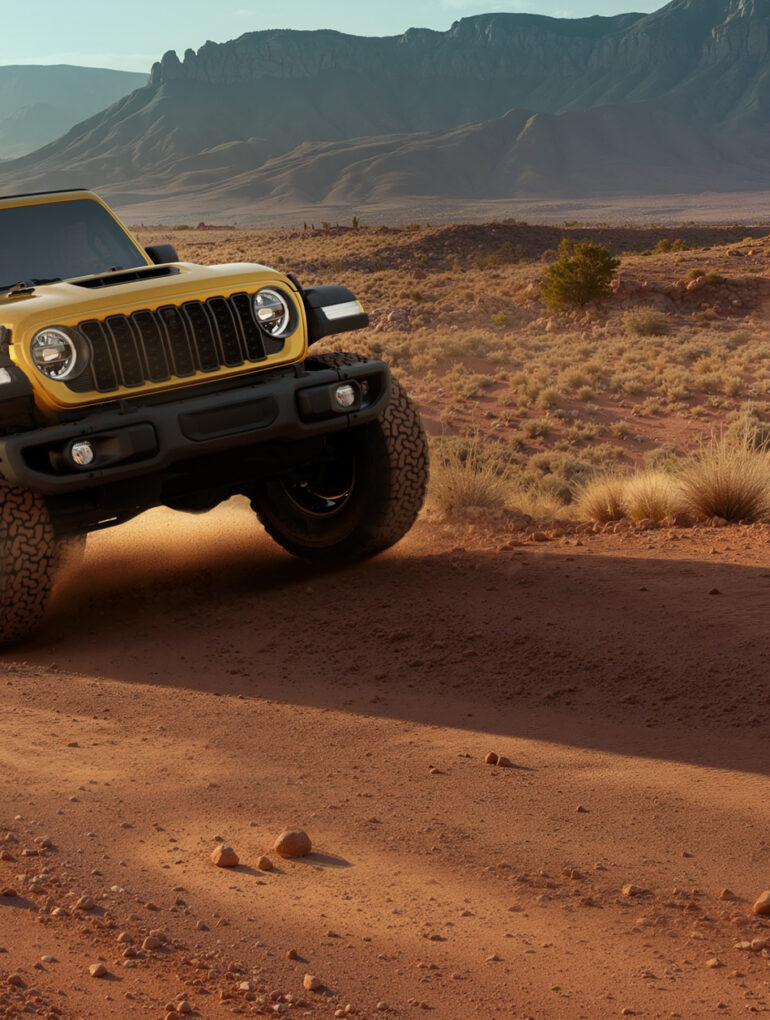
The 2026 Jeep Wrangler Willys 392 combines classic Willys styling, a 470-hp 6.4-liter HEMI V-8, serious off-road hardware, and premium equipment in a limited-edition package starting at $69,995.
Jeep is bringing V-8 performance to one of its most heritage-focused Wrangler models with the introduction of the 2026 Wrangler Willys 392. The fourth special edition in the brand’s yearlong Twelve 4 Twelve celebration, this limited-production model combines the traditional Willys formula with the performance, sound, and capability of the 6.4-liter HEMI V-8.
With 470 hp, 470 lb-ft of torque, 35-inch all-terrain tires, locking differential hardware, and heavy-duty Dana 44 axles, the Willys 392 is designed to deliver substantially more performance than its traditional appearance might suggest. It also pairs its mechanical upgrades with modern conveniences, including heated Nappa leather seats, a premium Alpine audio system, integrated navigation, and a full-time four-wheel-drive system.
The result is a Wrangler that draws directly from Jeep’s military and civilian heritage while embracing the demands of modern off-road enthusiasts who want naturally aspirated V-8 power without stepping away from the Wrangler’s recognizable character.
With a starting MSRP of $69,995 before destination charges, the Willys 392 also positions V-8 performance within a more accessible price bracket than the flagship Wrangler Rubicon 392 formula traditionally occupied.
Jeep Twelve 4 Twelve: Celebrating 85 Years of Heritage
The Wrangler Willys 392 is the fourth of 12 special-edition models planned for Jeep’s Twelve 4 Twelve initiative, a yearlong celebration of the brand’s heritage, engineering, and off-road identity. Each model is intended to highlight a different aspect of the Jeep experience, combining familiar design cues with distinctive equipment and modern capability.
The Willys name carries particular significance. Its roots reach back to the original military Jeep developed during World War II, when a compact, durable, four-wheel-drive vehicle became an essential tool for the Allied war effort. Following the war, Willys-Overland helped establish the civilian Jeep market, laying the groundwork for the rugged recreational vehicles that would eventually define the Wrangler lineage.
Over the decades, the Willys designation has come to represent a relatively straightforward interpretation of Jeep capability: functional equipment, recognizable styling, and an emphasis on practical off-road performance rather than unnecessary luxury.
The 2026 Wrangler Willys 392 preserves that identity but adds a powertrain that would have been unimaginable in the original military vehicle. Instead of a small-displacement engine designed primarily for utility, the modern Willys combines its traditional visual character with a large-displacement V-8 capable of delivering substantial low-speed torque and strong acceleration.
Jeep CEO Bob Broderdorf said the model responds directly to enthusiasts who want a return to a more classic, back-to-basics Wrangler formula while retaining the unmistakable performance of a V-8. He also positioned the vehicle as part of the brand’s broader effort to expand V-8 availability across the Wrangler lineup.
That combination of heritage styling, mechanical simplicity in spirit, and contemporary performance defines the Willys 392’s central appeal.
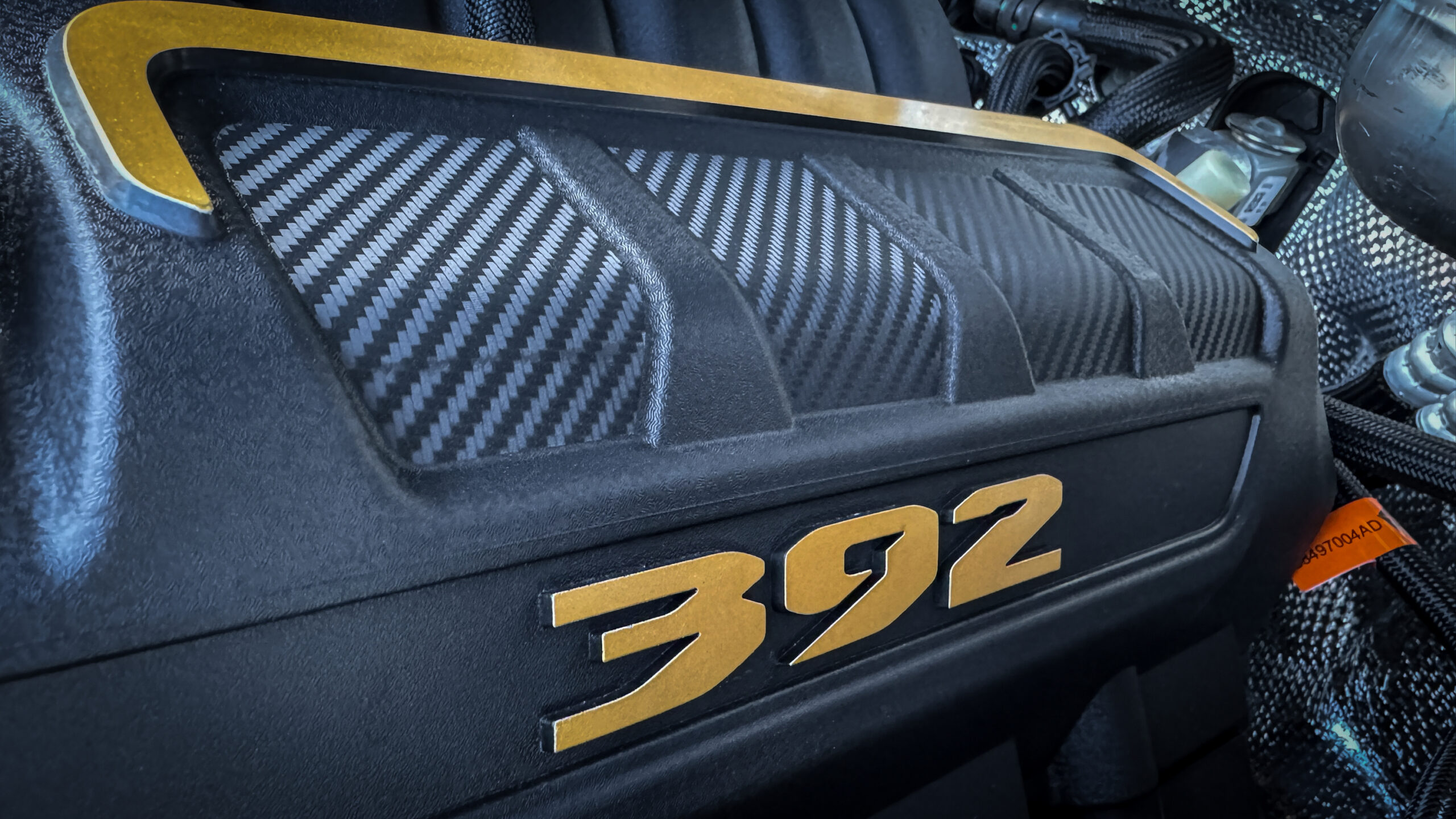
The 6.4-Liter HEMI V-8: 470 hp of American Muscle
The defining feature of the 2026 Wrangler Willys 392 is its 6.4-liter HEMI V-8. Producing 470 hp and 470 lb-ft of torque, the engine gives the heritage-focused Wrangler a substantially different character from four-cylinder and V-6-powered models.
Its large displacement and naturally aspirated configuration provide a direct connection between throttle input and engine response, while the broad torque output is useful in both everyday driving and demanding off-road conditions.
On the highway, the V-8’s output gives the Wrangler considerable passing power. On loose surfaces, steep inclines, and technical trails, its torque provides the potential for controlled progress when the driver needs to maintain momentum or climb over difficult terrain.
The engine’s appeal is not purely numerical, either. A HEMI V-8 brings a distinctive exhaust character and a traditional American performance-car personality to a vehicle whose design remains rooted in Jeep’s utility heritage.
Two-mode dual exhaust
Jeep equips the Willys 392 with a two-mode dual exhaust system that allows drivers to select between a more subdued sound and a louder, performance-oriented exhaust note.
This feature gives the vehicle some flexibility in how it presents its V-8 character. A quieter setting is appropriate when cruising through residential areas or spending time on the highway, while the more aggressive setting emphasizes the engine’s sound during spirited driving.
The exhaust system reinforces the model’s broader identity: a practical off-road vehicle with the soundtrack and performance credentials of a traditional V-8-powered machine.
Powertrain specifications
| Specification | 2026 Wrangler Willys 392 |
|---|---|
| Engine | 6.4-liter HEMI V-8 |
| Horsepower | 470 hp |
| Torque | 470 lb-ft |
| Exhaust | Two-mode dual exhaust |
| Four-wheel-drive system | Selec-Trac full-time transfer case |
| Axle ratio | 4.56:1 |
| Rear differential | Tru-Lok electronic locking differential |
Off-Road Engineering: Built for More Than Straight-Line Speed
Although the HEMI V-8 is the Willys 392’s headline feature, its off-road hardware is equally important. The vehicle combines large all-terrain tires, locking differential capability, a full-time four-wheel-drive transfer case, heavy-duty axles, and protective bodywork to support its performance away from paved roads.
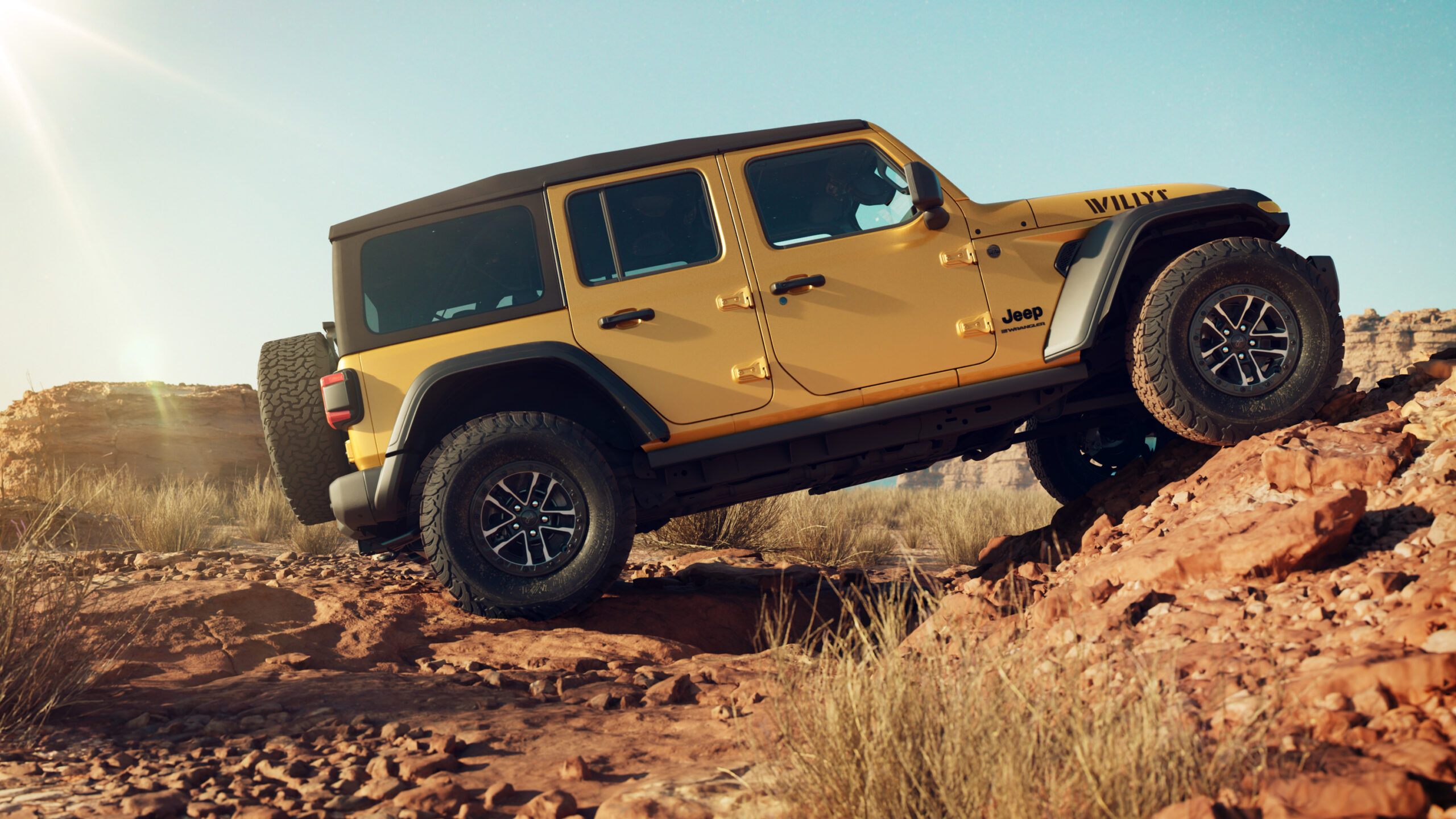
These components address different aspects of off-road driving. Tires influence traction, axle gearing helps determine how effectively engine torque reaches the ground, differential locks improve wheel-to-wheel torque distribution, and underbody protection reduces the risk of damage when navigating obstacles.
Together, they give the Willys 392 a specification that extends beyond its visual connection to Jeep’s past.
35-inch BFGoodrich KO2 tires
The Willys 392 comes standard with 35-inch BFGoodrich KO2 all-terrain tires mounted on 17-inch beadlock-capable wheels.
The larger tire diameter increases the distance between the ground and certain underbody components, helping the Wrangler negotiate rocks, ruts, and uneven terrain. The KO2’s all-terrain design also targets the varied surfaces encountered by drivers who travel between pavement, gravel, dirt, and rocky trails.
The accompanying 17-inch wheels are beadlock-capable, meaning their design can accommodate beadlock hardware. This is not the same as confirming that functional beadlock rings are installed as standard equipment.
Jeep lists 11.1 inches of ground clearance for the vehicle. That figure provides useful context for its intended terrain, although ground clearance alone does not determine overall obstacle-crossing ability. Approach, departure, and breakover angles, wheel articulation, tire contact, and driver technique remain important factors.
Tru-Lok electronic locking rear differential
A standard Tru-Lok electronic locking rear differential helps the Willys 392 maintain traction when one rear wheel encounters a surface with significantly less grip than the other.
In a conventional open differential, a wheel with limited traction can restrict the amount of useful torque delivered to the ground. Locking the differential mechanically couples the two rear wheels, helping maintain drive when the terrain becomes uneven or slippery.
This is particularly valuable when climbing rocky sections, crossing ruts, or negotiating uneven trails where individual wheels may lose contact or traction.
A locking differential is not a substitute for appropriate throttle control or careful line selection, but it gives the driver another tool for managing difficult terrain.
Selec-Trac full-time four-wheel drive
The Selec-Trac full-time transfer case adds another layer of versatility. Unlike a system that requires the driver to engage four-wheel drive only when conditions demand it, a full-time configuration is designed to accommodate changing traction conditions while remaining suitable for regular road use.
That versatility matters for a Wrangler that may spend weekdays on pavement and weekends on trails. The system helps bridge the gap between everyday drivability and off-road capability, although drivers must still select the appropriate operating mode for the surface and conditions.
Third-generation Dana 44 axles
Jeep specifies third-generation Dana 44 heavy-duty solid front and full-float rear axles for the Willys 392.
Solid axles are a longstanding feature of the Wrangler’s off-road architecture. Their design supports suspension articulation and helps maintain tire contact across uneven surfaces, important characteristics when crawling over rocks or crossing deeply rutted terrain.
The full-float rear axle configuration is also relevant to a vehicle expected to handle substantial loads and demanding off-road use. In a full-floating arrangement, the axle shafts transmit driving torque while the wheel hubs and associated hardware support the vehicle’s weight, a design that offers advantages in durability and serviceability under heavy-duty conditions.
The 4.56:1 axle ratio complements the V-8 by providing relatively short gearing at the axles. Numerically higher axle gearing increases torque multiplication at the wheels and can help the vehicle manage large tires and low-speed obstacles. The trade-off is that engine speed may be higher at a given road speed than it would be with taller gearing.
For the Willys 392, this gearing choice supports the combination of large tires, substantial engine output, and low-speed off-road control.
Protection and Recovery Equipment
A powerful engine is only part of a capable off-road package. Drivers who venture into remote areas also need protection against trail damage and equipment that can assist when the vehicle becomes immobilized.
The Wrangler Willys 392 includes several features intended to address those requirements.
Rock rails
Standard rock rails help protect the lower sides of the vehicle from contact with rocks and other obstacles. They are particularly useful when traversing narrow trails, where the Wrangler’s body sides may pass close to uneven terrain.
Although rock rails offer additional protection, they do not make the vehicle immune to damage. Drivers still need to account for wheel placement, body width, and the position of vulnerable components when negotiating tight obstacles.
Steel front and rear bumpers
The front bumper is constructed from steel and is designed to be winch-capable, while the rear bumper is also steel.
A winch-capable bumper provides a foundation for compatible recovery equipment, giving owners the potential to configure the vehicle for more demanding trail use. The announcement does not establish that a winch itself is included as standard equipment.
Steel bumpers also offer a different approach to trail protection than lightweight cosmetic alternatives, although their actual recovery capability depends on the design, installation, and rating of the equipment being used.
Cold-air intake hood with water separator
The Willys 392 features a cold-air intake hood incorporating a water separator.
This design is intended to help manage water and debris exposure around the engine’s intake system in conditions that can challenge a conventional road-going vehicle. It is a useful addition for a Wrangler expected to encounter dust, mud, splashes, and other environmental hazards.
However, the presence of a water separator should not be interpreted as unlimited protection against water ingestion. Safe water crossings still depend on the vehicle’s specified limits, crossing technique, water depth, current, and the condition of the intake and electrical systems.
Exterior Design: Classic Willys Character With Modern Details
The Willys 392’s exterior avoids abandoning the model’s historical identity in favor of an entirely new visual treatment. Instead, Jeep combines familiar Willys graphics with contemporary lighting and functional off-road equipment.
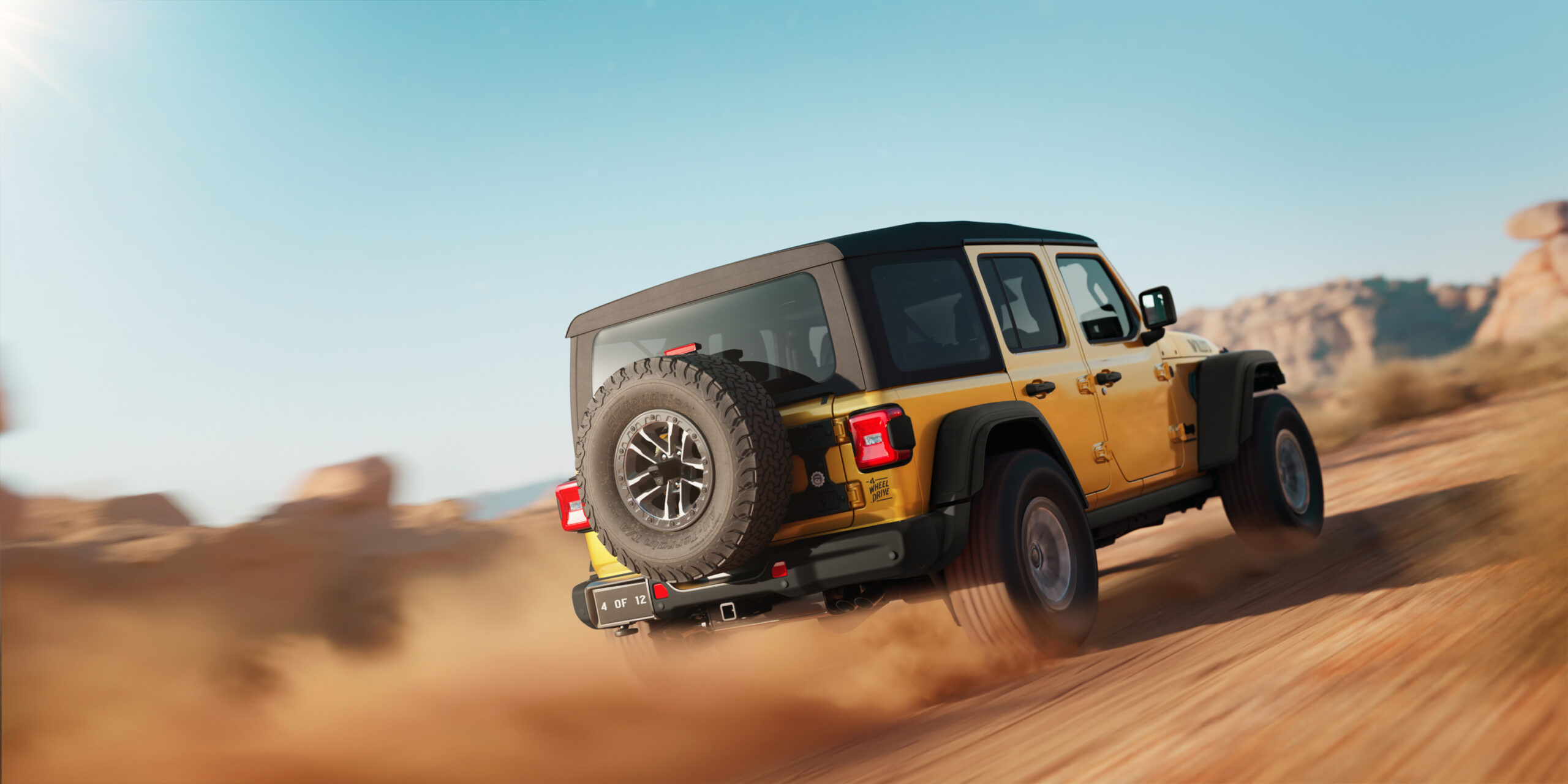
Standard Willys hood decals and heritage 4WD graphics on the rear distinguish the vehicle from other Wrangler variants. These elements reinforce the connection to the Willys name without requiring the body to imitate an earlier generation of Jeep.
LED exterior lighting adds modern functionality while retaining the Wrangler’s familiar overall design. The large tires, beadlock-capable wheels, steel bumpers, and rock rails further communicate that this is an off-road-focused vehicle rather than a styling package alone.
The result is a deliberate contrast between the Willys’ relatively understated heritage-inspired appearance and the substantial engine beneath the hood.
Goldilocks: A new heritage-inspired color
Jeep plans to introduce Goldilocks, a new exterior color, to the Willys 392 palette in March.
The rich, heritage-inspired finish provides an additional way to distinguish the special edition from more conventional Wrangler configurations. Its arrival also fits the broader theme of the Twelve 4 Twelve program, which uses distinctive model treatments to celebrate Jeep’s history while giving each edition its own identity.
Availability and exact color specifications should be confirmed through Jeep’s ordering materials when the relevant model-year configuration is released.
Interior: Willys Heritage Meets Premium Comfort
While the exterior emphasizes utility, the cabin of the 2026 Wrangler Willys 392 incorporates several premium features intended to make the vehicle more comfortable during daily driving and longer trips.
Heated, power-adjustable Nappa leather seats
The front seats feature Nappa leather upholstery, heating, and power adjustment.
These appointments elevate the cabin beyond the traditional back-to-basics interpretation associated with the Willys name. Heated seats can be useful during cold-weather driving, while power adjustment makes it easier to tailor the driving position to individual preferences.
The inclusion of premium leather also reflects the Willys 392’s dual purpose: it is intended to deliver serious off-road capability without requiring owners to sacrifice modern comfort.
Alpine premium audio system
A standard Alpine nine-speaker premium audio system includes a subwoofer and a 552-watt amplifier.
The dedicated subwoofer provides low-frequency support, while the amplifier supplies power to the system’s speakers. The result is a more substantial audio setup than a basic factory radio, particularly useful in a vehicle that may be driven with the roof and doors removed or in environments where wind and road noise can become significant.
Actual sound quality will depend on listening conditions, vehicle configuration, and whether the Wrangler is being driven with its open-air components installed or removed.
12.3-inch touchscreen with navigation
The Willys 392 features a 12.3-inch touchscreen radio with integrated navigation.
The large display provides a central interface for infotainment and navigation functions, helping the driver access route information and vehicle media without relying entirely on a separate phone-mounted system.
Integrated navigation is particularly relevant to an off-road-oriented vehicle, although owners should not assume that every trail is mapped or that the factory navigation system replaces dedicated topographic maps, offline navigation tools, or responsible trip planning in remote areas.
Four programmable auxiliary switches
Four programmable auxiliary switches are included as standard equipment.
These switches provide a convenient control interface for compatible accessories, potentially including auxiliary lighting and other owner-installed electrical equipment. The actual accessories supported depend on their electrical requirements, installation, and compatibility with the vehicle.
For enthusiasts who personalize their Wranglers, factory-integrated auxiliary controls can simplify the installation of additional equipment and help reduce the need for separate aftermarket switch panels.
Trailer Tow Package
Jeep also includes the Trailer Tow Package as standard equipment.
This broadens the Willys 392’s utility beyond trail driving, allowing owners to consider towing applications within the vehicle’s approved limits. The supplied announcement does not specify the model’s maximum towing capacity, so buyers should consult the official specifications and owner’s documentation before selecting a trailer.
Pricing and Availability
Jeep announced a starting MSRP of $69,995 for the 2026 Wrangler Willys 392, excluding a $1,995 destination charge.
| Pricing detail | Amount |
|---|---|
| Starting MSRP | $69,995 |
| Destination charge | $1,995 |
| Starting price including destination | $71,990 |
The $71,990 figure represents the advertised starting price with destination included, before applicable taxes, registration, dealer fees, optional equipment, or other charges.
Orders were announced as opening in March, alongside the planned introduction of the Goldilocks exterior color. Prospective buyers should confirm current ordering status, production availability, dealer allocation, and final pricing with an authorized Jeep retailer.
Because this is a limited-edition model, actual availability may vary by market and dealership. The announcement does not establish a definitive production quantity, so the vehicle should not be assigned a specific build limit without further confirmation from Jeep.