

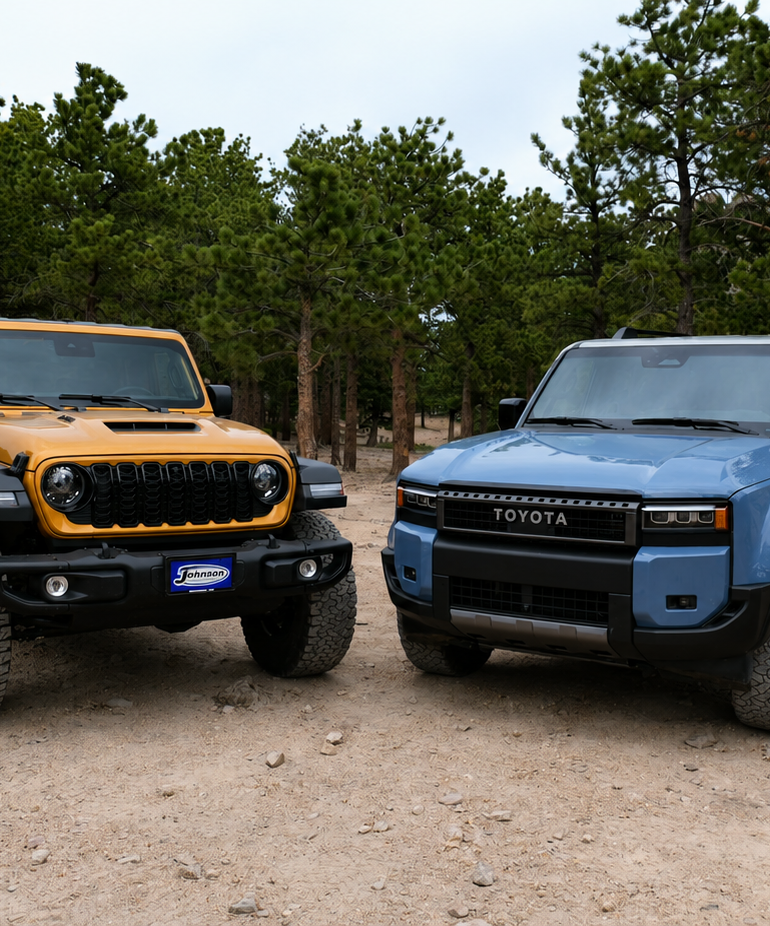
When it comes to factory-built off-road SUVs, few names command as much respect as the 2025 Toyota Land Cruiser and the Jeep Wrangler 392. Although both occupy a similar $75,000 price bracket, they approach extreme terrain with fundamentally different engineering philosophies. In a recent TFLoffroad comparison, both SUVs were subjected to demanding rock-crawling obstacles designed to expose their strengths and weaknesses in suspension articulation, ground clearance, traction management, and overall trail performance.
Two Different Approaches to Off-Road Performance
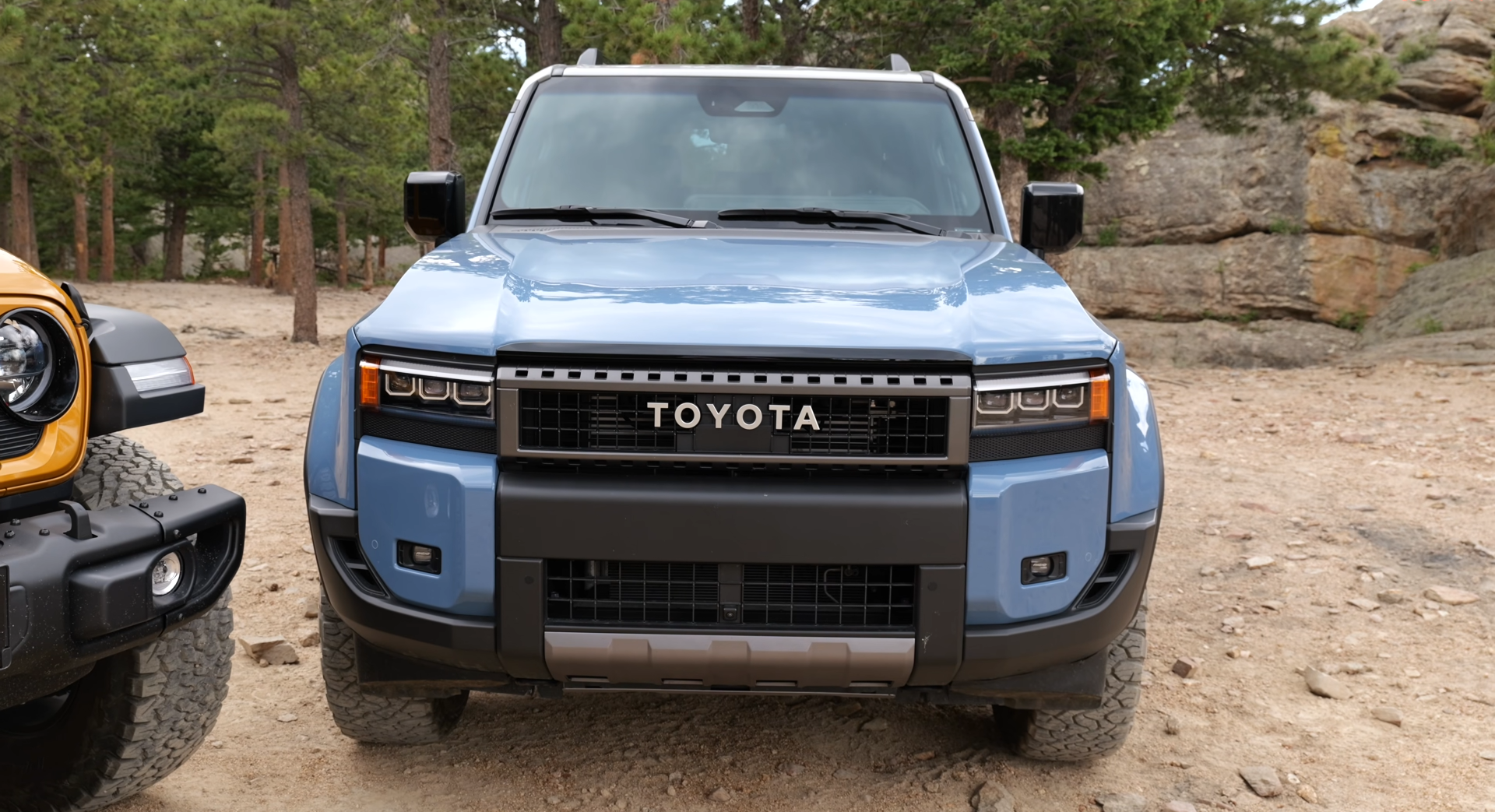
Toyota has positioned the latest Land Cruiser as a refined adventure SUV that balances everyday usability with legitimate off-road capability. Equipped with a hybrid powertrain, full-time four-wheel drive, front and center locking differentials, Crawl Control, and Toyota’s Multi-Terrain Select system, the Land Cruiser emphasizes electronic precision over brute force.
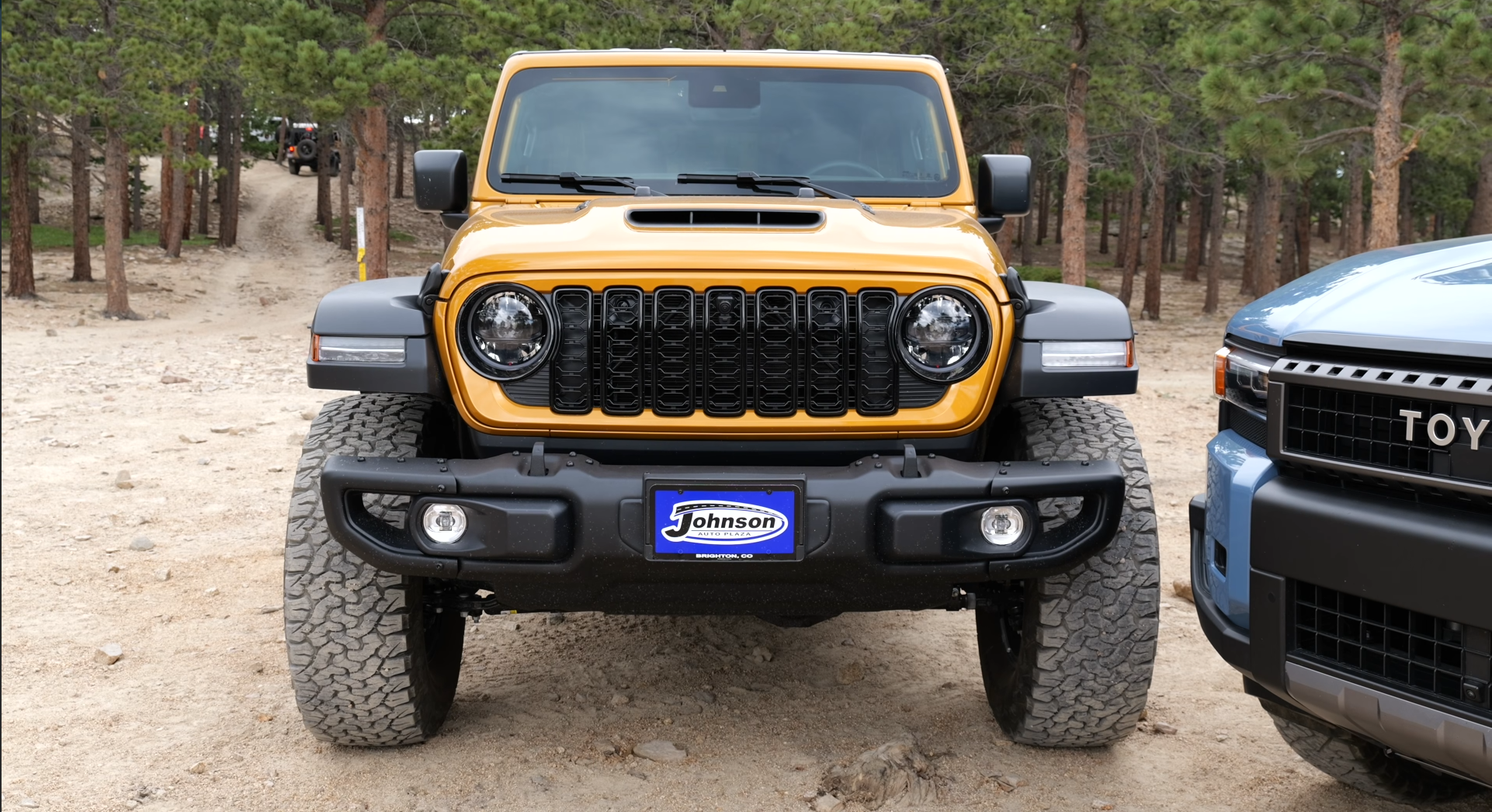
The Jeep Wrangler 392, meanwhile, represents the opposite philosophy. Powered by a naturally aspirated 6.4-liter HEMI V8, the Wrangler combines massive low-end torque with solid front and rear axles, factory 35-inch BFGoodrich KO2 tires, and exceptional suspension articulation. While the tested Willys-based 392 lacked both a front locking differential and an electronic sway bar disconnect, it still showcased the Wrangler’s legendary trail credentials.
Rock Crawling Highlights
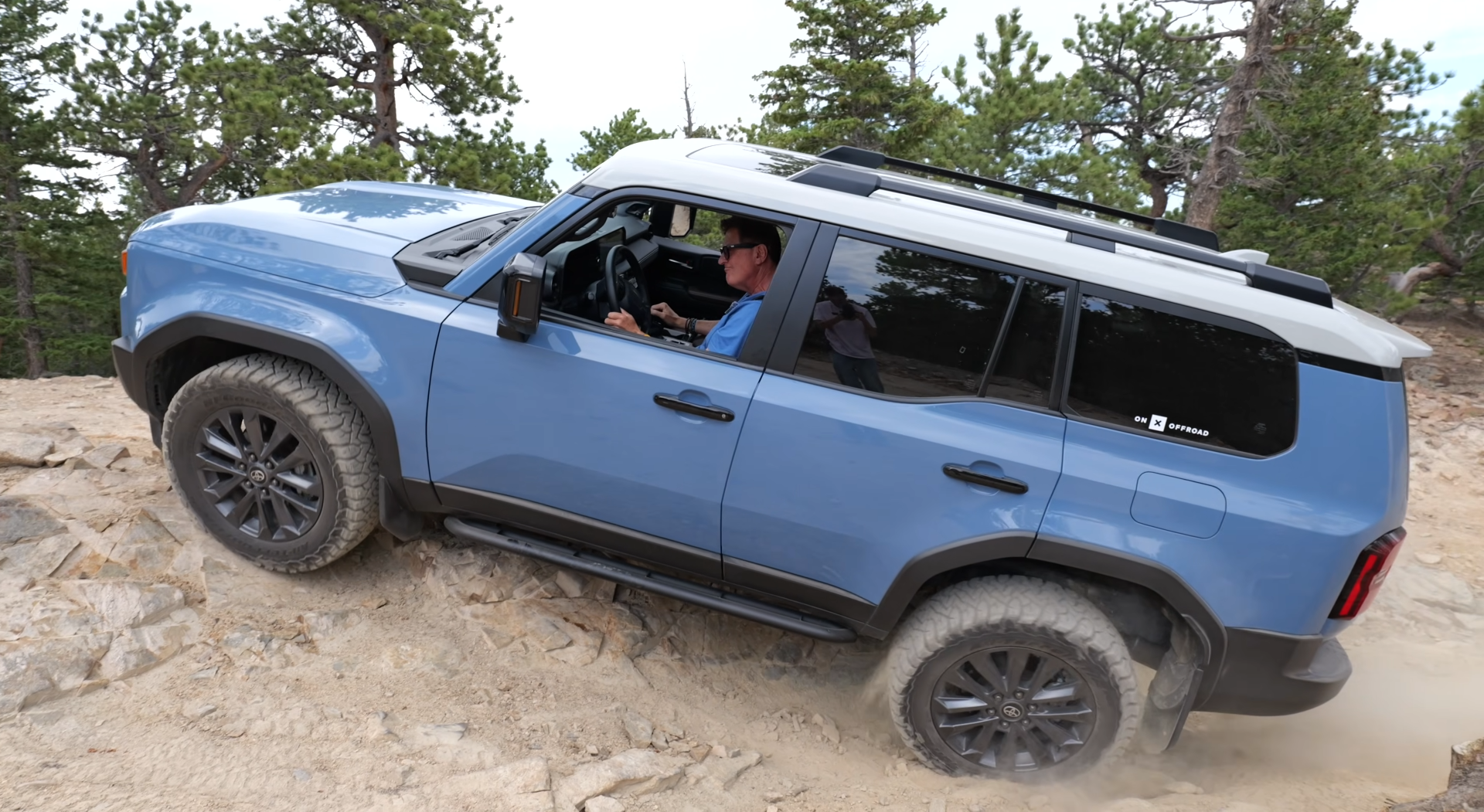
The first major challenge involved navigating TFLoffroad’s notorious Razor Rocks obstacle, a technical section requiring excellent wheel articulation, traction control, and underbody protection.
Despite relying heavily on electronic traction systems rather than mechanical articulation, the Land Cruiser successfully climbed the obstacle. Toyota’s traction management intelligently transferred power to wheels with available grip, allowing the SUV to maintain forward momentum even when suspension travel became limited. Although the vehicle occasionally scraped its skid plates and exhibited reduced breakover clearance, its upgraded rock rails and skid plates prevented any significant damage.
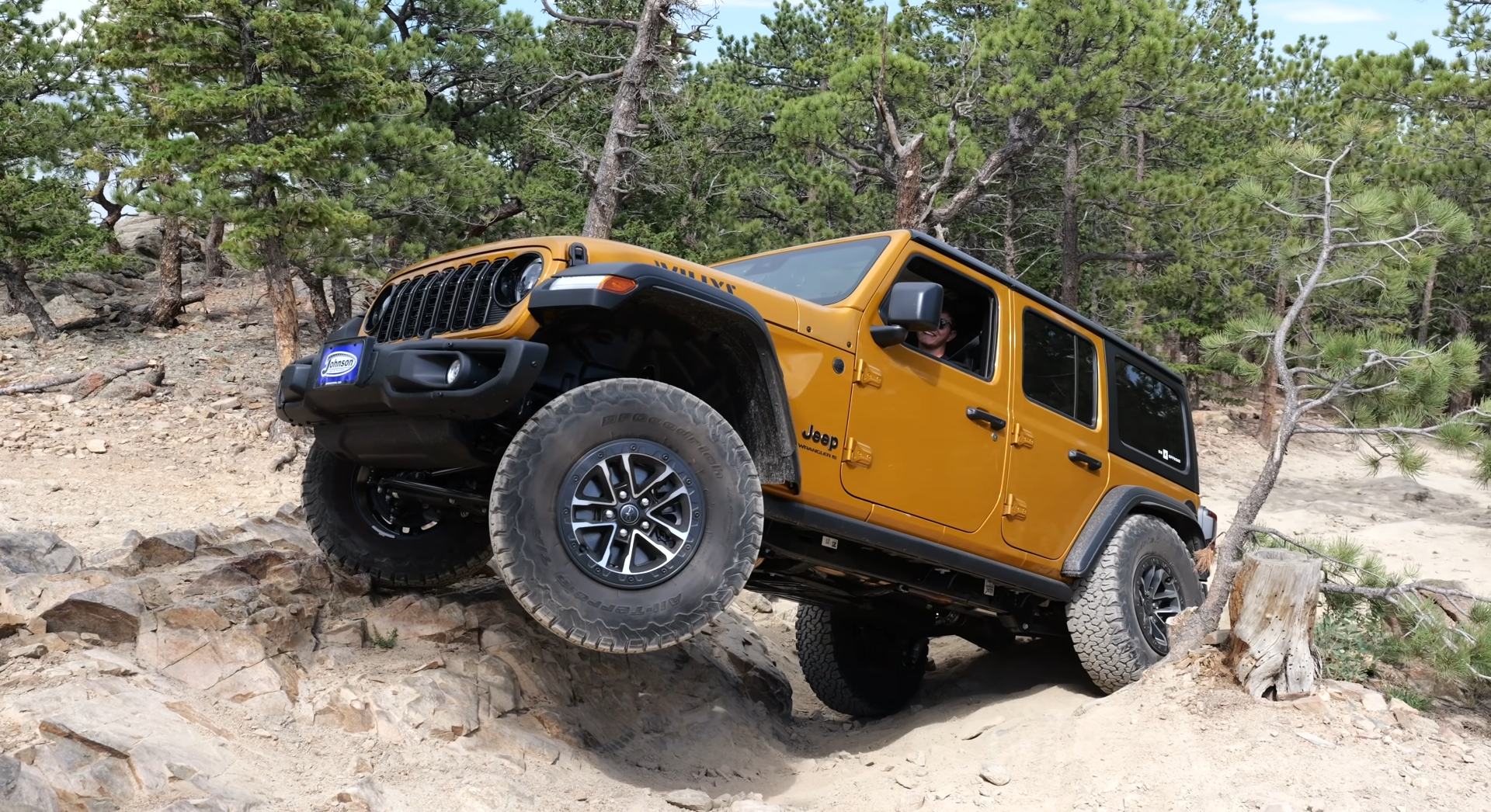
The Wrangler 392 tackled the same obstacle with noticeably greater confidence. Its solid axle suspension and taller ride height allowed the Jeep to maintain superior wheel contact over uneven terrain. Even without a front locker, the Wrangler demonstrated impressive stability while lifting wheels high into the air, highlighting the inherent advantage of its suspension geometry during slow-speed rock crawling.
Ground Clearance and Suspension Advantage
Ground clearance proved to be one of the largest differentiators. The Land Cruiser offers approximately 8.3 inches of clearance, which is respectable for a modern SUV but ultimately limits its ability to clear larger obstacles. Independent front suspension contributes to excellent ride quality but sacrifices articulation during extreme off-road situations.
By comparison, the Wrangler 392 delivers nearly 12.9 inches of ground clearance along with a remarkable 47-degree approach angle. Combined with factory 35-inch tires and a solid front axle, the Jeep comfortably handled more aggressive lines and significantly outperformed the Toyota during breakover tests.
Technology vs. Mechanical Capability
Toyota’s biggest strength lies in its sophisticated electronics. Multi-Terrain Select, Crawl Control, and carefully calibrated traction control systems compensate remarkably well for the lack of extensive suspension travel. Once properly configured, the system consistently found traction and minimized wheelspin.
The Jeep, however, depends far less on electronic intervention. Mechanical grip, axle articulation, and abundant V8 torque allow it to crawl over obstacles with minimal drama. Although additional features like a sway bar disconnect would further improve performance, the Wrangler remained exceptionally capable in factory form.
On-Road Comfort Matters
While the Wrangler dominated the most technical sections of the trail, the Land Cruiser excelled once comfort entered the conversation. Its independent suspension delivers a smoother ride both on rough trails and paved roads, making it a far more comfortable daily driver. Cabin refinement, driving ergonomics, and overall ride quality significantly surpass the Jeep’s more rugged and utilitarian character.
The Wrangler counters with an emotional driving experience few SUVs can replicate. The unmistakable soundtrack of its 6.4-liter V8 transforms every drive into an event, even if it comes at the expense of comfort, fuel economy, and interior refinement.
Final Verdict
The TFLoffroad comparison ultimately illustrates that neither SUV is objectively better—they simply prioritize different types of adventure. Drivers seeking maximum off-road capability, exceptional articulation, superior ground clearance, and the excitement of a naturally aspirated V8 will find the Jeep Wrangler 392 to be one of the most capable factory-built rock crawlers available today.
Meanwhile, the 2025 Toyota Land Cruiser offers an outstanding blend of modern technology, everyday comfort, and genuine off-road competence. While it cannot quite match the Wrangler’s extreme rock-crawling prowess, its advanced traction systems and refined driving dynamics make it an excellent choice for enthusiasts who want a highly capable adventure vehicle that remains comfortable and practical for everyday use.
Source: TFLoffroad