
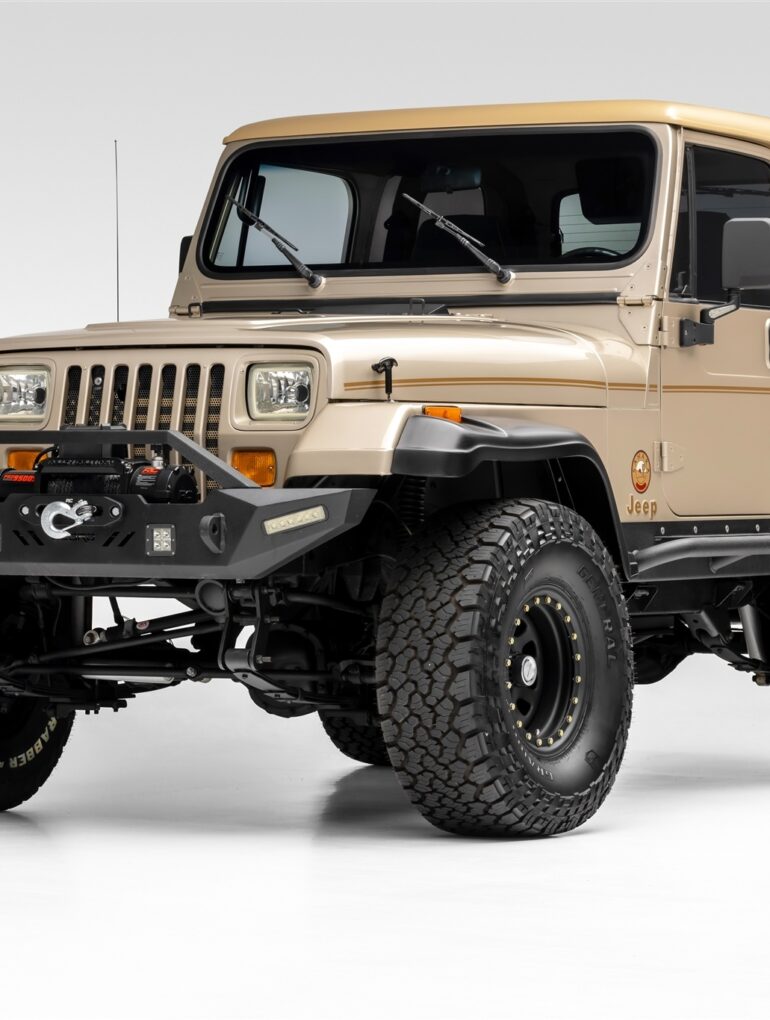
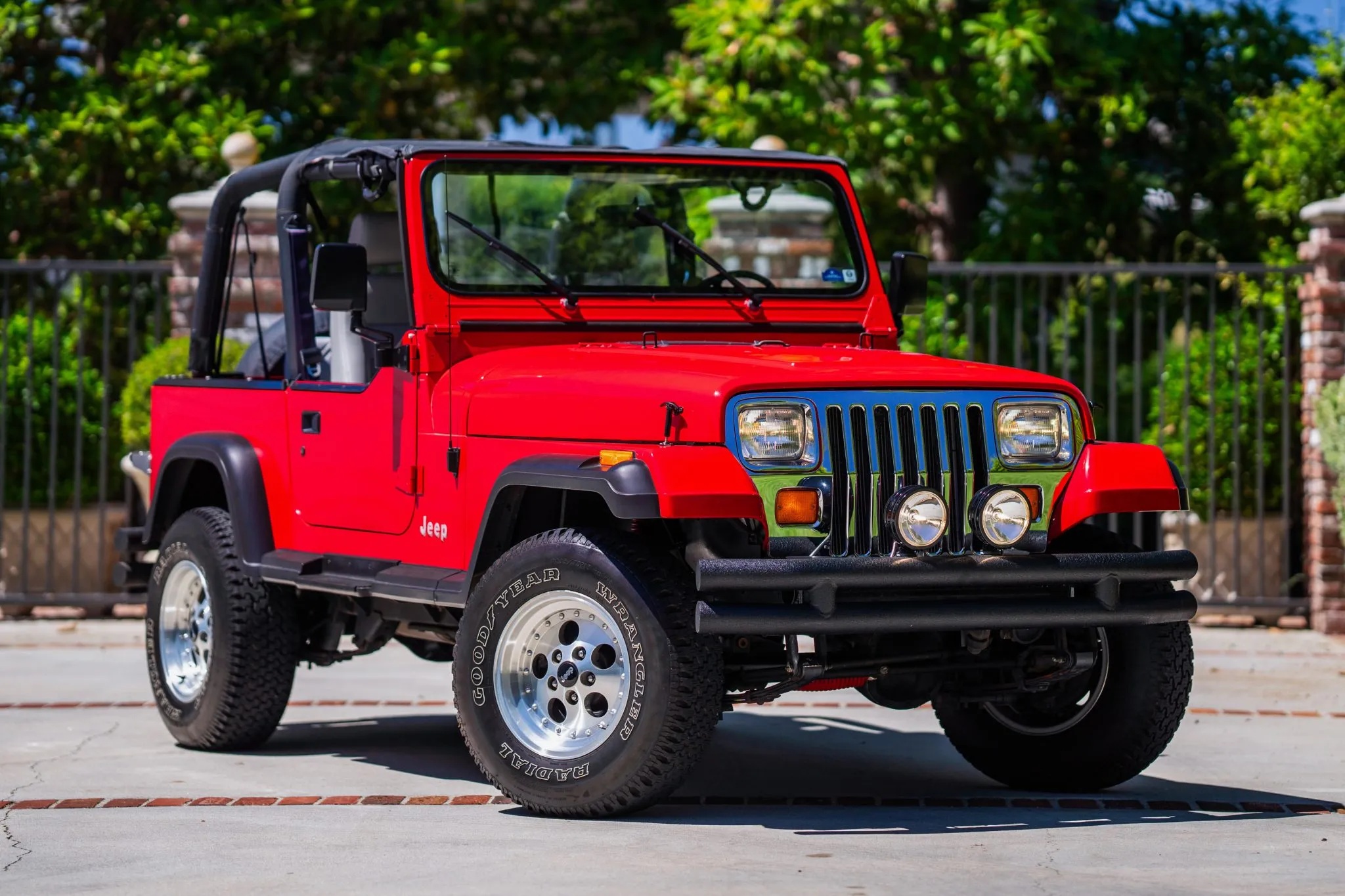
For years, the Jeep Wrangler YJ has occupied an unusual position in the brand’s history. Often mocked for its rectangular headlights and nicknamed the “Yuppie Jeep,” the first-generation Wrangler was initially viewed by enthusiasts as an awkward departure from the traditional CJ series. However, a closer examination reveals that the YJ represented an important turning point for Jeep, combining the rugged mechanical foundations of its predecessor with meaningful improvements in stability, comfort, and everyday usability.
In a recent feature, TFLclassics explores the engineering decisions, marketing strategy, and historical circumstances behind the Wrangler YJ, explaining why the once-overlooked model is attracting renewed attention in the classic SUV market. Produced from 1987 through 1995, the YJ helped establish the modern Wrangler identity while retaining much of the mechanical simplicity that made earlier Jeeps popular.
From the Civilian Jeep to the Wrangler YJ
The Wrangler’s origins can be traced to the civilian Jeep CJ, which evolved from the military vehicles developed during World War II. Early models such as the CJ-2A were primarily designed as practical utility vehicles for agricultural work, construction, and transportation across difficult terrain.
Over subsequent decades, the CJ gradually developed into a lifestyle vehicle. Models such as the CJ-5 and CJ-7 introduced greater comfort, more appealing styling, additional equipment, and increasingly powerful engine options. By the 1980s, however, the traditional CJ platform was facing growing challenges.
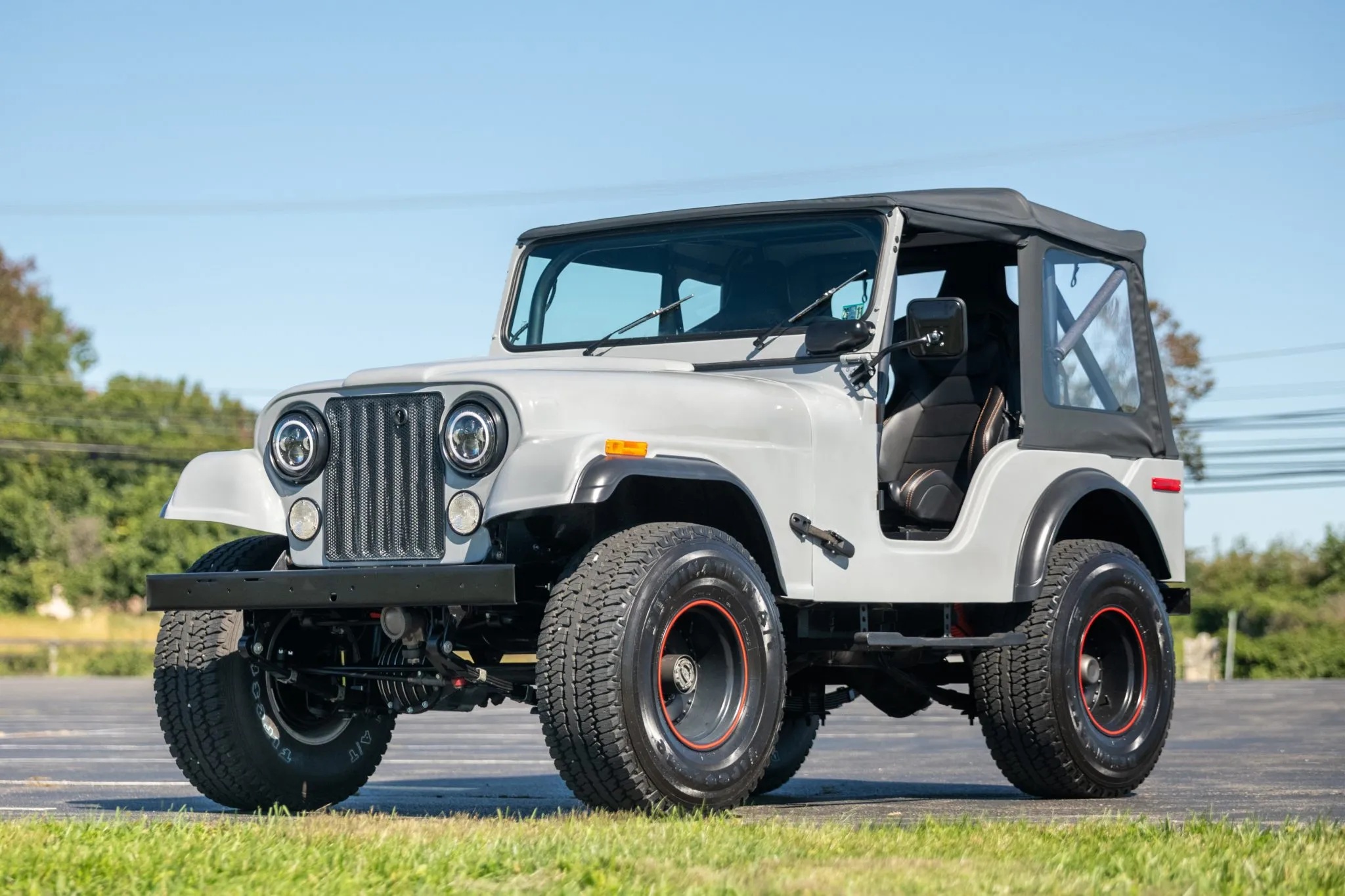
One of the most significant issues involved rollover safety. In 1980, a 60 Minutes investigation highlighted the rollover characteristics of the CJ-5, drawing attention to concerns also documented in research by the Insurance Institute for Highway Safety (IIHS). The controversy damaged Jeep’s reputation and contributed to mounting legal and financial pressure on American Motors Corporation (AMC), which owned the brand at the time.
The CJ’s original design had been developed primarily as a compact off-road utility vehicle, but customers were increasingly using it on public roads and highways. Jeep needed a successor that could preserve the vehicle’s distinctive character while offering improved road manners and greater everyday practicality.
The result was the Wrangler YJ, introduced for the 1987 model year.
Why Jeep Introduced Rectangular Headlights
The YJ’s most controversial styling feature was undoubtedly its rectangular headlights. For traditional Jeep enthusiasts, replacing the familiar round headlights was almost sacrilegious.
However, the decision was not simply an engineering experiment. According to the TFLclassics discussion, Jeep’s approach was heavily influenced by marketing considerations, particularly the desire to communicate a more modern and stable-looking vehicle.
The Wrangler also received substantial structural and suspension changes. Compared with the outgoing CJ, the YJ sat approximately half an inch lower and featured a track width roughly three inches wider. Its redesigned frame accommodated longer leaf springs, while front and rear track bars helped control axle movement.
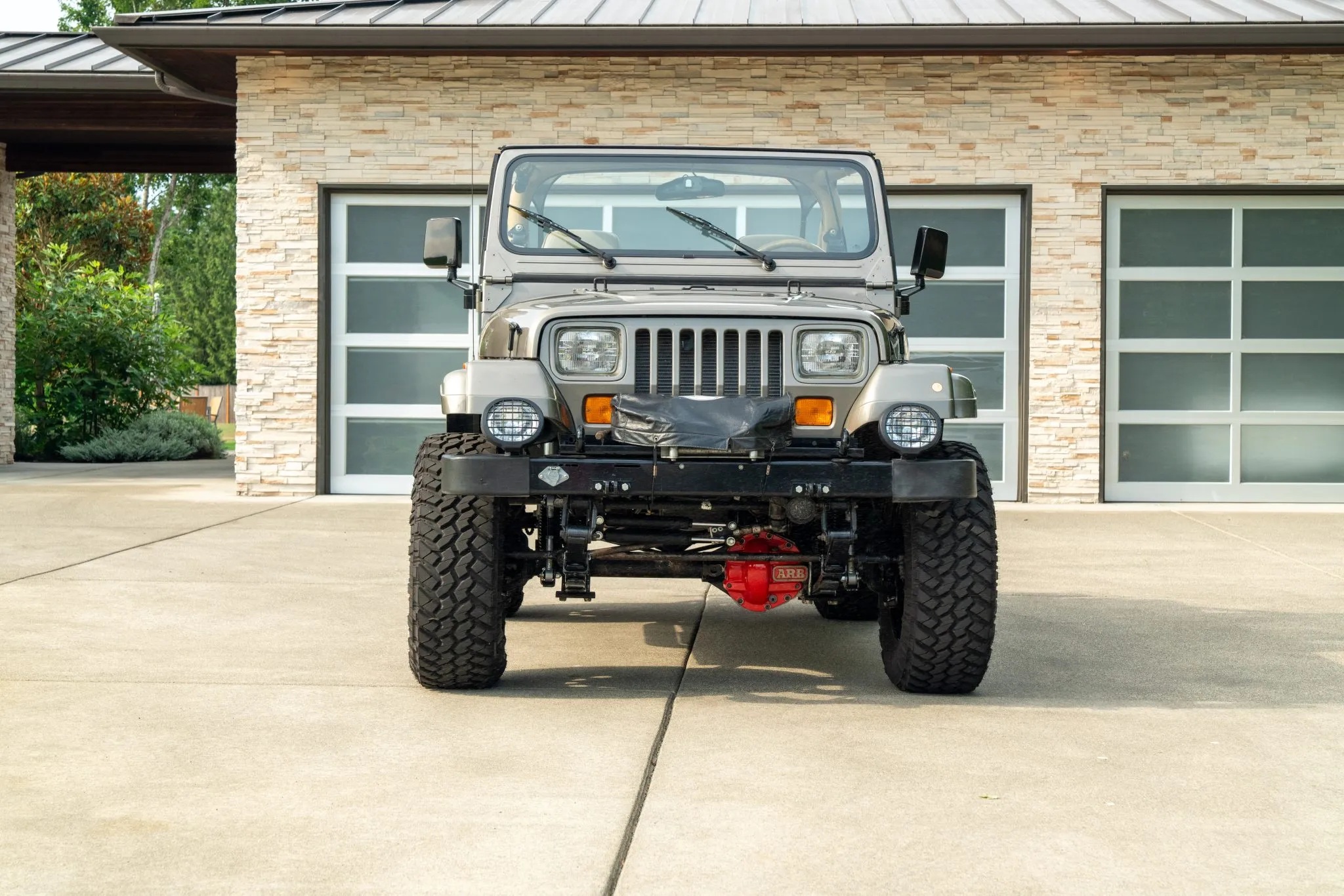
These modifications contributed to a lower center of gravity and improved on-road stability.
Other changes included a side-hinged rear tailgate replacing the traditional drop-down design, a molded dashboard with a more comprehensive instrument layout, and a stronger sport bar. Jeep also expanded the model range with distinctive versions such as the Laredo, Islander, Sahara, and Renegade, giving customers more opportunities to personalize their vehicles.
Despite these improvements, the YJ retained considerable mechanical and structural similarities to the CJ-7. Many body components, including the doors and windshield frame, remained interchangeable, reinforcing the vehicle’s connection to its predecessor.
The 1991 Model Year: The Most Important YJ Upgrade
While the Wrangler YJ debuted with familiar engines and relatively traditional mechanical technology, the 1991 model year brought one of the most important developments in its history.
Jeep introduced the fuel-injected 4.0-liter inline-six engine, replacing the earlier carbureted 4.2-liter unit in six-cylinder models. The new engine delivered approximately 190 horsepower and 220 lb-ft of torque, representing a substantial improvement in performance, throttle response, and everyday drivability.
Fuel injection also eliminated many of the tuning and starting complications associated with older carbureted engines.
The 1991 model is particularly desirable among enthusiasts because it combines this more sophisticated powertrain with the earlier-style sport bar, which was replaced by a redesigned family-style roll bar for subsequent models.
Transmission selection is another important consideration. Six-cylinder examples equipped with the AX-15 five-speed manual transmission are especially attractive because of the gearbox’s reputation for durability and its ability to complement the 4.0-liter engine’s strong low-speed torque.
Four-cylinder models remain suitable for lighter-duty applications, but buyers planning regular highway driving will generally benefit from choosing the six-cylinder.
Jurassic Park and Clueless Helped Make the YJ Famous
The Wrangler YJ’s commercial success was not driven exclusively by its engineering improvements. Popular culture also played an important role in establishing its identity.
Two particularly memorable appearances helped introduce the model to very different audiences: Jurassic Park and Clueless.
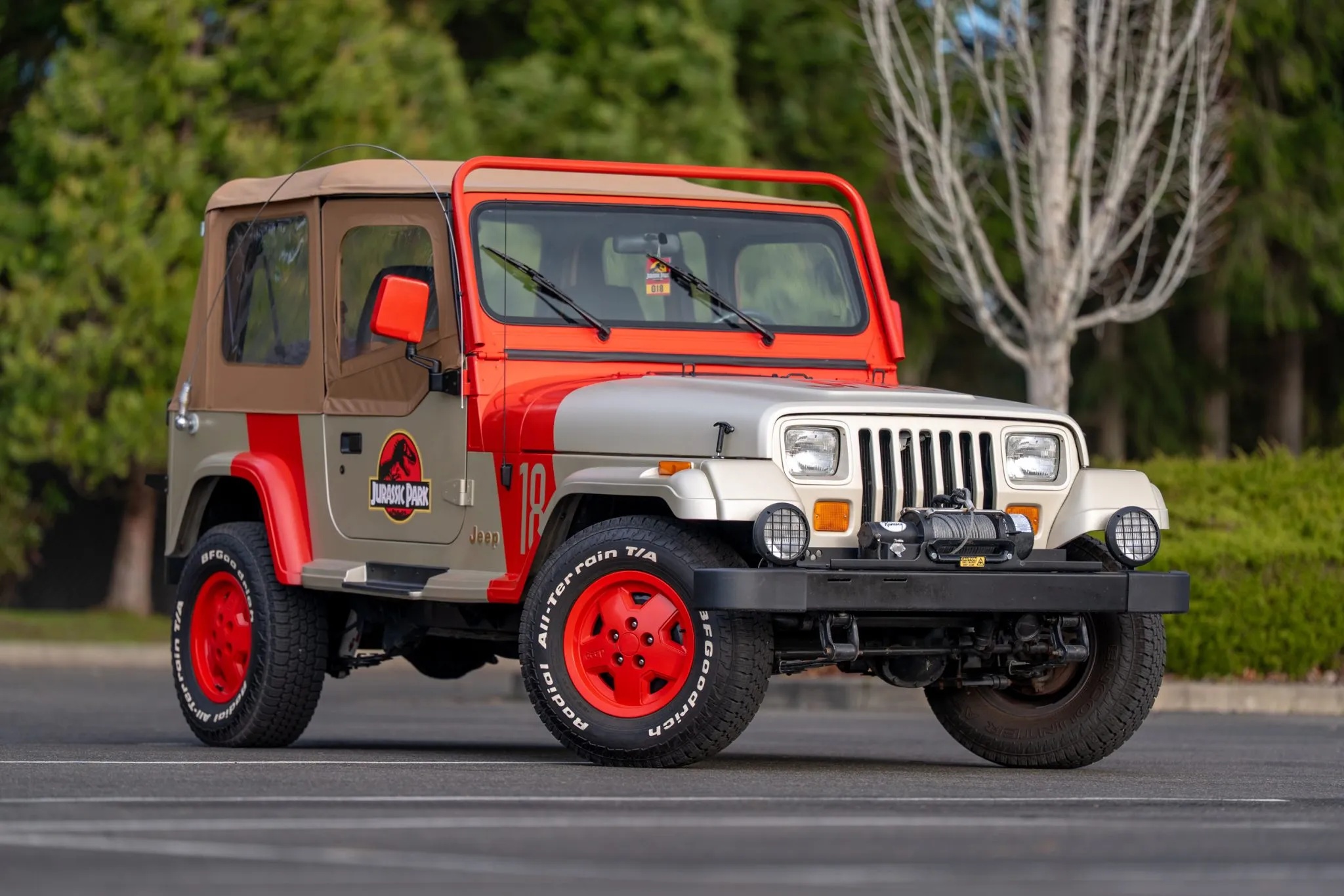
The former associated the Wrangler with adventure, exploration, and rugged outdoor capability. The latter presented it as a fashionable lifestyle vehicle suitable for suburban and urban environments.
This contrast reflected Jeep’s broader marketing ambitions. Rather than positioning the Wrangler exclusively as an off-road utility vehicle, the company wanted it to appeal to a much wider customer base.
Sales reportedly increased significantly during the model’s production run, reaching approximately 65,000 units in 1993, compared with roughly 28,000 during its introductory year.
What to Look for When Buying a Jeep Wrangler YJ
With growing interest in classic SUVs, the Wrangler YJ is becoming an increasingly interesting proposition for collectors. However, buying the right example requires careful consideration.
TFLclassics recommends prioritizing 1991-and-later six-cylinder models, particularly those equipped with the AX-15 manual transmission. These vehicles offer the strongest combination of performance, mechanical simplicity, and everyday usability.
Buyers should also consider the following:
-
Originality: Unmodified examples are generally more appealing to collectors than heavily customized vehicles.
-
Rust: Carefully inspect the frame, body mounts, floorboards, and surrounding structural components.
-
Engine condition: Check for overheating, oil leaks, cooling-system problems, and evidence of inconsistent maintenance.
-
Transmission: Pay particular attention to manual gearbox operation, clutch condition, and unusual noises.
-
Suspension: Inspect leaf springs, bushings, steering components, and track bars for excessive wear.
-
Electrical systems: Verify that the gauges, lighting, and other electrical components operate correctly.
Four-cylinder models can offer an affordable entry point, particularly for buyers who primarily need a vehicle for short-distance driving. However, the 4.0-liter inline-six remains the preferred choice for enthusiasts who intend to use their Wrangler regularly.
Jeep Wrangler YJ Prices and Collector Potential
The Wrangler YJ remains relatively accessible compared with many other classic Jeep models, although desirable examples are beginning to command higher prices.
According to the TFLclassics discussion, buyers can still find serviceable examples for less than $10,000, while particularly attractive, well-preserved vehicles can approach or exceed $30,000.
For someone seeking a balance between affordability and long-term collector appeal, an original six-cylinder Wrangler with approximately 120,000 miles and a purchase budget of $7,000 to $9,000 represents an interesting starting point, subject to condition and local market availability.
Special editions such as the Sahara and Renegade may attract additional interest because of their distinctive equipment and styling.
An Underrated Chapter in Jeep History
The Jeep Wrangler YJ was never universally accepted by traditional Jeep enthusiasts. Its rectangular headlights, plastic dashboard, and departure from familiar CJ styling initially made it an easy target for criticism.
However, its historical significance extends well beyond its controversial appearance. The YJ addressed important stability concerns, introduced a more usable cabin, and eventually received the highly regarded 4.0-liter fuel-injected inline-six.
It also established the foundation for the Wrangler’s transition from a relatively specialized off-road vehicle into a recognizable lifestyle SUV.
Today, the YJ’s combination of mechanical simplicity, vintage character, and improving collector appeal makes it increasingly difficult to dismiss. What was once considered the least desirable Wrangler generation may eventually become one of the most interesting classic Jeeps to own.
Source: TFLclassics