

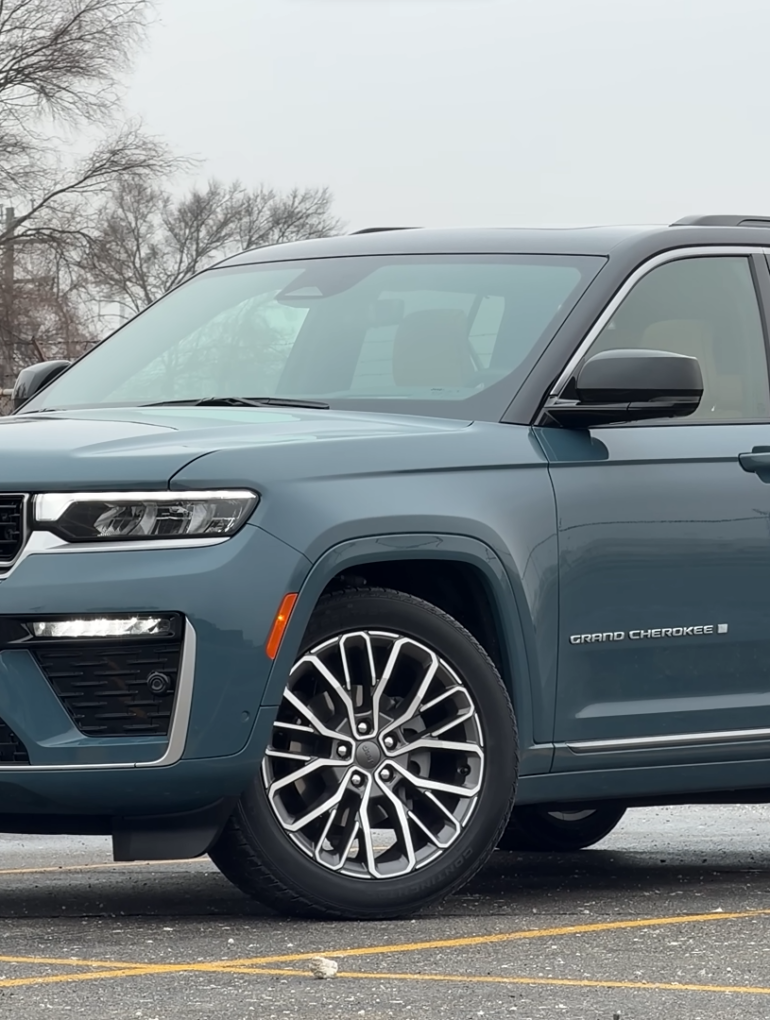
The 2026 Jeep Grand Cherokee arrives at a pivotal moment for Jeep. For decades, the Grand Cherokee built its reputation on muscular V8 engines, authentic off-road credibility, and a uniquely American blend of ruggedness and luxury. Now, Jeep is steering its flagship midsize SUV into a new era—one defined by downsized turbocharged engines, digital-heavy interiors, and premium aspirations that edge closer to Lincoln territory than traditional off-road SUV roots.
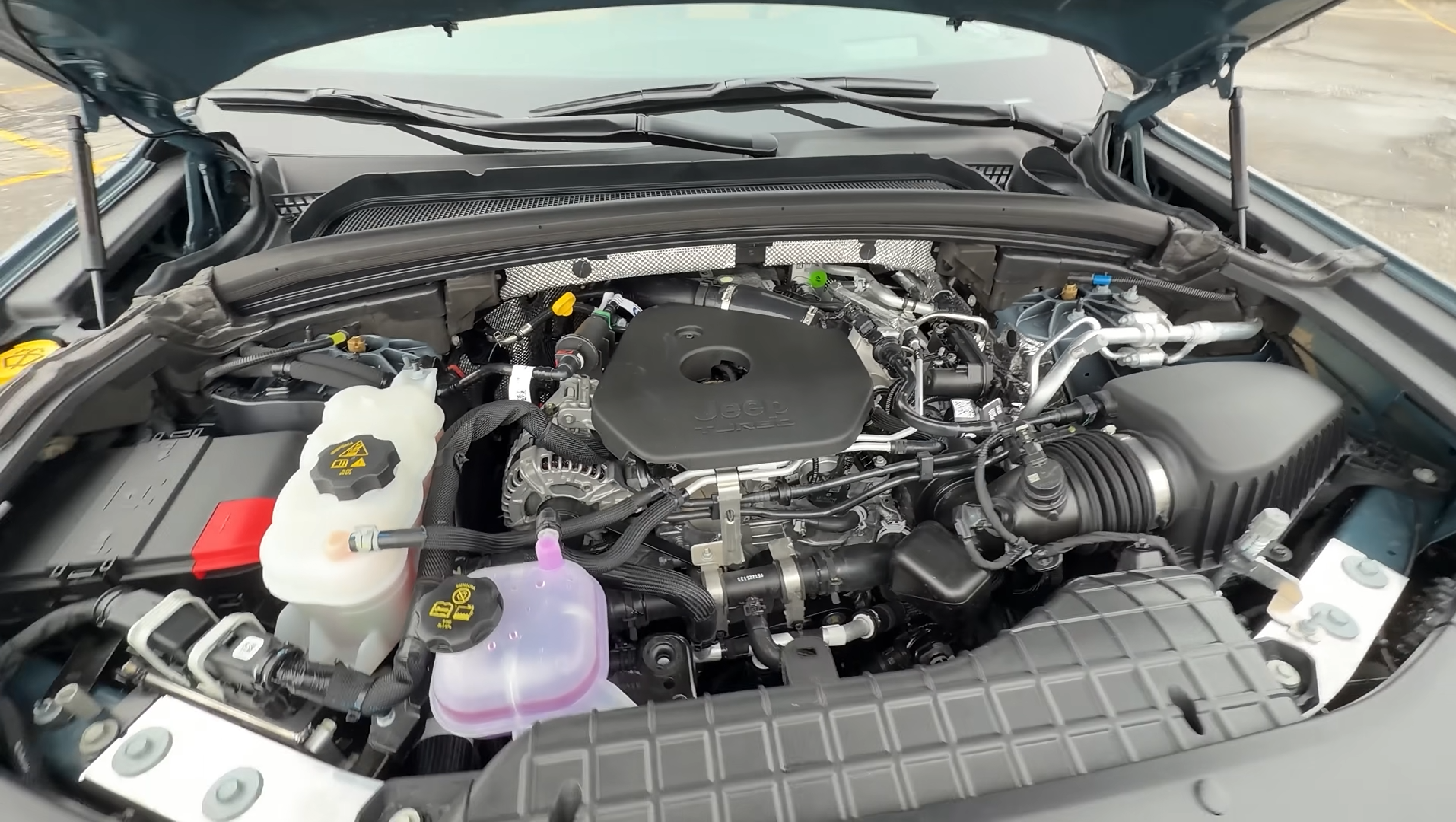
In their latest drive review, TheStraightPipes dissect the updated Grand Cherokee and immediately confront the biggest talking point: the new 2.0-liter turbocharged Hurricane inline-four powertrain. Producing 324 horsepower and 332 lb-ft of torque, the engine delivers stronger output figures than some outgoing Hemi-powered variants on paper.
A Smaller Engine With Bigger Expectations
The transition away from V8 power fundamentally changes the Grand Cherokee’s personality. While the turbocharged four-cylinder offers respectable acceleration once underway, the reviewers repeatedly noted inconsistent throttle mapping and awkward transmission behavior. The eight-speed automatic transmission appears overly eager to downshift, resulting in uneven power delivery during partial-throttle driving.
Off the line, the SUV lacks the immediate surge buyers once associated with Jeep’s larger-displacement engines. Brake-boosted launches feel hesitant, and the drivetrain’s tuning prioritizes efficiency over drama. That said, once rolling, the turbo engine demonstrates substantial mid-range torque and acceptable highway performance.
The issue is not outright speed—it is refinement. The engine produces the characteristic “clickety-clack” direct-injection noises common in modern turbocharged fours, which clash somewhat with the Grand Cherokee’s increasingly upscale identity. Inside the cabin, however, sound insulation does an impressive job muting the harshness.
For longtime Jeep enthusiasts accustomed to the thunder of the 5.7-liter Hemi or the supercharged insanity of the Trackhawk, the emotional disconnect is impossible to ignore.
Luxury Takes Center Stage
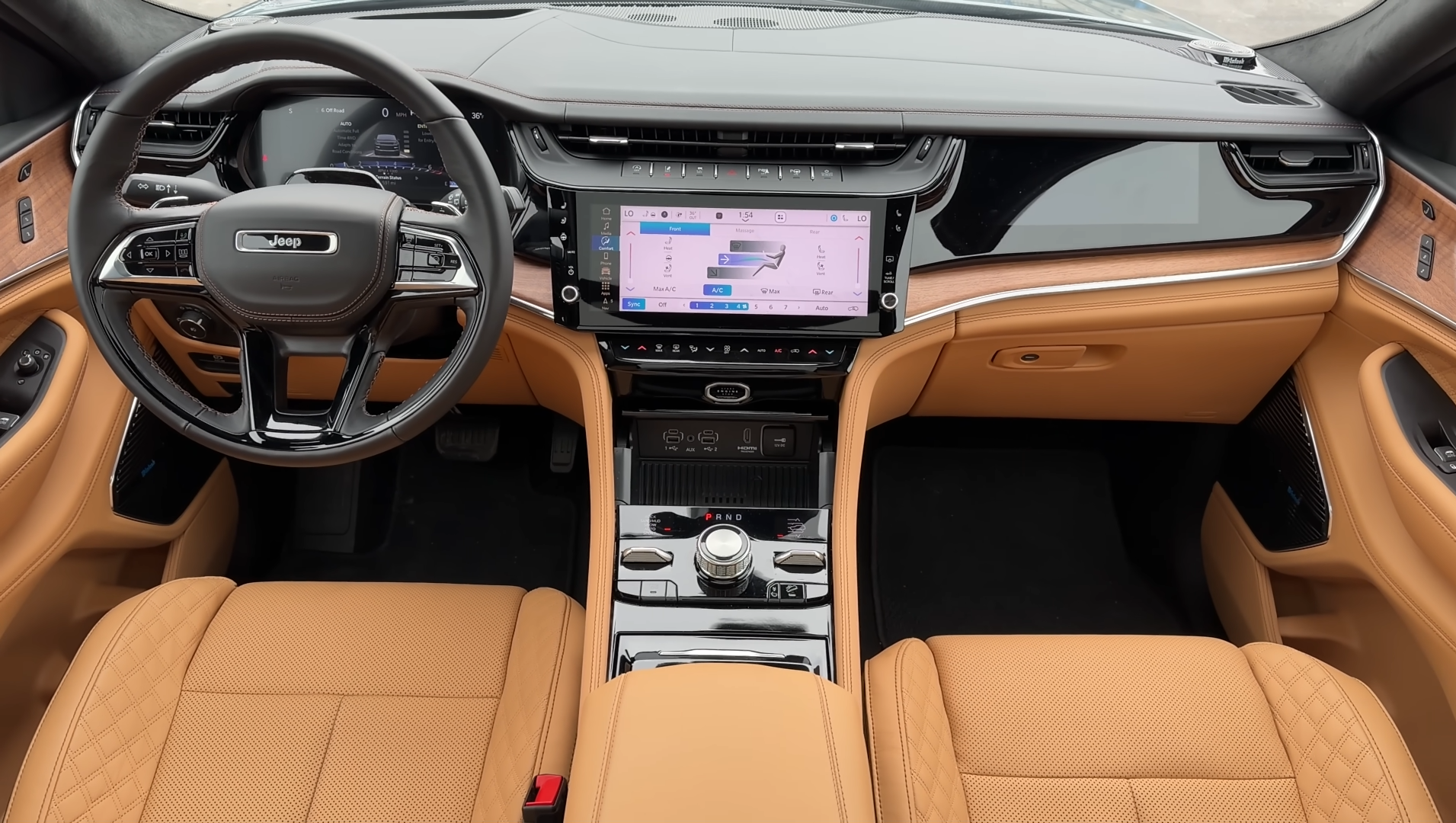
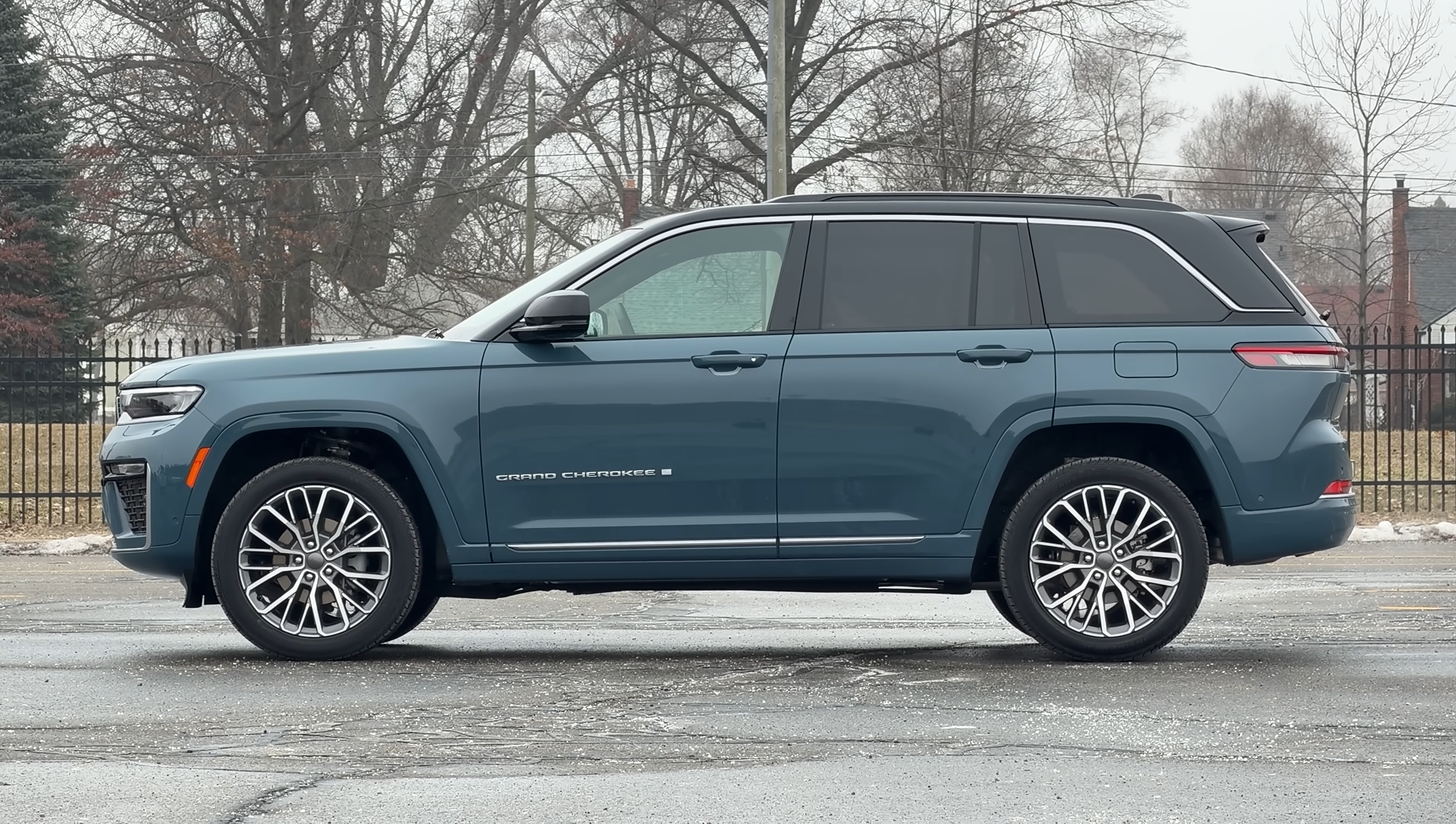
Where the 2026 Grand Cherokee truly excels is interior execution. In Summit trim, the cabin feels significantly more premium than many mainstream competitors from Ford or Chevrolet. The materials quality, soft-touch surfaces, stitched leather, wood trim, and available black roof package create an ambiance that genuinely approaches luxury-brand standards.
The reviewers repeatedly compared the experience to a smaller Jeep Wagoneer, noting that Jeep has successfully trickled down many of its flagship SUV’s premium design cues. Massage seats, extensive lumbar adjustment, rear sunshades, a panoramic sunroof, and a McIntosh premium audio system elevate the Grand Cherokee into near-luxury territory.
Technology also receives a major emphasis. The latest Uconnect infotainment system operates with minimal lag and supports wireless Apple CarPlay alongside multiple USB ports and HDMI connectivity. A front passenger display further reinforces Jeep’s high-tech ambitions, although its real-world usefulness remains debatable.
Not everything is perfect. Capacitive climate controls continue the industry trend toward glossy piano-black surfaces and touch-sensitive interfaces, sacrificing tactile usability for visual sophistication. The reviewers criticized the lack of physical climate buttons, arguing that function should outweigh aesthetics in daily driving situations.
Ride Comfort and Real-World Capability
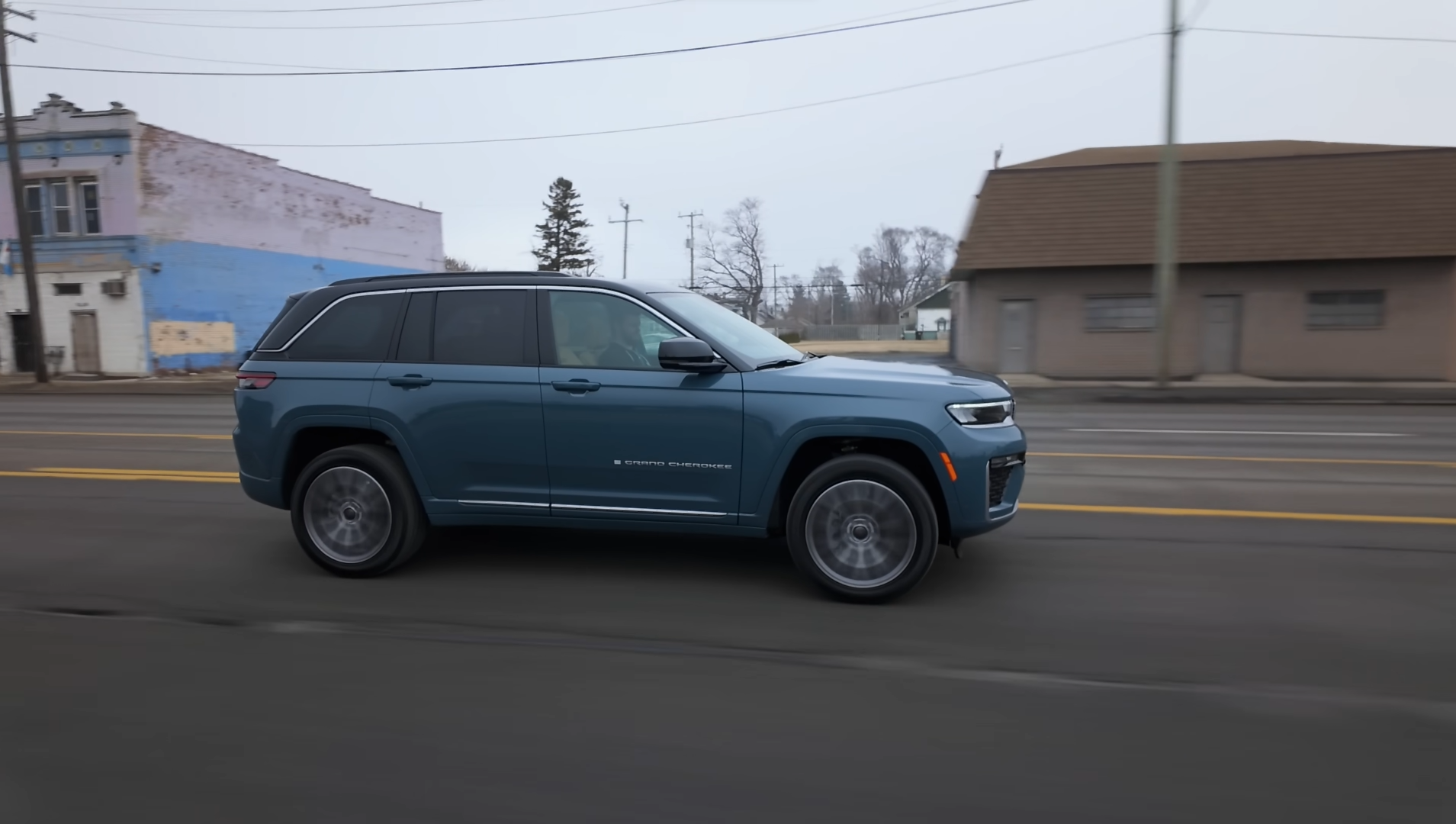
Despite its large wheels, the Grand Cherokee remains impressively comfortable. The available air suspension effectively absorbs broken pavement and urban road imperfections, particularly on rough Detroit streets where the review took place. Adjustable ride height and multiple terrain modes—including rock, sand, and mud settings—preserve the vehicle’s legitimate off-road capability.
Importantly, this remains a true Grand Cherokee underneath the luxury veneer. Four-wheel-drive low range is still available, distinguishing it from many crossover competitors that merely imitate rugged styling.
Pricing and Market Position
The pricing structure reflects Jeep’s premium ambitions. Canadian pricing starts around CAD $59,995 for V6-equipped entry models, while the Summit trim tested by The Straight Pipes climbs to approximately CAD $84,490.
At that price point, expectations naturally rise. Buyers are no longer simply comparing the Grand Cherokee to mainstream SUVs—they are evaluating it against entry-level luxury competitors from Lincoln, Lexus, and even some European alternatives.
The Identity Crisis—and the Future
The 2026 Grand Cherokee is, in many ways, an excellent modern SUV. It is quiet, technologically advanced, spacious, comfortable, and genuinely luxurious. Jeep has clearly refined the platform into something more premium and sophisticated than previous generations.
Yet the transition away from V8 power creates an undeniable identity shift. The Grand Cherokee once embodied brute-force American performance blended with trail-ready toughness. The new turbo-four strategy introduces efficiency and modernization, but sacrifices some emotional character in the process.
Still, hope remains for enthusiasts. The review jokingly speculates that returning Stellantis executive Tim Kuniskis could revive high-performance variants like the Trackhawk. Given Jeep’s history and the enduring demand for halo-performance SUVs, such speculation may not be entirely unrealistic.
Until then, the 2026 Grand Cherokee stands as a symbol of the modern automotive industry itself: more efficient, more digital, more luxurious—and perhaps just a little less visceral than before.
Source: TheStraightPipes