

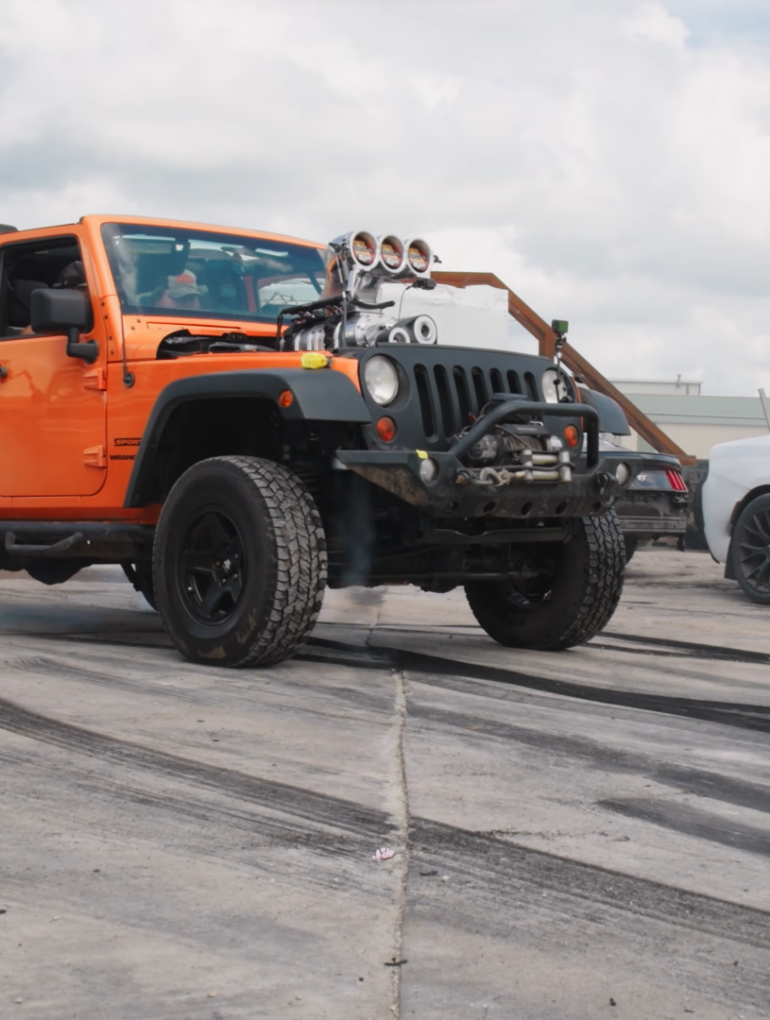
Westen Champlin’s latest build takes an unconventional platform and transforms it into a purpose-built tire-destroying machine. What began as a neglected 2012 Jeep Wrangler shell quickly evolved into an ambitious engineering project centered around one objective: creating a reliable, high-horsepower burnout vehicle capable of delivering sustained performance under extreme abuse.
At the heart of the build is a fully prepared supercharged LS V8, estimated to produce roughly 1,500-1,600 horsepower. Rather than simply dropping the engine into the Wrangler and hoping for the best, Champlin enlisted the expertise of Australian burnout specialist Dale, whose experience constructing competitive burnout cars brought a level of technical discipline rarely seen in grassroots projects. The goal was not only to make power, but to ensure the Jeep could repeatedly survive the punishment associated with high-RPM burnouts.
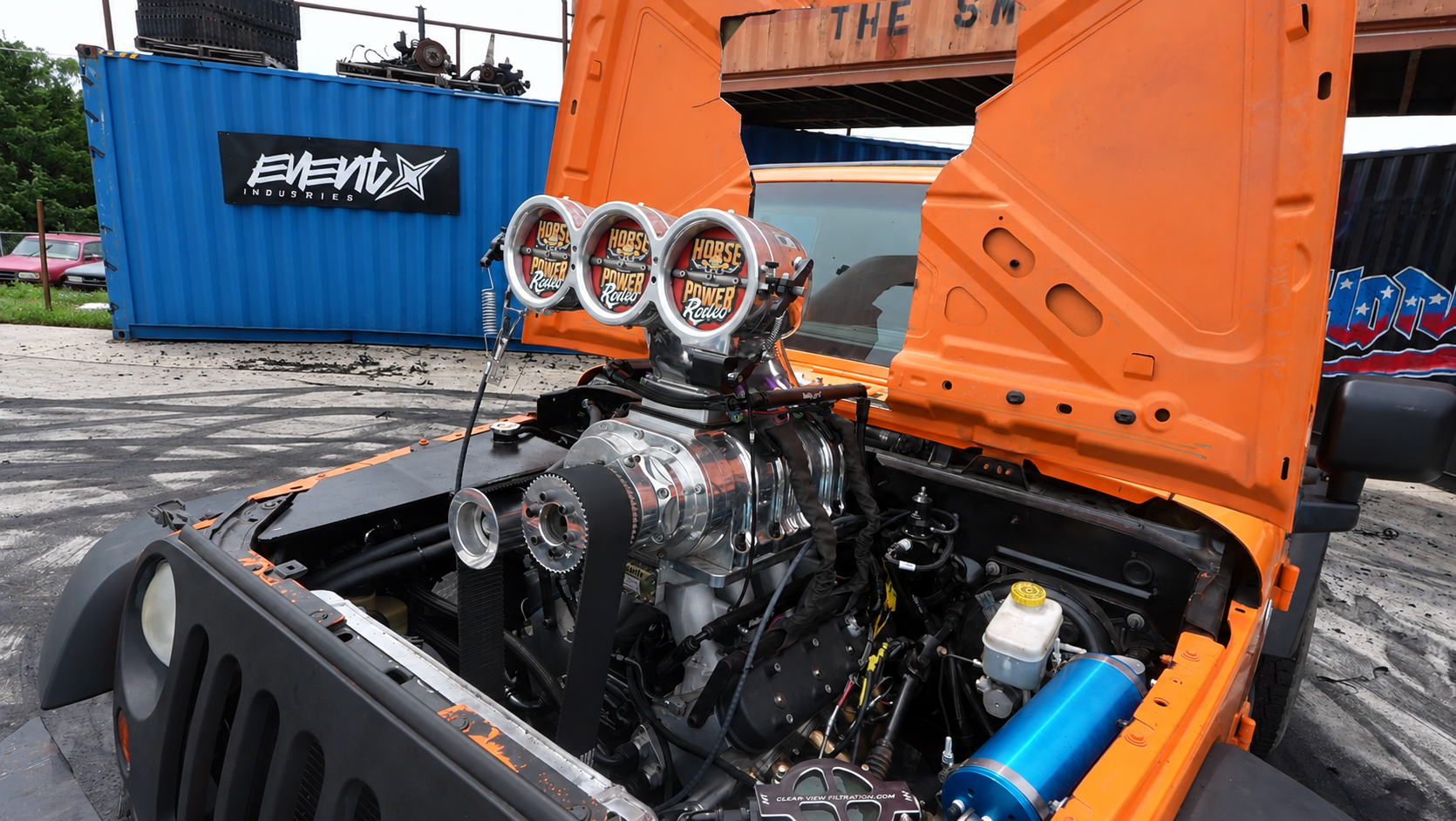
Significant preparation work was completed before the engine installation. The team stripped unnecessary factory components, modified the engine bay, test-fitted a mock powertrain, and reinforced critical areas to accommodate the massive blown LS package. Once installed, the combination featured an 8-71 BDS supercharger, Holley EFI Dominator management system, methanol fueling, a Turbo 400 transmission, upgraded cooling systems, and a welded rear differential designed to keep both rear tires spinning under load.
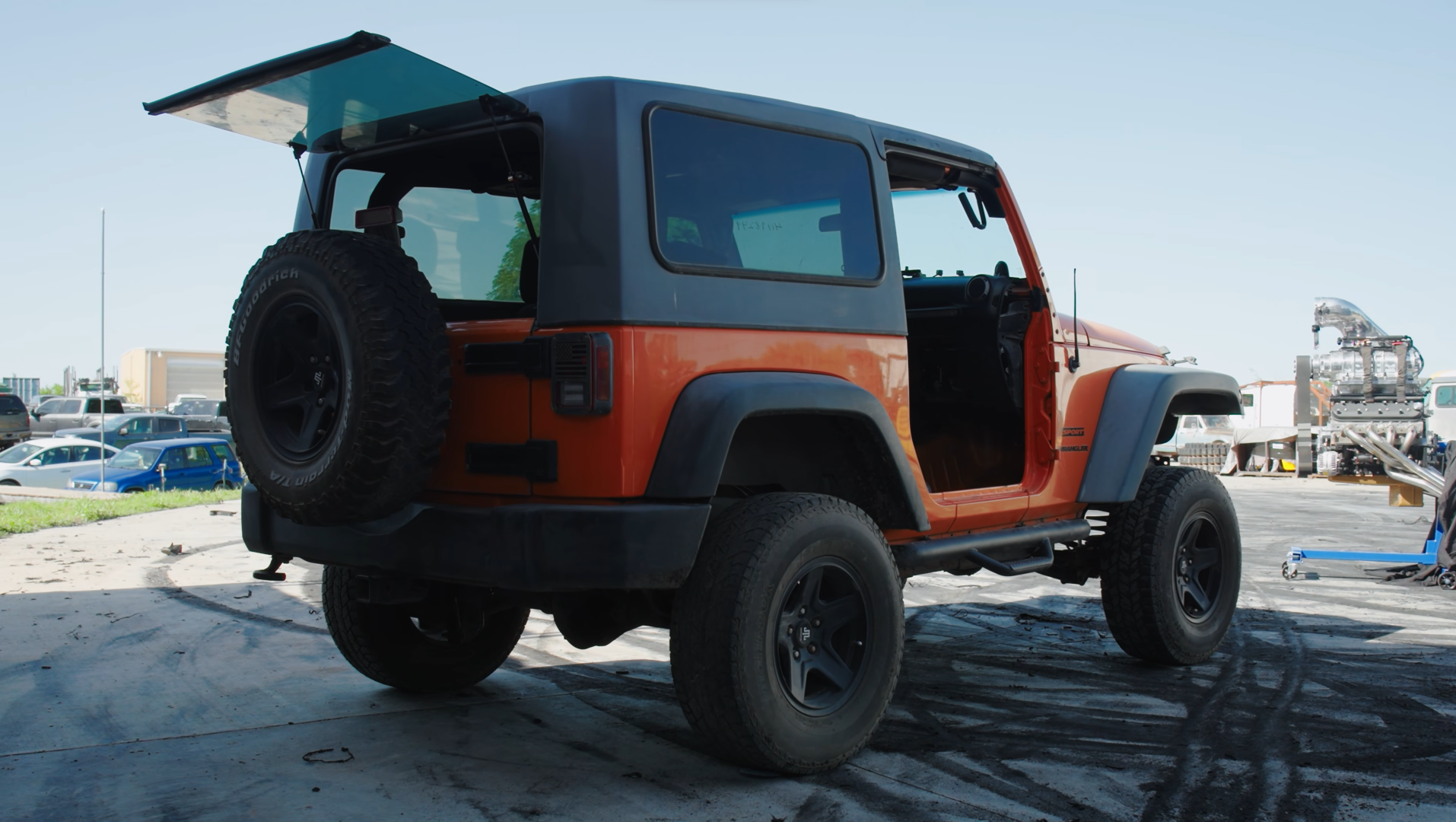
The project moved rapidly from assembly to dyno testing, where the Jeep immediately demonstrated its aggressive character. However, as is common with extreme performance builds, several mechanical issues emerged. Engine mounts failed under torque, sensors loosened from vibration, ignition components disconnected during testing, and drivetrain components showed signs of stress. Later troubleshooting identified a faulty crank sensor that limited engine speed well below its intended 7,500-rpm redline.
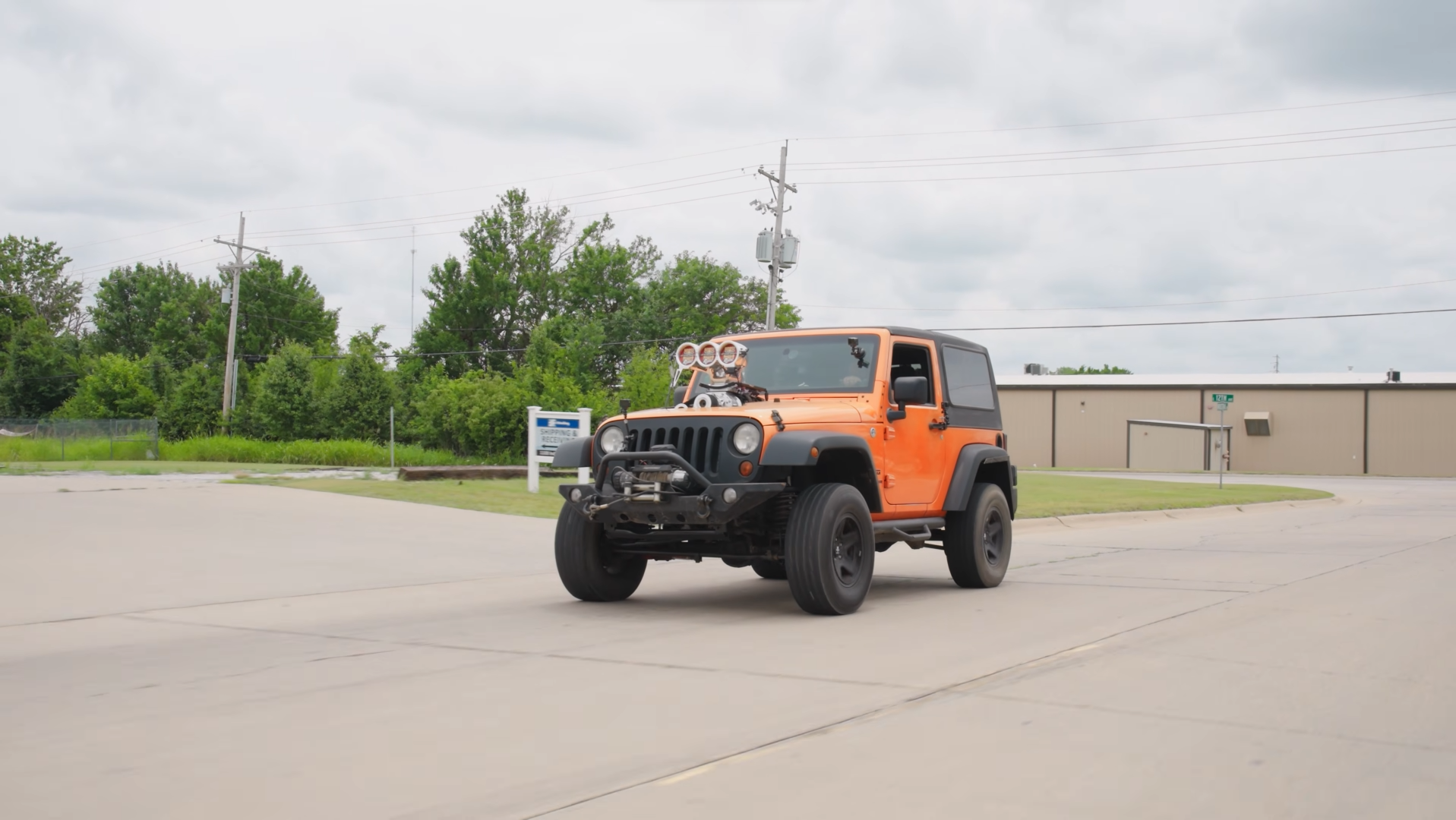
Despite these setbacks, the Wrangler proved its potential. Once sorted, the supercharged Jeep generated massive clouds of tire smoke and delivered the kind of violent acceleration expected from a dedicated burnout machine. The build highlights both the excitement and complexity of combining modern engine management, forced induction, and race-proven burnout engineering into an unlikely platform. The result is a highly specialized Jeep that successfully trades off-road capability for raw horsepower, spectacle, and relentless tire-shredding performance.
Source: Westen Champlin