

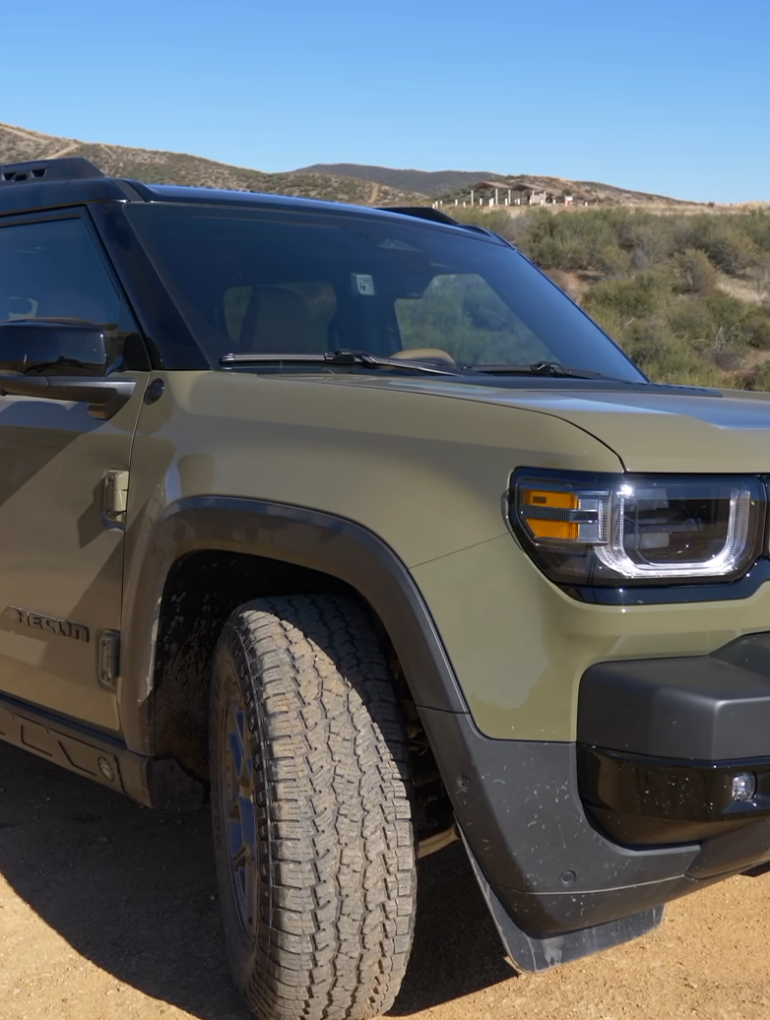
The all-new Jeep Recon promises to bring traditional Jeep character into the electric era, combining removable body panels, open-air driving, and serious performance with an all-electric powertrain. However, after spending a full week and approximately 500 miles behind the wheel, Tommy from TFLEV discovered that while the Recon delivers an entertaining driving experience, its limitations make it difficult to recommend as a primary vehicle.
Bold Jeep Styling Meets Open-Air Freedom
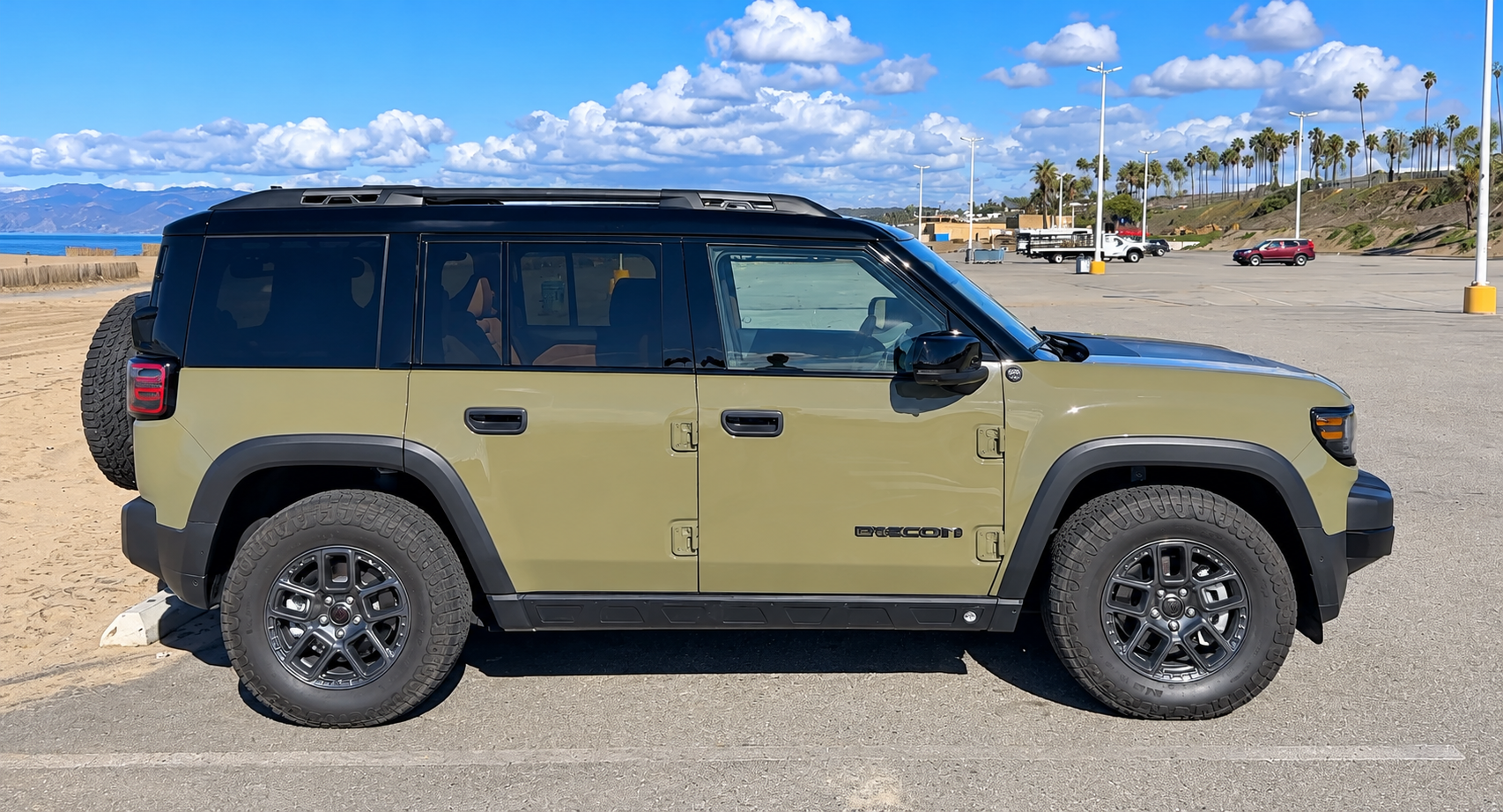
One of the Recon’s strongest selling points is its unmistakable Jeep styling. Its chunky, squared-off front end recalls the classic Cherokee, while exposed door hinges, red tow hooks, and a full-size rear-mounted spare tire reinforce its off-road identity. Unlike most electric SUVs, the Recon also delivers a genuine open-air experience.
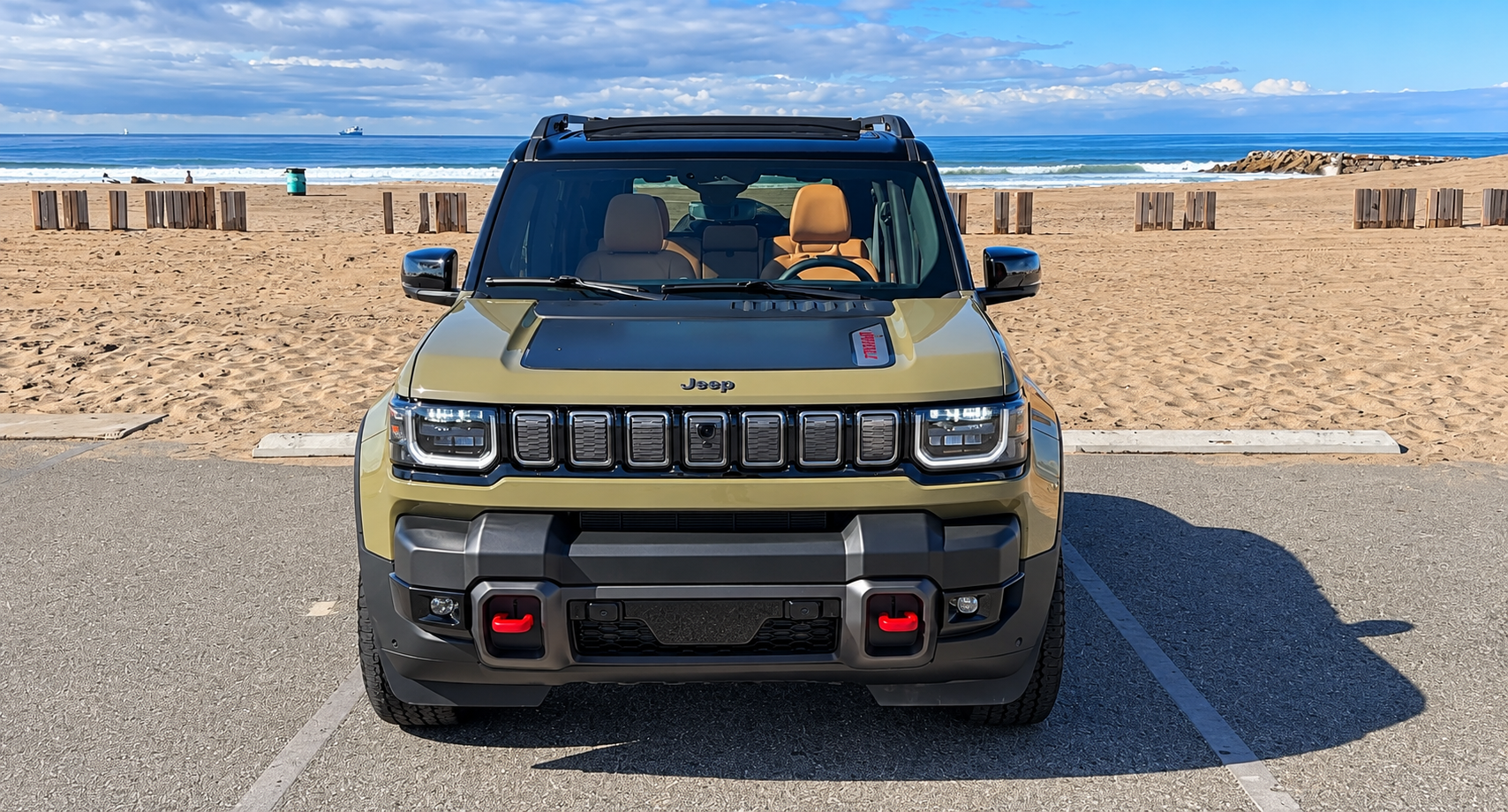
Its power-operated roof folds back at the push of a button, while removable quarter windows, rear glass, and doors allow owners to enjoy a more traditional Jeep experience. Inside, the Joshua Tree brown upholstery gives the cabin an upscale appearance, complemented by excellent material quality and solid construction.
The Recon also makes a convincing family vehicle. Its rear seats offer generous space for three passengers, with heated seating, USB-C ports, and a 120-volt outlet. The front seats are particularly impressive, offering enough comfort and support for extended road trips.
670 Horsepower Makes the Recon Surprisingly Quick
Performance is where the Recon becomes particularly entertaining. Its dual-motor electric powertrain produces 670 horsepower, allowing the approximately 6,100-pound SUV to accelerate from zero to 60 mph in a claimed 3.6 seconds.
Tommy found the acceleration almost excessive, particularly in Sport mode, where the instantaneous torque makes the heavy electric Jeep feel surprisingly aggressive.
On the road, independent suspension and rack-and-pinion steering give the Recon a substantial advantage over the Wrangler in ride comfort and handling. Although its suspension can feel underdamped over certain bumps, the overall experience is quieter, smoother, and considerably more refined.
Range and Charging Remain Major Weaknesses
Unfortunately, the Recon’s biggest weakness is its electric efficiency. The EPA-rated range is just 222 miles from its 100-kWh battery, translating to approximately 2.2 miles per kWh.
Charging infrastructure also presents compromises. The launch model uses a CCS charging connection rather than the North American Charging Standard (NACS), requiring an approximately $240 adapter for Tesla Supercharger compatibility. Jeep plans to introduce native NACS connectivity in a subsequent model year.
After six days and roughly 500 miles, Tommy had visited public charging stations four times. Without home charging, the experience became increasingly inconvenient. He found that charging beyond 80% took considerably longer, making approximately 150 miles a more realistic distance between charging stops.
His total charging expenditure reached $79.80, based on public charging rates of approximately $0.60 per kWh.
Is the Jeep Recon Worth $72,000?
At approximately $72,000 for the tested Moab model, the Recon faces serious competition from more practical electric SUVs, particularly the Rivian R2. The Rivian offers substantially greater range at a considerably lower starting price, although it cannot replicate the Recon’s removable doors and open-air configuration.
Ultimately, Tommy describes the Recon as very fun but fundamentally flawed. Its extraordinary acceleration, comfortable interior, distinctive styling, and open-air versatility make it an appealing recreational vehicle. However, its limited range, expensive purchase price, and charging compromises undermine its appeal as an everyday SUV.
The Recon makes the most sense as a second or third vehicle for buyers who prioritize adventure and lifestyle over efficiency and practicality. A more affordable hybrid version, as mentioned in the review, could potentially address several of its shortcomings.
For now, the Jeep Recon is an exciting electric interpretation of the Wrangler spirit, but its entertainment value comes at a substantial financial and practical cost.
Source: TFLEV