
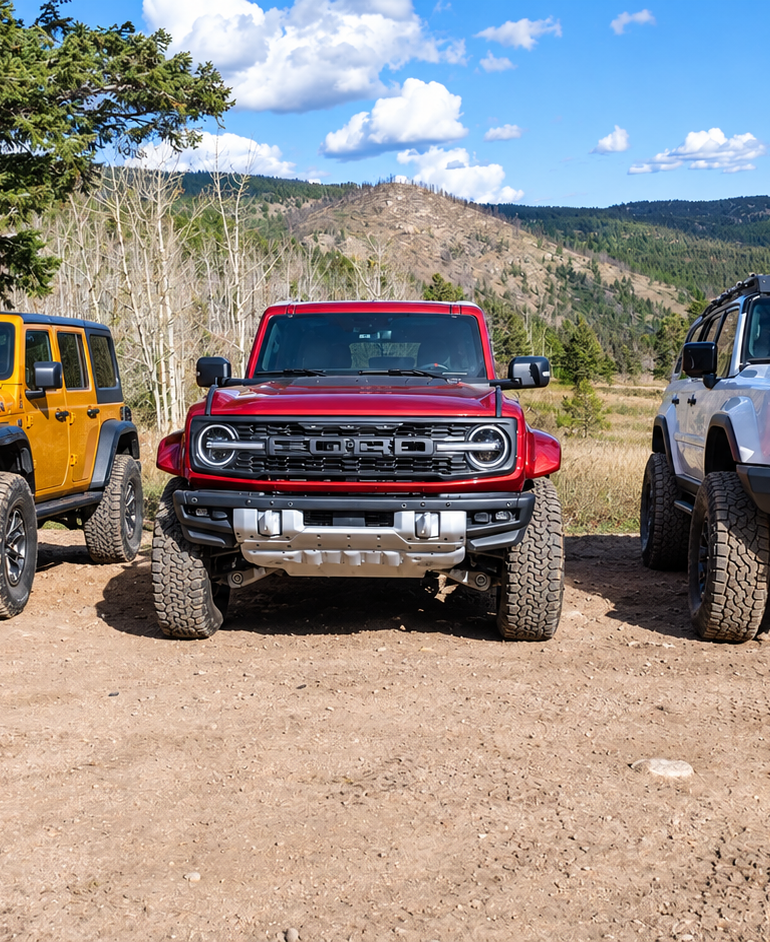
Three highly capable off-road SUVs faced one of Colorado’s challenging rocky trails as TFLoffroad put a Jeep Wrangler 392, Ford Bronco Raptor, and heavily modified Toyota Land Cruiser to the test on Cliffhanger 2.0. With steep climbs, loose boulders, narrow passages, and unpredictable terrain, the comparison examined how factory engineering and aftermarket modifications translate into real-world rock-crawling performance.
Although all three completed the demanding route, their different approaches to traction, suspension articulation, ground clearance, and power revealed some interesting strengths and compromises.
Jeep Wrangler 392: V8 Power Meets Traditional Rock-Crawling Hardware
The Jeep Wrangler 392 Willys entered the comparison as the least expensive vehicle, with an approximately $75,000 test price. Despite being the smallest of the three, it brought a significant advantage: a naturally aspirated 6.4-liter HEMI V8 producing 470 horsepower and 470 lb-ft of torque.
Riding on 35-inch BFGoodrich KO2 tires, the Wrangler was also the only vehicle in the comparison featuring a solid front axle. This traditional configuration provides excellent characteristics for technical rock crawling, while its narrower body makes navigating tight obstacles considerably easier.
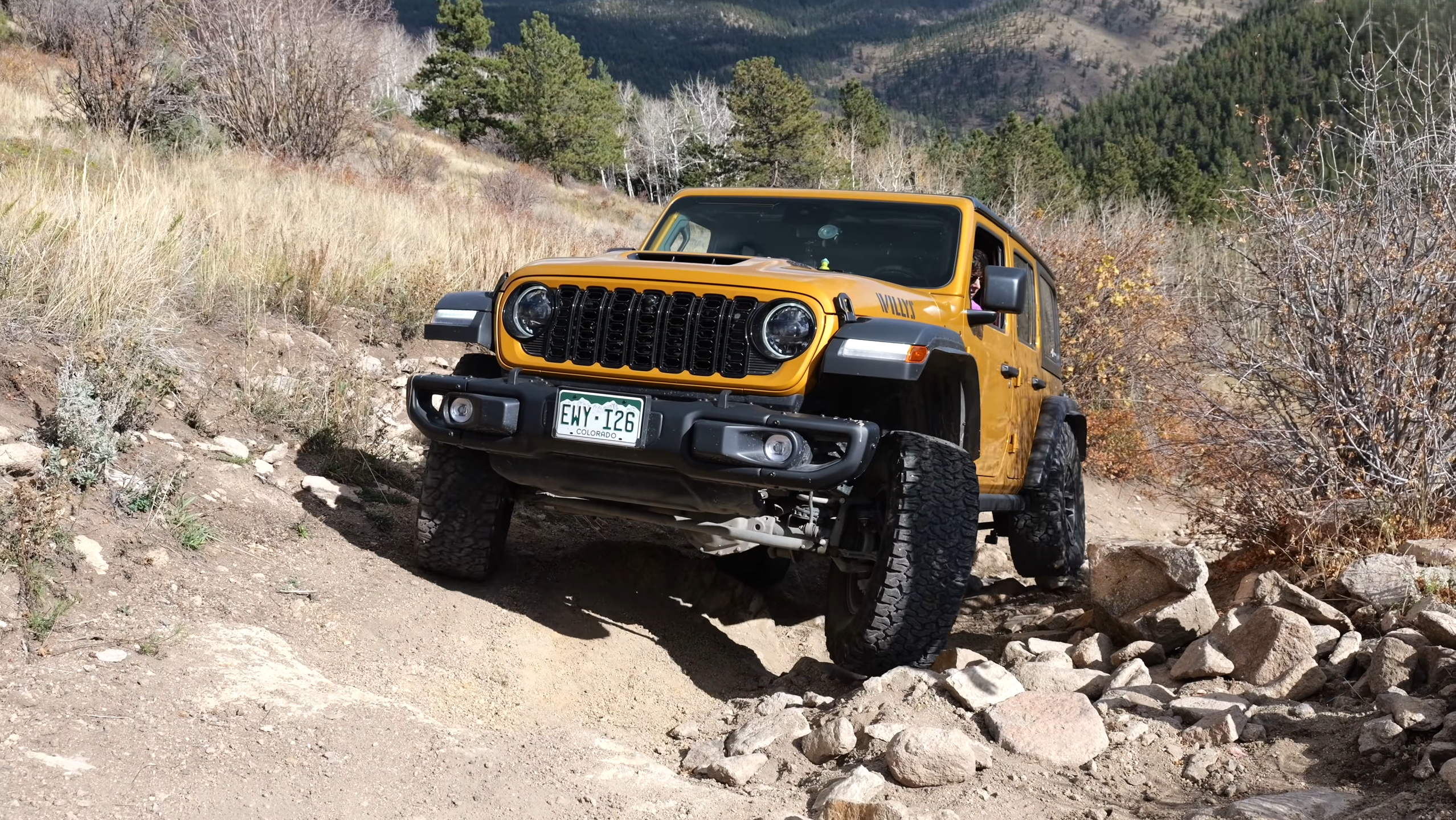
The Wrangler initially tackled the trail using its traction-control system without engaging the rear differential locker. Its abundant low-speed torque allowed it to climb surprisingly easily, although the rear locker became useful when the terrain became more demanding.
However, this particular 392 Willys lacked a front locking differential and an electronically disconnecting sway bar, limiting its available traction and suspension articulation compared with its competitors.
Nevertheless, its predictable handling, impressive engine braking, and maneuverability made it exceptionally effective on Cliffhanger 2.0.
Ford Bronco Raptor: Factory-Built Performance With 37-Inch Tires
The Ford Bronco Raptor approached the challenge with a different philosophy. Designed to handle both high-speed desert driving and technical off-road terrain, it combines an independent front suspension with a solid rear axle.
Its 3.0-liter twin-turbocharged V6 produces 418 horsepower, while factory-installed 37-inch BFGoodrich KO2 tires provide additional clearance and obstacle-clearing capability. Ford also equips the Raptor with front and rear locking differentials, approximately 13 inches of ground clearance, and electronically disconnecting front stabilizer bars.
The Fox Live Valve suspension is another significant advantage, automatically adjusting damping characteristics to accommodate changing terrain and driving conditions.
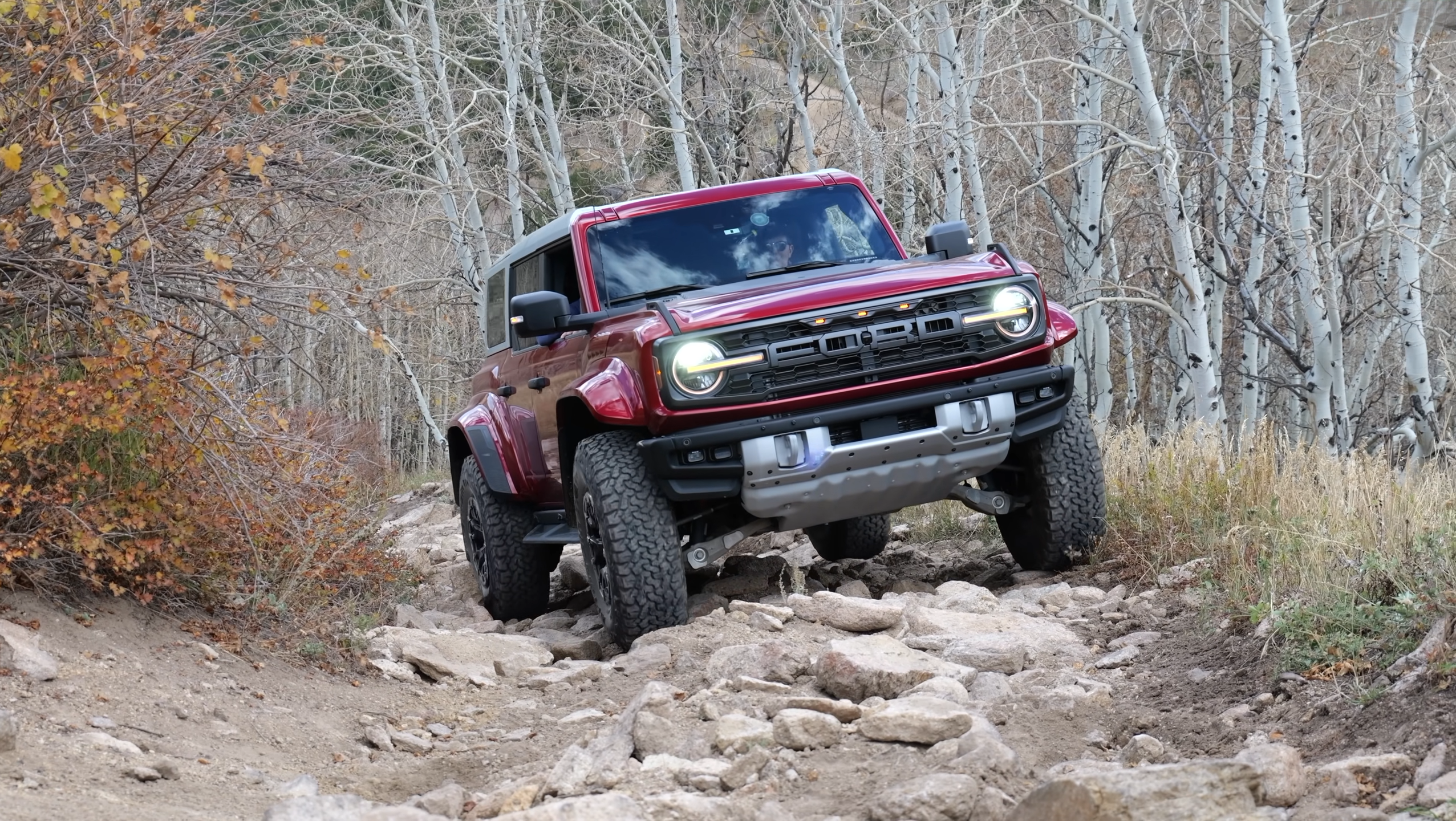
On the loose, rocky climbs, the Bronco initially relied on its four-wheel-drive system and traction control. When traction became inconsistent, engaging the rear and front lockers provided additional control.
Its biggest disadvantage was its considerable width. Unlike the narrower Wrangler, the Bronco required more careful positioning around trees, large rocks, and tight sections. Its independent front suspension nevertheless delivered impressive articulation, particularly with the stabilizer bar disconnected.
The Raptor demonstrated that its high-speed desert-oriented engineering does not prevent it from performing serious rock crawling.
Toyota Land Cruiser: Portal Axles and Extreme Ground Clearance
The Toyota Land Cruiser was arguably the most unconventional vehicle in the comparison. Based on the 250-series model, this heavily modified example combined Toyota’s i-FORCE MAX hybrid powertrain with an extensive aftermarket off-road package.
Its turbocharged 2.4-liter four-cylinder hybrid system produces 326 horsepower and 465 lb-ft of torque. Although that is less horsepower than either competitor, its substantial torque output provides considerable low-speed pulling capability.
The biggest transformation comes from its portal axles, which accommodate 37-inch tires while delivering approximately 3.9 inches of additional lift through the axle assemblies. The resulting ground clearance was estimated at more than 16 inches.
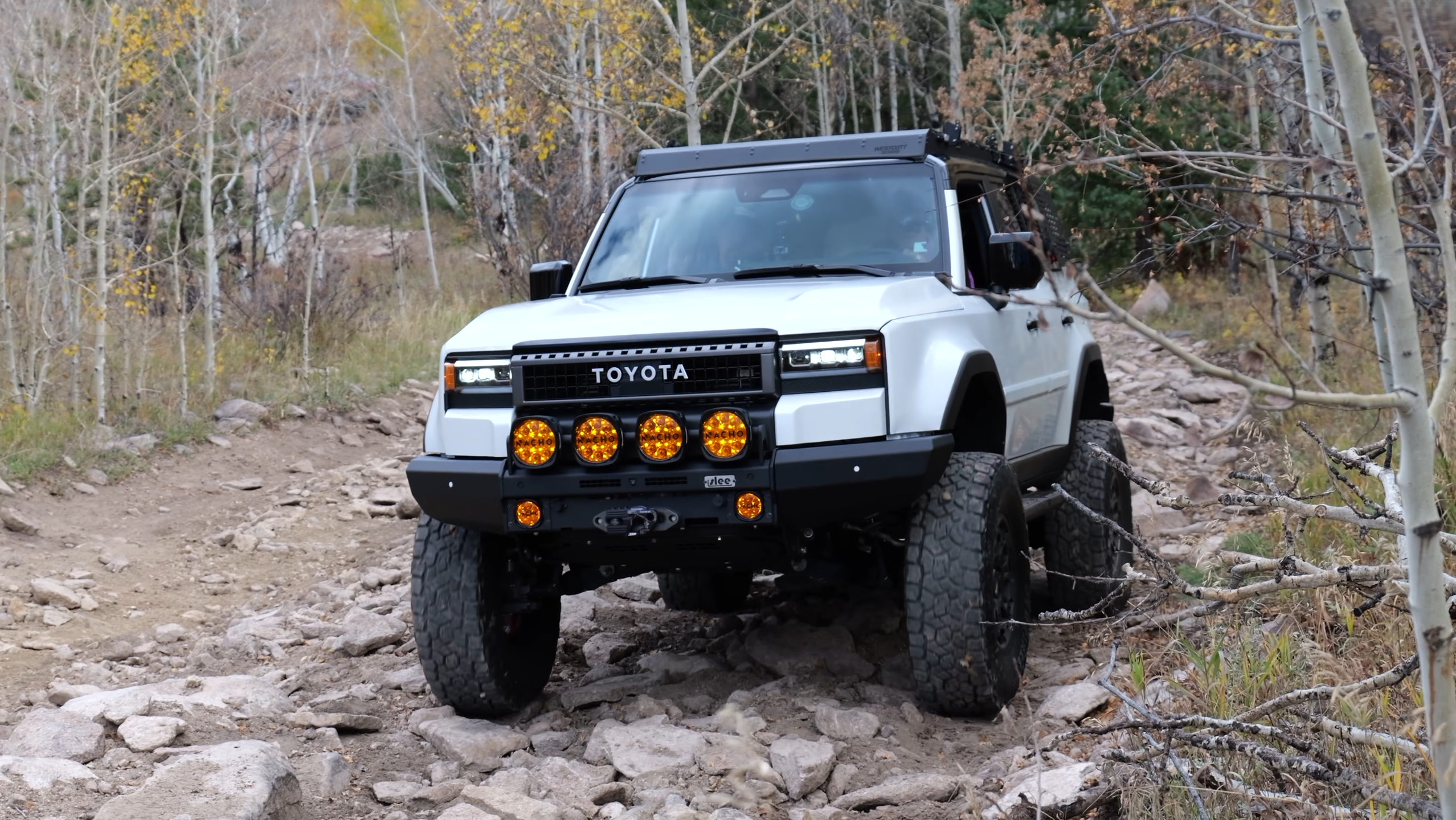
The Land Cruiser also features front and rear locking differentials, a locking center differential, a front sway-bar disconnect, steel skid plates, Slee bumpers, and a Westcott Designs roof rack.
With approximately $60,000 or more invested in aftermarket parts and labor on top of its roughly $70,000 purchase price, this build represents an estimated $130,000 off-road machine.
Its enormous ground clearance made underbody contact unlikely, while the portal gearing helped compensate for the larger tires. However, its additional height raised questions about its practicality on narrower trails and during everyday driving.
Cliffhanger 2.0: Three Different Approaches to Off-Roading
All three vehicles successfully demonstrated impressive capability on the trail, but their strengths became apparent in different situations.
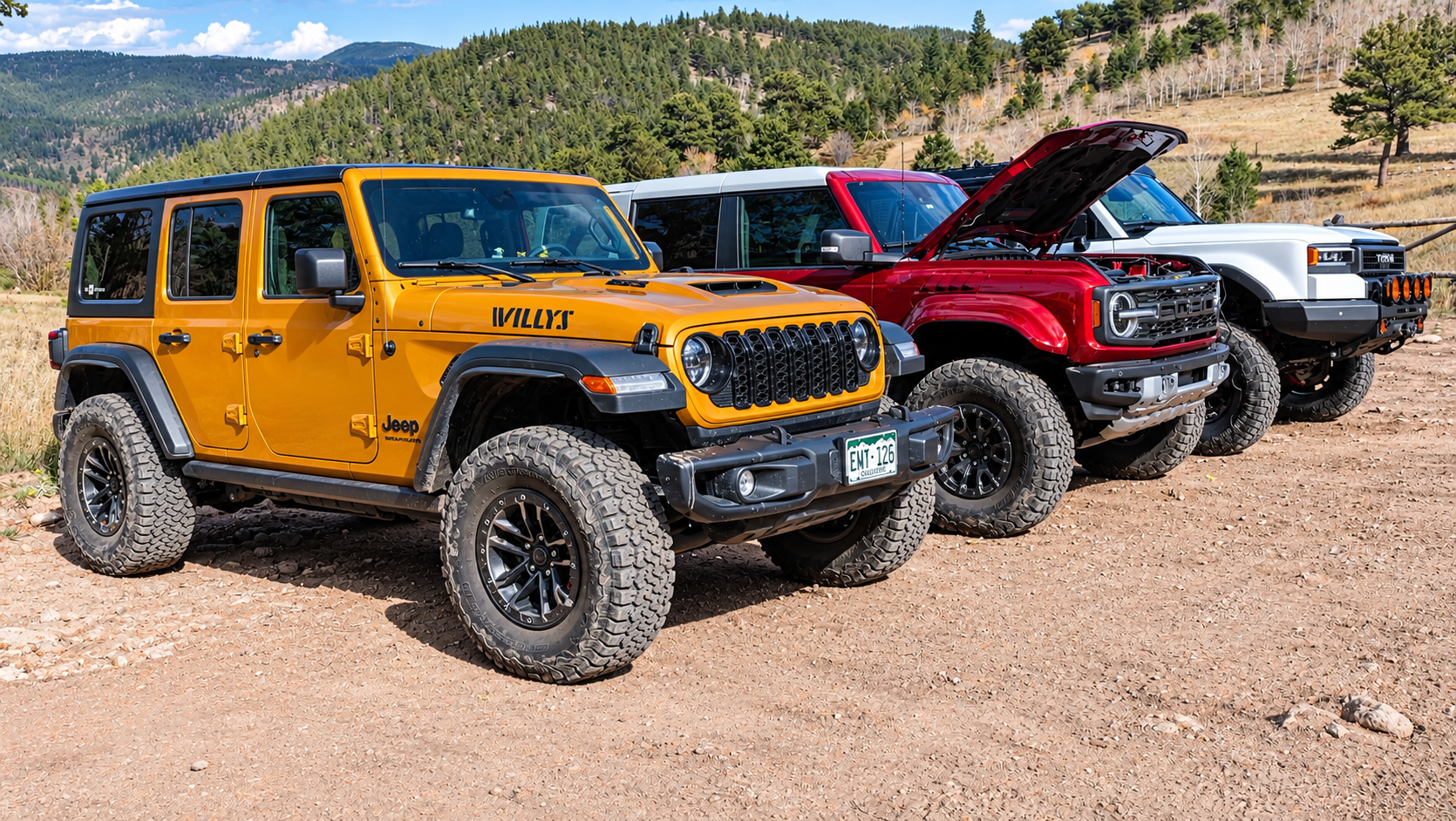
The Wrangler was the easiest to maneuver through tight obstacles and delivered the most satisfying low-speed experience thanks to its V8. The Bronco Raptor offered an excellent balance of factory-engineered capability, suspension technology, and versatility, although its width demanded more careful driving. Meanwhile, the Land Cruiser delivered extraordinary ground clearance and traction, particularly when its lockers were engaged.
The final obstacle highlighted the Toyota’s impressive engineering, although its considerable height produced some noticeable body movement and a slight moment of front-wheel lift.
Which Off-Roader Comes Out on Top?
Interestingly, the TFLoffroad presenters did not agree on a single winner. One favored the Wrangler 392 for its affordability, maneuverability, and entertaining V8 character. The other selected the Bronco Raptor, appreciating its ability to transition between high-speed desert driving and technical crawling.
The modified Land Cruiser earned considerable respect, but its estimated $130,000 investment and extreme ride height made it harder to justify as an everyday off-roader.
Ultimately, Cliffhanger 2.0 demonstrated that bigger tires, additional ground clearance, and expensive modifications do not automatically produce the best overall off-road vehicle. The Wrangler, Bronco, and Land Cruiser each brought a different engineering philosophy to the mountain, and all three proved capable of tackling terrain that would challenge most conventional SUVs.
Source: TFLoffroad