

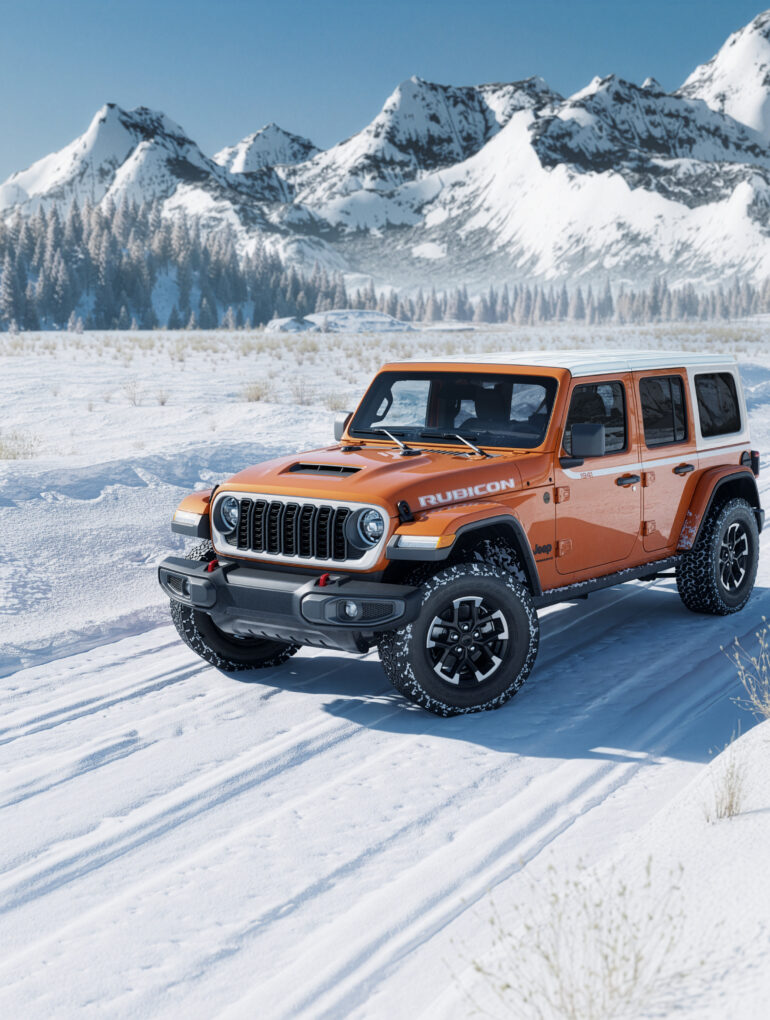
The Jeep Wrangler has earned its reputation as one of the most capable off-road vehicles ever built, thanks to its rugged construction, four-wheel-drive systems, and exceptional versatility. However, even a vehicle designed to tackle challenging terrain has vulnerabilities when temperatures plunge and winter conditions take hold. Freezing weather introduces a different set of challenges, from reduced battery performance and sluggish engine starts to compromised tire traction, frozen washer systems, and uncomfortable cabin temperatures.
Preparing a Wrangler for winter requires more than engaging four-wheel drive and hoping for the best. Cold temperatures affect nearly every major vehicle system, while snow, ice, road salt, and freezing rain introduce additional maintenance concerns. Fortunately, several practical modifications can improve reliability, protect essential components, and make winter driving considerably safer.
Here are 10 worthwhile upgrades and maintenance measures that can help transform a Jeep Wrangler into a more dependable cold-weather companion.
1. Install Dedicated Winter Tires
The most important winter upgrade for any Jeep Wrangler is a dedicated set of winter tires. Although four-wheel drive provides excellent traction when accelerating through snow, it does not improve braking or cornering grip by itself. Those responsibilities ultimately depend on the four contact patches between the tires and the road.
Standard all-season tires can lose considerable flexibility as temperatures fall, reducing their ability to maintain traction on cold pavement, snow, and ice. Dedicated winter tires use specialized rubber compounds that remain more flexible in low temperatures, alongside tread patterns designed to evacuate snow and maintain contact with slippery surfaces.
One recognizable option is the Bridgestone Blizzak range, which has established a strong reputation for winter performance. Other manufacturers also offer dedicated winter tires suitable for the Wrangler’s different wheel and tire configurations.
When shopping, look for the Three-Peak Mountain Snowflake (3PMSF) symbol on the sidewall. This indicates that the tire meets a defined snow-traction performance requirement.
For the best results, install four matching winter tires rather than replacing only the front or rear pair. A dedicated winter wheel-and-tire package also makes seasonal changes easier and reduces wear on your regular tires.
2. Add Heated Seats for Improved Cabin Comfort
The Wrangler’s cabin can take considerable time to warm up on particularly cold mornings. This is especially noticeable on entry-level models equipped with conventional cloth seats and without factory-installed seat heaters.
An aftermarket heated-seat system offers a practical solution. Companies such as Bartact and Stinger provide retrofit options that use thin heating elements installed beneath the upholstery or compatible seat covers.
Once connected to the vehicle’s electrical system, these elements provide localized warmth through dedicated switches. Unlike the conventional cabin heater, which depends on engine temperature, heated seats can provide comfort shortly after starting the vehicle.
This is particularly useful during short journeys when the engine might not reach its normal operating temperature before the trip ends.
Although heated seats are primarily a comfort upgrade rather than a mechanical necessity, they can make a significant difference during extended winter commutes.
Installation should follow the kit manufacturer’s electrical requirements, particularly when working with factory seat wiring, occupancy sensors, and airbag systems.
3. Carry Tire Chains or Approved Traction Devices
Four-wheel drive does not automatically exempt a Jeep Wrangler from winter tire-chain regulations. In mountainous regions where authorities impose traction controls, drivers may be required to carry approved chains or alternative traction devices even when their vehicles have four-wheel drive and snow-rated tires.
California provides a useful example, with chain-control requirements ranging from less restrictive conditions to situations where chains must be installed on every vehicle.
For Wrangler owners, carrying a compatible set of tire chains is a sensible precaution when traveling through regions prone to heavy snowfall. Traditional metal chains provide additional traction in demanding conditions, while fabric traction devices such as AutoSock offer a lighter and potentially easier-to-install alternative where permitted.
Compatibility is important. Wrangler tire sizes, suspension configurations, and available clearance vary, so owners should consult their vehicle manual and chain manufacturer before purchasing.
It is also worth practicing installation at home before encountering freezing temperatures on the roadside. Trying to figure out how chains fit while standing in deep snow is an experience most drivers would rather avoid.
4. Improve Soft-Top Insulation or Switch to a Hardtop
The Wrangler’s removable roof is one of its defining characteristics, but a soft top is not necessarily ideal for extended winter use. Fabric construction generally provides less insulation than a hardtop, allowing more heat to escape and increasing exposure to wind noise.
Owners who regularly encounter severe winter conditions may benefit from switching to a factory-style hardtop. Its more substantial construction provides better protection against the elements and offers a more enclosed cabin environment.
For additional comfort, Mopar offers hardtop headliner solutions, while aftermarket manufacturers such as Hothead Headliners produce insulation kits designed to improve thermal and acoustic performance.
These additions help reduce the amount of heat escaping through the roof while making highway journeys quieter.
A hardtop also provides a more robust surface for dealing with accumulated snow. Nevertheless, owners should still follow the manufacturer’s recommendations for snow loading and roof maintenance.
For those who prefer retaining the soft top, inspecting its seals, windows, stitching, and mounting points before winter is essential. Replacing worn weatherstripping can help minimize drafts and water intrusion.
5. Install an Engine Block Heater
Cold starts place additional demands on an engine. As temperatures drop, engine oil becomes more viscous, increasing resistance during cranking and making it more difficult for the lubrication system to circulate oil immediately after startup.
An engine block heater helps address this problem by warming the engine before it is started.
The device uses electrical power from an external outlet to heat the engine coolant or a designated engine component, depending on its design. By raising the engine’s temperature while the Wrangler is parked, it can reduce starting effort and help the engine reach operating temperature more quickly.
Jeep has offered engine block heaters as part of cold-weather equipment on certain configurations, making this a particularly worthwhile upgrade for owners living in regions with prolonged subfreezing temperatures.
The heater can generally be connected an hour or two before departure, although the ideal operating period depends on ambient temperature and the specific heater.
A properly installed block heater can also reduce the time required for the cabin heater to deliver warm air.
Owners should use the correct application-specific heater, follow electrical safety recommendations, and avoid leaving extension cords exposed to damage or standing water.
6. Keep a Dedicated Winter Recovery Kit
Even a properly equipped Wrangler can become immobilized in deep snow. Once its tires lose contact with a firm surface, spinning the wheels can dig the vehicle deeper into the snow and make recovery more difficult.
A dedicated winter recovery kit provides essential equipment for handling these situations without immediately relying on roadside assistance.
A useful setup should include:
-
Rated recovery straps designed for the intended recovery application.
-
Compatible, properly rated shackles.
-
Traction boards for providing additional grip beneath the tires.
-
A folding shovel for removing snow around the wheels and underbody.
-
Insulated gloves and appropriate cold-weather clothing.
Traction boards are particularly useful because they provide a surface for the tires to grip when conventional traction disappears. After clearing snow from around the tires, the boards can be positioned to help the vehicle regain forward movement.
Recovery equipment must be used correctly. Never use ordinary chains, unsuitable hooks, or damaged straps for vehicle recovery. Only use manufacturer-approved recovery points and equipment with appropriate working-load ratings.
Drivers should also understand the distinction between kinetic recovery straps and static tow straps. Their intended applications are different, and using the wrong equipment can create serious hazards.
7. Maintain Battery Health and Consider an AGM Replacement
Battery performance is one of the first things affected by freezing temperatures. As temperatures fall, the chemical reactions inside a conventional lead-acid battery slow down, reducing its available starting power precisely when the engine requires additional cranking effort.
This combination explains why a Wrangler that starts perfectly during autumn might struggle or refuse to start during a particularly cold winter morning.
Battery maintenance should therefore be a priority before temperatures begin falling.
If the existing battery is approximately three or four years old, having it tested is a sensible precaution. An AGM (Absorbent Glass Mat) battery can be a worthwhile replacement because its construction offers good resistance to vibration and repeated charge-discharge cycles.
This is particularly relevant to newer Wrangler JL models equipped with automatic stop-start technology and an auxiliary battery.
However, owners should ensure that any replacement meets the vehicle’s electrical specifications and is compatible with its charging and stop-start systems.
A smart battery maintainer, such as the NOCO Genius range, is another useful addition. It can maintain battery charge while the vehicle is parked for extended periods, helping reduce the likelihood of a discharged battery.
Pay attention to slow cranking, dimming lights, and battery warnings. These symptoms warrant testing rather than waiting for the next freezing morning to discover a problem.
8. Use a Winter Grille Cover to Improve Engine Warm-Up
During extreme cold, airflow through the Wrangler’s front grille can contribute to slower engine warm-up, particularly during low-speed driving in freezing conditions.
A winter grille cover, sometimes called a winter front, can reduce the amount of cold air entering the engine compartment. By restricting airflow under appropriate conditions, it may help the engine reach operating temperature sooner and improve cabin heating performance.
These covers are generally straightforward to install and remove, making them a relatively inexpensive seasonal accessory.
However, they require careful use. Blocking airflow through the grille can increase the risk of overheating, particularly during highway driving, uphill climbs, towing, or warmer weather.
Owners should follow the cover manufacturer’s temperature and operating recommendations, monitor the engine temperature gauge, and remove or open the cover whenever conditions require additional cooling airflow.
A grille cover should never be treated as a permanent modification or a substitute for a properly functioning cooling system.
9. Replace Summer Windshield Washer Fluid and Install Winter Wiper Blades
Visibility becomes particularly important during winter, when freezing rain, snow, road grime, and salt can quickly cover the windshield.
Unfortunately, standard summer windshield washer fluid may freeze when temperatures fall below its rated operating range. A frozen washer system can leave drivers unable to clear their windshields and potentially damage the reservoir, pump, or fluid lines.
Replacing summer fluid with a winter-rated de-icing formula is an inexpensive preventative measure. Products such as Prestone De-Icer and Rain-X De-Icer are designed for colder conditions, although their actual freeze protection varies by formulation.
Always select a product rated for the lowest temperatures expected in your region.
Winter wiper blades are another worthwhile addition. Conventional blades can accumulate ice around their exposed metal frames, preventing consistent contact with the windshield.
Winter-specific designs generally feature protective rubber covers that help prevent snow and ice from interfering with the wiping mechanism.
Together, winter washer fluid and appropriate wiper blades help maintain visibility when road conditions deteriorate.
10. Install Heavy-Duty Rubber Floor Liners
The final upgrade focuses on protecting the Wrangler’s interior from one of winter’s most persistent problems: moisture and road salt.
Every time occupants enter the vehicle, they can bring snow, mud, water, and de-icing chemicals inside. As the snow melts, moisture collects in the carpeting and can remain trapped against the floor beneath it.
Over time, road salt and persistent moisture can contribute to corrosion, unpleasant odors, and deterioration of interior materials.
Deep-channel rubber floor liners provide a simple solution by containing water and debris before they reach the carpet.
WeatherTech and Mopar both offer all-weather floor protection designed for specific Wrangler configurations. Their molded construction and raised edges help contain accumulated moisture, making cleanup considerably easier.
Some Mopar liners also feature drain-compatible designs, allowing collected water to be removed more conveniently where the vehicle’s floor configuration permits.
Owners should not overlook the cargo area, where wet recovery equipment, muddy boots, and winter supplies can introduce additional moisture.
Regularly removing and cleaning the liners, drying the underlying carpet, and checking floor drains will help prevent moisture-related problems from developing.
Final Thoughts: Building a Jeep Wrangler That Can Handle Winter
Preparing a Jeep Wrangler for freezing temperatures is about more than adding accessories. It requires understanding how cold weather affects the vehicle’s mechanical systems, driving characteristics, and interior environment.
Some modifications primarily improve comfort, including heated seats, insulated headliners, and winter grille covers. Others, such as battery maintenance, engine block heaters, and recovery equipment, help improve reliability when conditions become particularly demanding.
However, dedicated winter tires remain the most important upgrade because four-wheel drive cannot compensate for inadequate braking and cornering traction.
Combining the right tires with appropriate maintenance, emergency equipment, and cold-weather accessories can make the Wrangler considerably more dependable throughout winter.
Ultimately, the goal is not simply to make a Jeep look ready for snow. It is to ensure that it starts reliably, maintains traction, protects its occupants, and gets them safely to their destination when temperatures fall.