
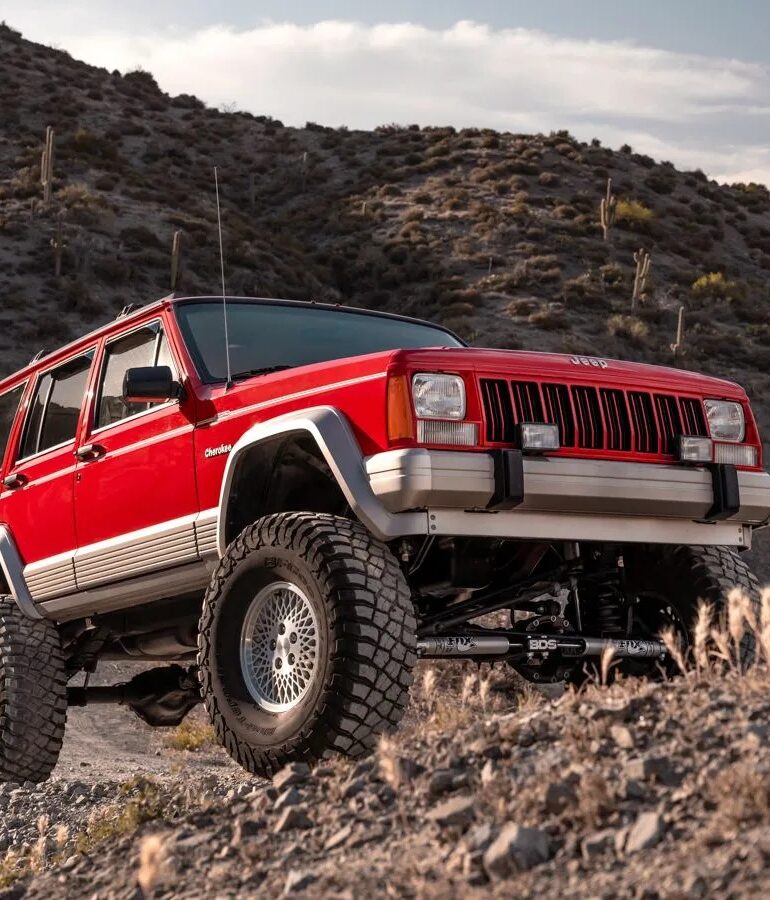
Jeep has one of the richest histories in the automotive industry, built on a reputation for ruggedness, mechanical capability, and vehicles designed to go places where conventional cars simply cannot. From military-inspired utility vehicles to family-friendly SUVs and purpose-built off-roaders, the brand has spent decades establishing an identity that few competitors can replicate.
However, not every successful Jeep has survived the company’s changing product strategies. Over the years, several memorable nameplates have disappeared, replaced by newer vehicles, shifting consumer preferences, and changing ideas about what an SUV or pickup truck should be. Some departures made business sense at the time, but that does not necessarily mean those vehicles have lost their relevance.
In fact, the continued popularity of classic Jeep models, the enthusiasm surrounding vintage off-road builds, and renewed interest in compact pickups suggest that certain discontinued nameplates could have a compelling place in today’s market.
A modern revival would not necessarily mean reproducing an old vehicle. Instead, Jeep could take the original formula, update its engineering, introduce modern powertrains and safety technology, and preserve the characteristics that made each model memorable.
Here are five discontinued Jeep models that deserve another opportunity, based on their historical popularity, enthusiast following, distinctive identities, and potential relevance to today’s automotive market.
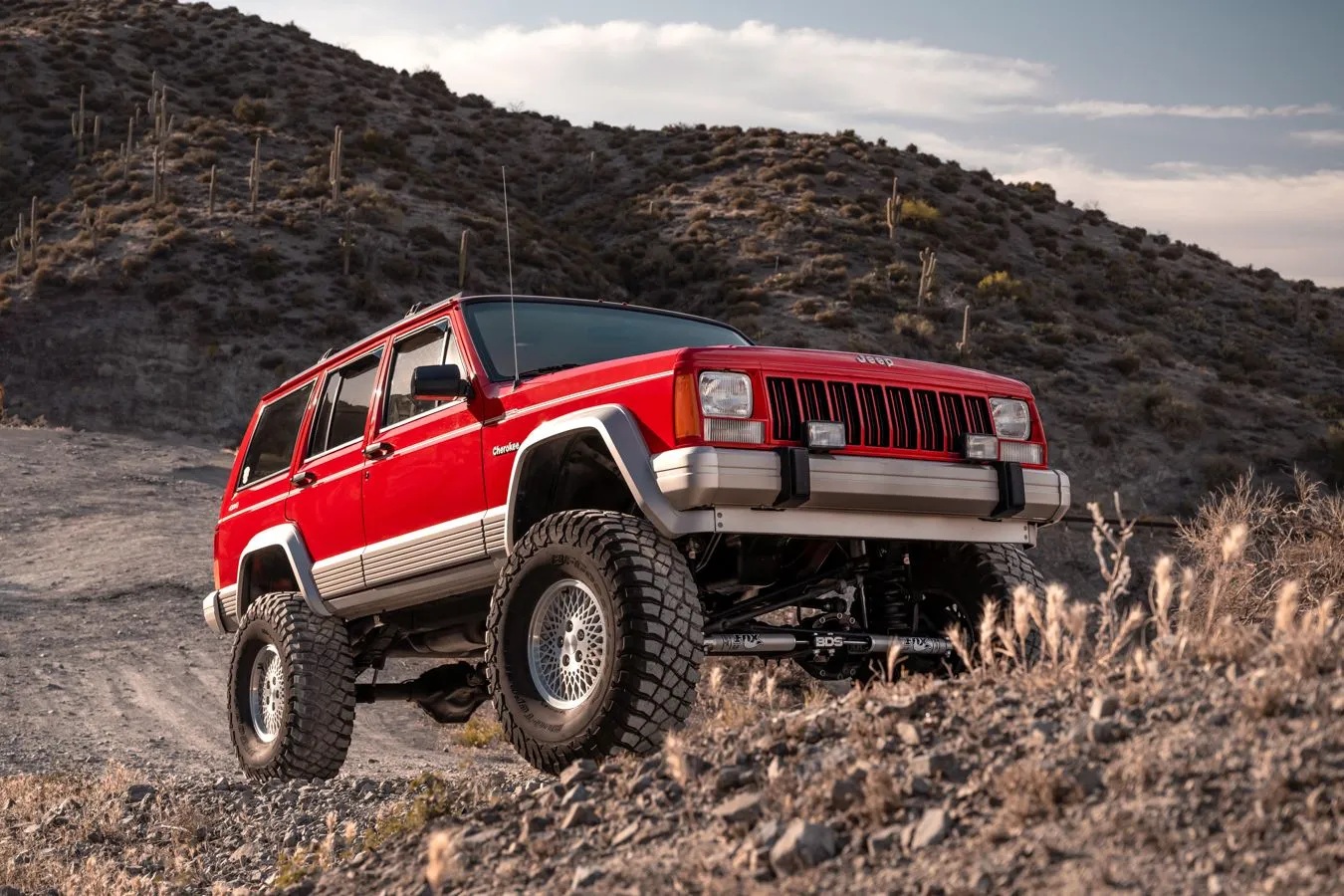
1. Jeep Cherokee XJ: The Compact Off-Roader That Started a Revolution
-
Production: 1984–2001
-
Original category: Compact SUV
-
Standout powertrain: 4.0-liter AMC inline-six
Few discontinued vehicles have earned the kind of reputation enjoyed by the Jeep Cherokee XJ. Introduced for the 1984 model year, the second-generation Cherokee fundamentally changed the SUV market by combining compact dimensions, practical interior space, and genuine four-wheel-drive capability in a relatively lightweight package.
Unlike traditional body-on-frame SUVs, the XJ employed a unibody construction with integrated structural reinforcement. This helped reduce weight while maintaining the rigidity necessary for off-road use. Its suspension design also contributed to its distinctive combination of trail capability and everyday usability.
The introduction of the legendary 4.0-liter inline-six in 1987 further strengthened its reputation. Producing approximately 190 horsepower in later applications, the engine became synonymous with durability, straightforward maintenance, and strong low-speed torque. Combined with available Command-Trac and Selec-Trac four-wheel-drive systems, the Cherokee became an exceptionally versatile vehicle.
Its commercial success was equally impressive. According to historical sales figures, U.S. Cherokee sales reached 165,261 units in 1999, representing a 13% increase over the previous year. Production was even extended beyond its originally scheduled November 2000 closing date in response to customer demand.
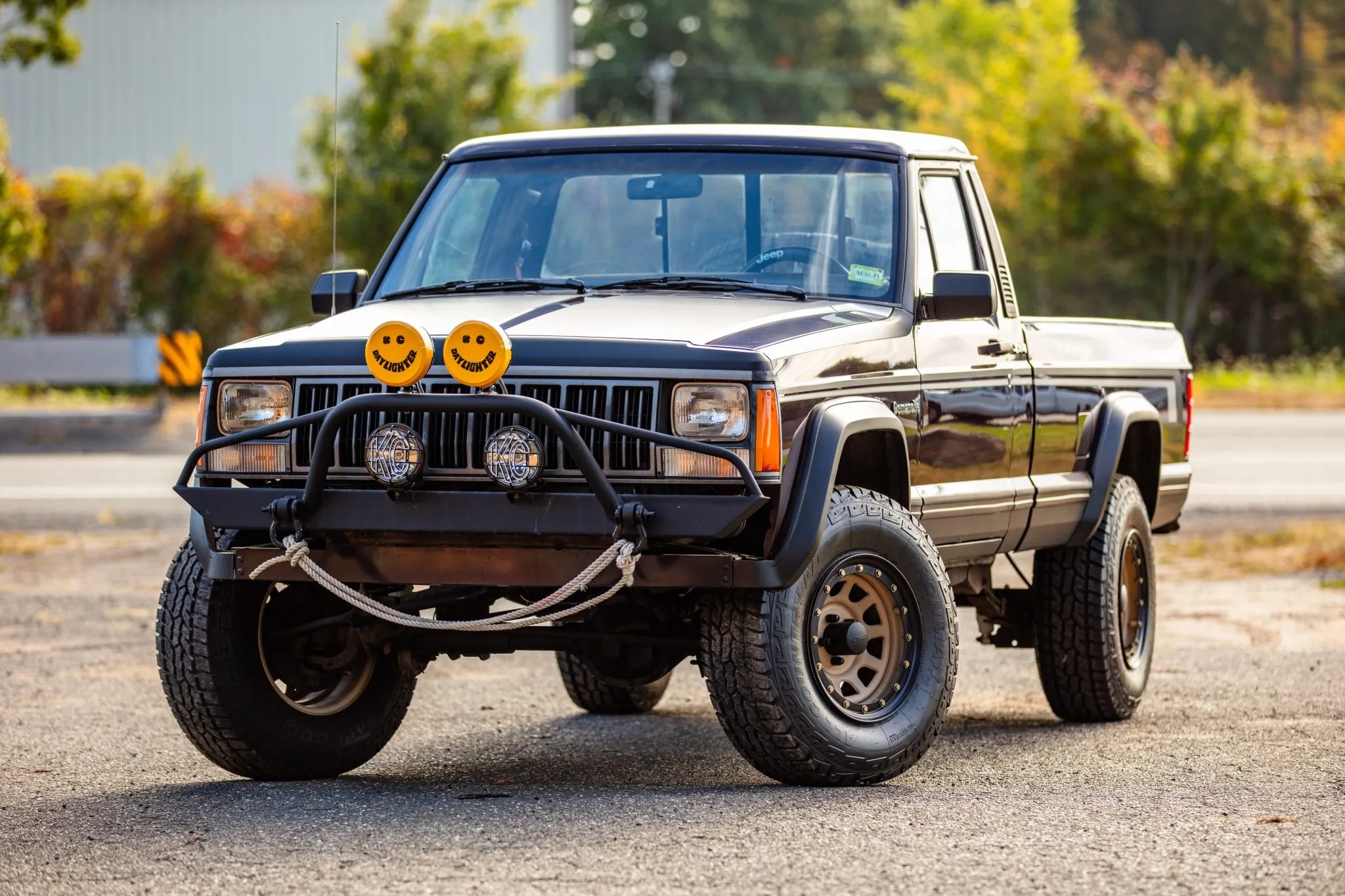
2. Jeep Comanche: A Compact Pickup With Untapped Potential
-
Production: 1986–1992
-
Original category: Compact pickup
-
Standout powertrain: 4.0-liter inline-six
The Jeep Comanche is arguably one of the most interesting discontinued vehicles in the brand’s history. While Jeep eventually returned to the pickup segment with the Gladiator in 2019, the Comanche offered something substantially different: a smaller, lighter, and more approachable truck built around the mechanical architecture of the Cherokee XJ.
Introduced in 1986, the Comanche, internally designated MJ, shared much of its engineering with the Cherokee. Its unibody-based construction was unusual for a pickup, with the cargo bed mounted through a separate structural arrangement. This approach helped distinguish it from conventional body-on-frame competitors.
Jeep offered different configurations, including a short-bed Sport Truck and a longer-bed Chief. Engine choices included four-cylinder and six-cylinder gasoline units, with the 4.0-liter inline-six becoming one of the most desirable options.
The Comanche’s commercial history is particularly interesting. It recorded approximately 43,718 U.S. sales in 1988, its strongest year, before demand declined toward the end of its production run. Just over 190,000 examples were built before production ended in 1992.
Its discontinuation was not necessarily evidence that compact pickups had no future. Corporate considerations, competition from Dodge’s Dakota, and changing market conditions contributed to Jeep’s decision to leave the segment.
Today, the market looks considerably different. Buyers have demonstrated renewed interest in smaller pickups that are easier to maneuver, less expensive to operate, and more practical for everyday transportation. Ford’s Maverick provides a particularly compelling example, with approximately 155,000 units sold in 2025.
3. Jeep Liberty: A Practical SUV That Deserves Another Look
-
Production: 2002–2012 in North America
-
Original category: Compact SUV
-
Standout powertrain: 2.8-liter CRD turbodiesel
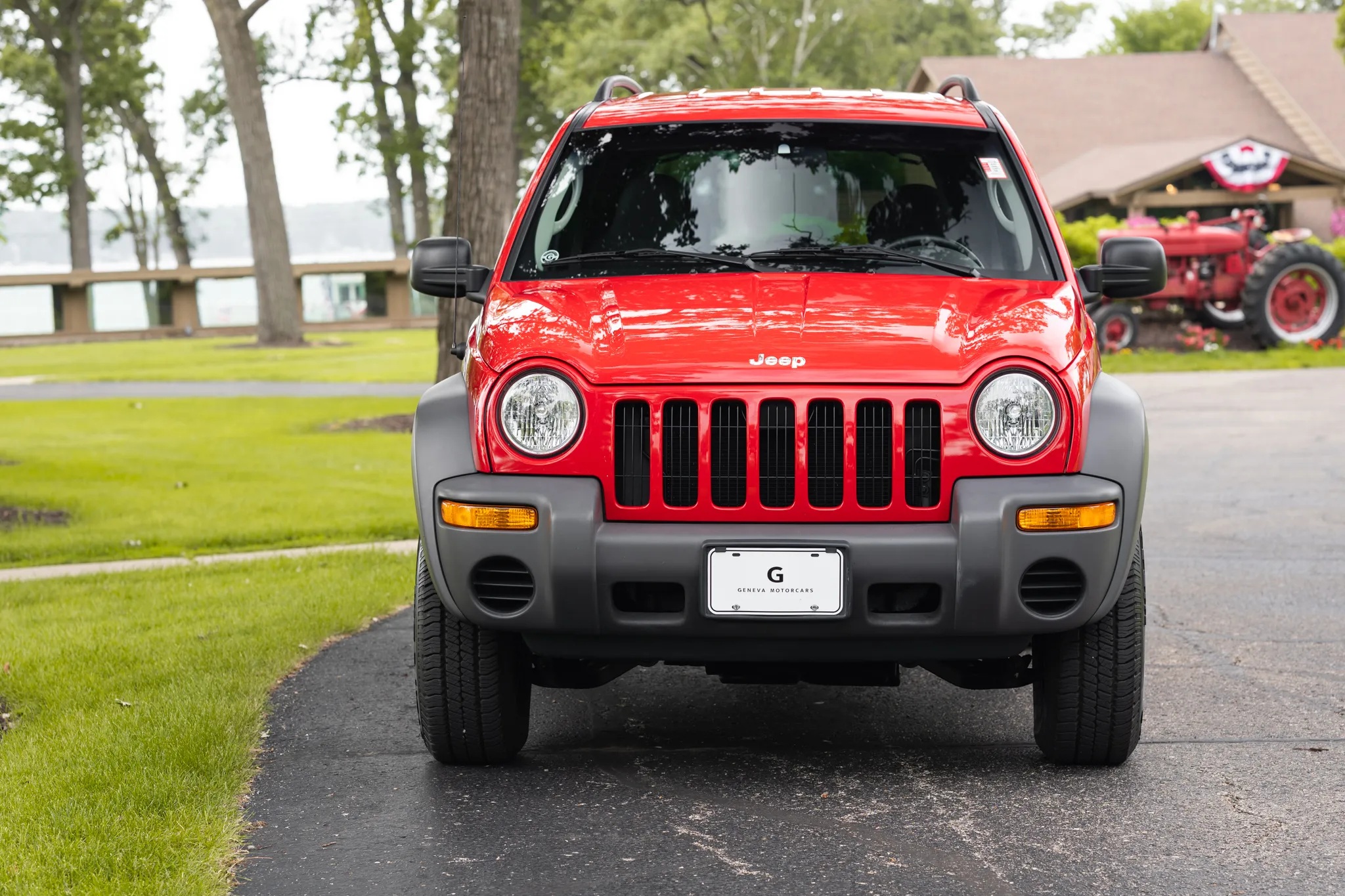
The Jeep Liberty never achieved the legendary status of the Cherokee XJ, but it filled an important role in the brand’s lineup. Introduced in 2002 as the North American replacement for the XJ Cherokee, the Liberty was designed to provide a more modern driving experience without completely abandoning Jeep’s traditional off-road identity.
The first-generation KJ adopted an independent front suspension, a departure from the solid-front-axle arrangement of the XJ. This decision improved everyday ride characteristics and handling, making the Liberty more comfortable for urban driving and longer journeys.
Its styling was also distinctive. Rounded headlights, a relatively upright body, and pronounced wheel arches gave the KJ a personality that separated it from the increasingly crossover-oriented competition.
Power came primarily from a 3.7-liter V6, although certain markets also received a 2.8-liter turbo-diesel. The diesel option was particularly interesting because it combined improved fuel efficiency with useful low-speed torque. Depending on configuration, the Liberty could also be equipped with Jeep’s Command-Trac or Selec-Trac four-wheel-drive systems.
The second-generation KK arrived for 2008, retaining the compact SUV formula but adopting a more squared-off design inspired by the larger Commander. The Liberty continued until 2012, when it was discontinued without an immediate North American successor.
4. Jeep Commander: A Boxy Three-Row SUV With Character
-
Production: 2006–2010 in North America
-
Original category: Full-size three-row SUV
-
Standout powertrain: 5.7-liter HEMI V8
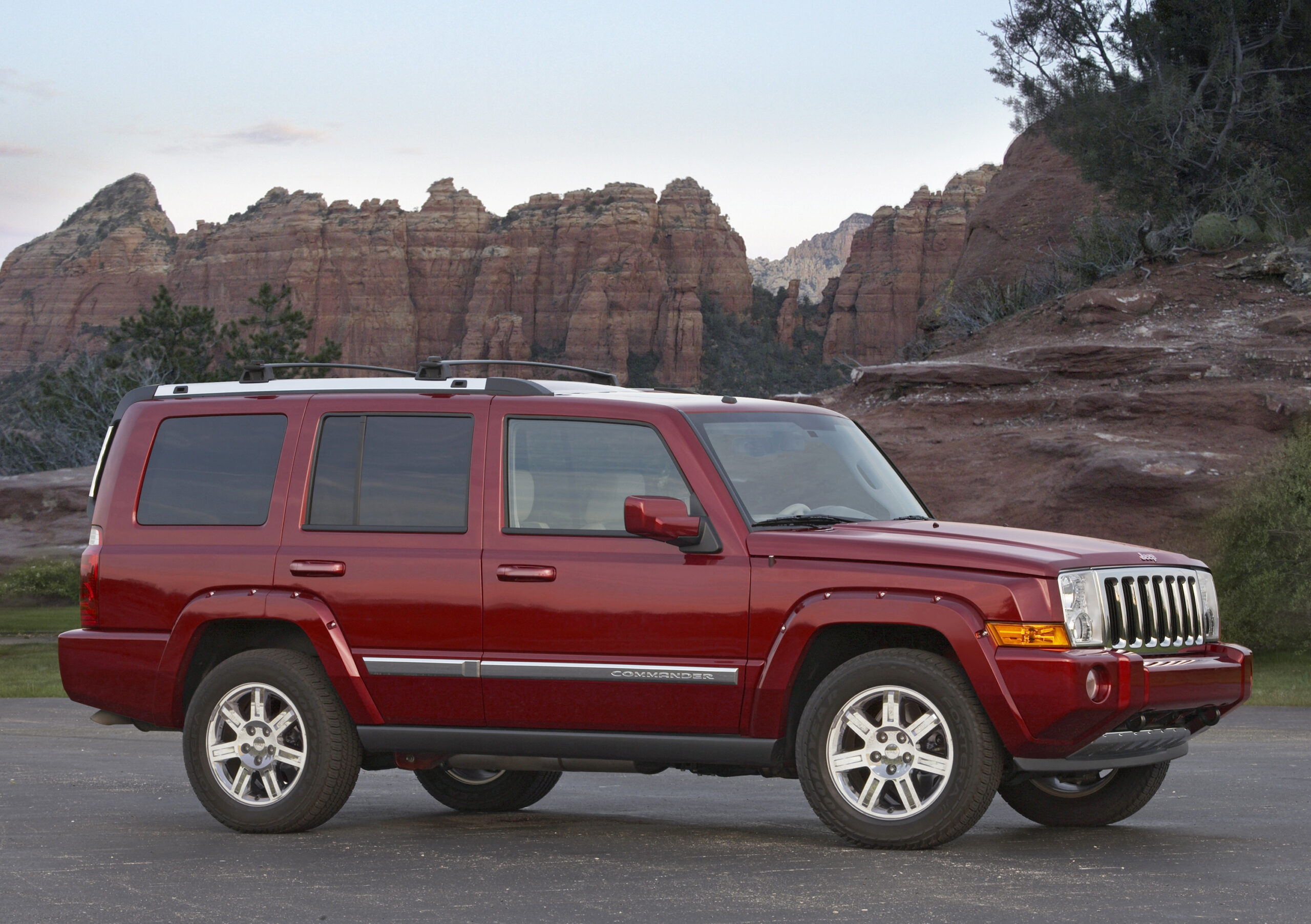
The Jeep Commander was one of the brand’s more distinctive attempts to combine traditional off-road engineering with the practicality of a large family SUV.
Introduced for 2006, the Commander was closely related to the Grand Cherokee WK, sharing its underlying platform and much of its mechanical architecture. However, Jeep gave it a considerably different exterior design, with an upright windshield, squared-off bodywork, and a stepped roofline.
Its most important selling point was its three-row seating configuration. Unlike the Grand Cherokee, which concentrated on five-passenger accommodation, the Commander offered seating for up to seven occupants.
Engine choices included a 3.7-liter V6, a 4.7-liter V8, and the desirable 5.7-liter HEMI V8. Depending on specification, buyers could also obtain advanced four-wheel-drive systems, including Quadra-Trac II and Quadra-Drive II.
The Commander was discontinued after the 2010 model year in North America. Its relatively short production run was unfortunate because it offered something that remains attractive in today’s SUV market: a large, upright vehicle with recognizable Jeep styling and genuine off-road credentials. Jeep’s official historical records identify the XK Commander as a 2006–2010 model.
5. Jeepster Commando: The Forgotten Adventure Vehicle
-
Production: 1967–1973
-
Original category: Compact recreational 4×4
-
Standout powertrain: Dauntless V6 and later AMC V8
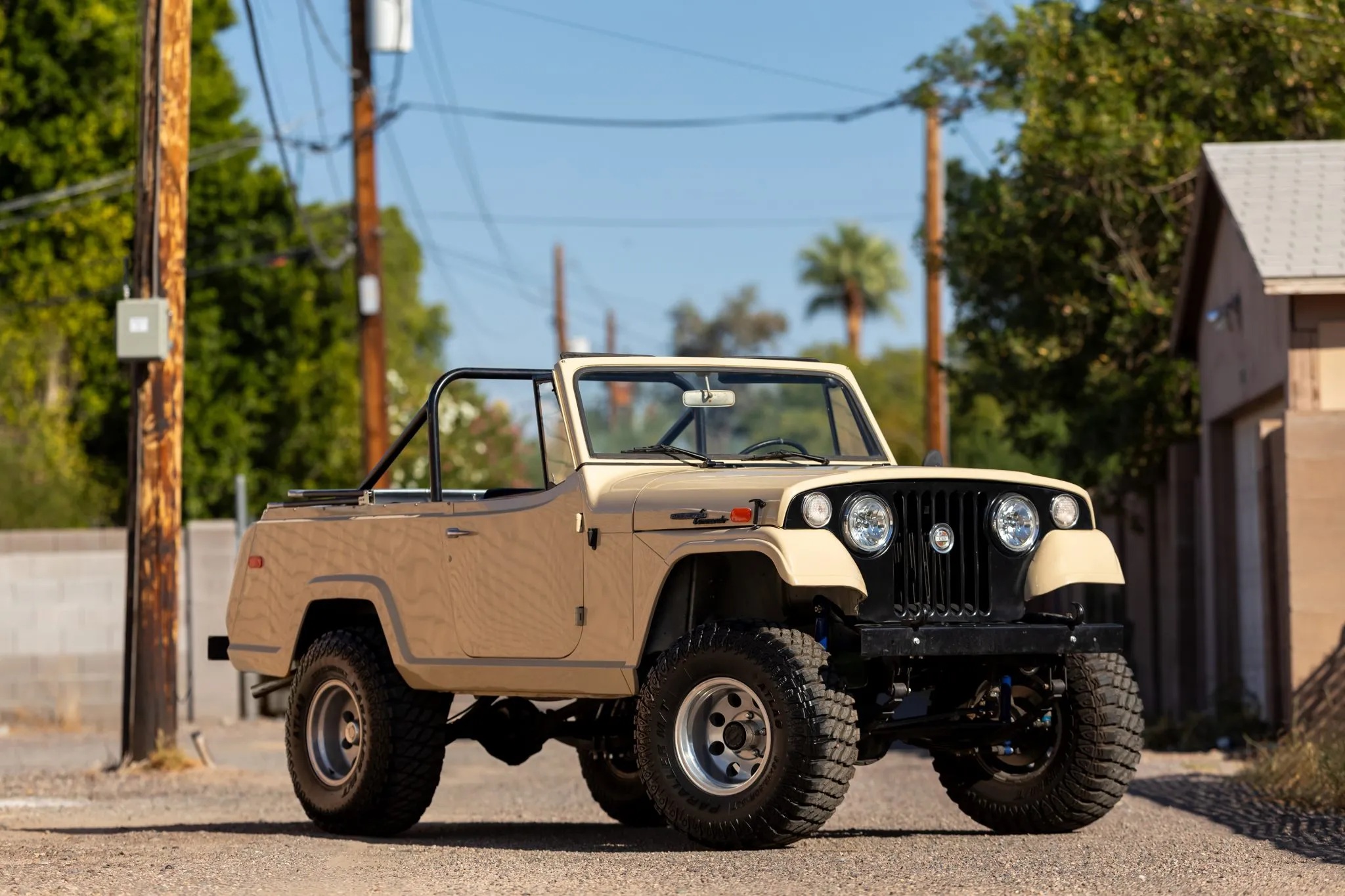
The Jeepster Commando is perhaps the most unusual candidate on this list, but it represents an interesting direction Jeep could explore again. Long before lifestyle-oriented SUVs became mainstream, the Commando was designed to appeal to customers who wanted a vehicle that could handle outdoor adventures while remaining enjoyable on ordinary roads.
Introduced in 1967, the Jeepster Commando was developed to compete against vehicles such as the Ford Bronco and Toyota Land Cruiser. Jeep recognized that recreational four-wheel-drive vehicles were becoming increasingly popular and wanted a product that could appeal to buyers beyond traditional utility and agricultural customers.
One of its greatest strengths was versatility. The original C-101 platform was offered in several body configurations, including a roadster, pickup, convertible, and station wagon. This gave customers considerable freedom to choose a vehicle suited to their particular lifestyle.
The available Dauntless V6 was another highlight. Buyers could also specify an automatic transmission, an appealing feature for a compact four-wheel-drive vehicle during the late 1960s. Later versions adopted AMC engines, including the 304-cubic-inch V8.
Unfortunately, the Commando’s styling changes in 1972 proved controversial. The redesigned front end departed from the traditional Jeep grille, and the model was discontinued after 1973.