

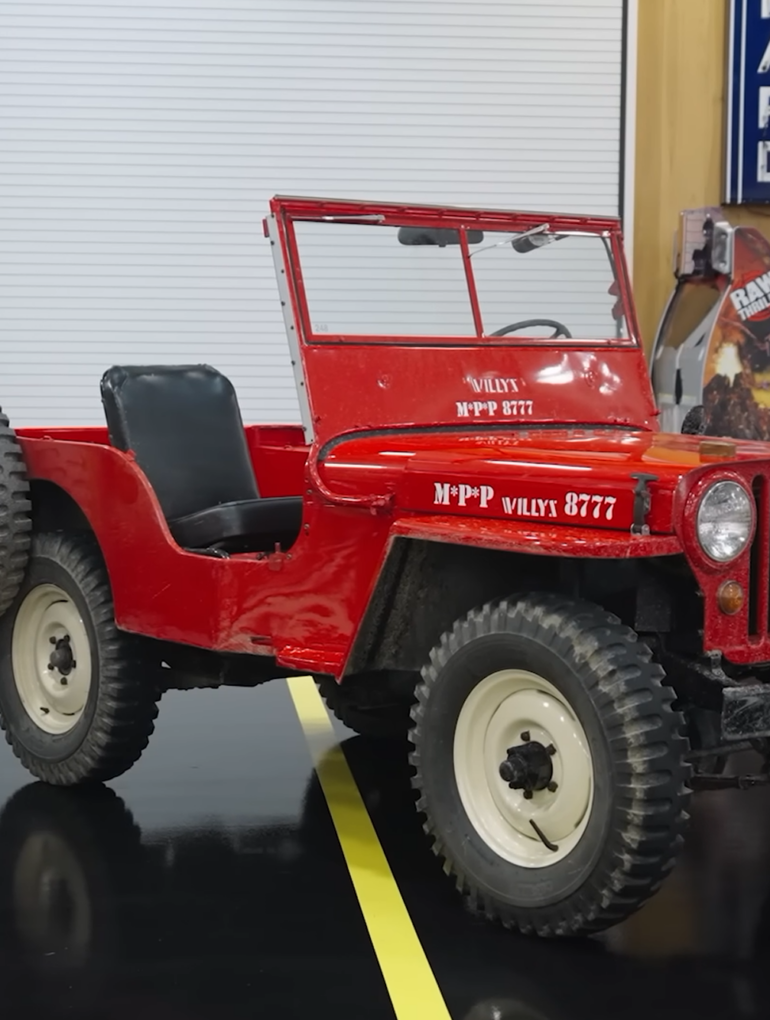
The 1946 Willys Jeep CJ-2A represents a defining moment in American automotive history. Developed from the military Jeep that served Allied forces during World War II, it transformed proven battlefield engineering into a practical civilian vehicle for farms, ranches, forests, and industrial workplaces. Featured by the Audrain Museum Network, this early civilian Jeep demonstrates how a wartime workhorse became an enduring symbol of American utility and off-road capability.
From Military MB to Civilian CJ-2A
The Jeep’s origins date to 1940, when the US military requested a lightweight quarter-ton utility vehicle capable of replacing horses and improving battlefield mobility. The requirements emphasized durability, maneuverability, mechanical simplicity, and adaptability.
Developed through contributions from Willys-Overland, American Bantam, and Ford, the military Jeep became one of World War II’s most recognizable vehicles. Willys and Ford ultimately secured production contracts, manufacturing hundreds of thousands of examples.
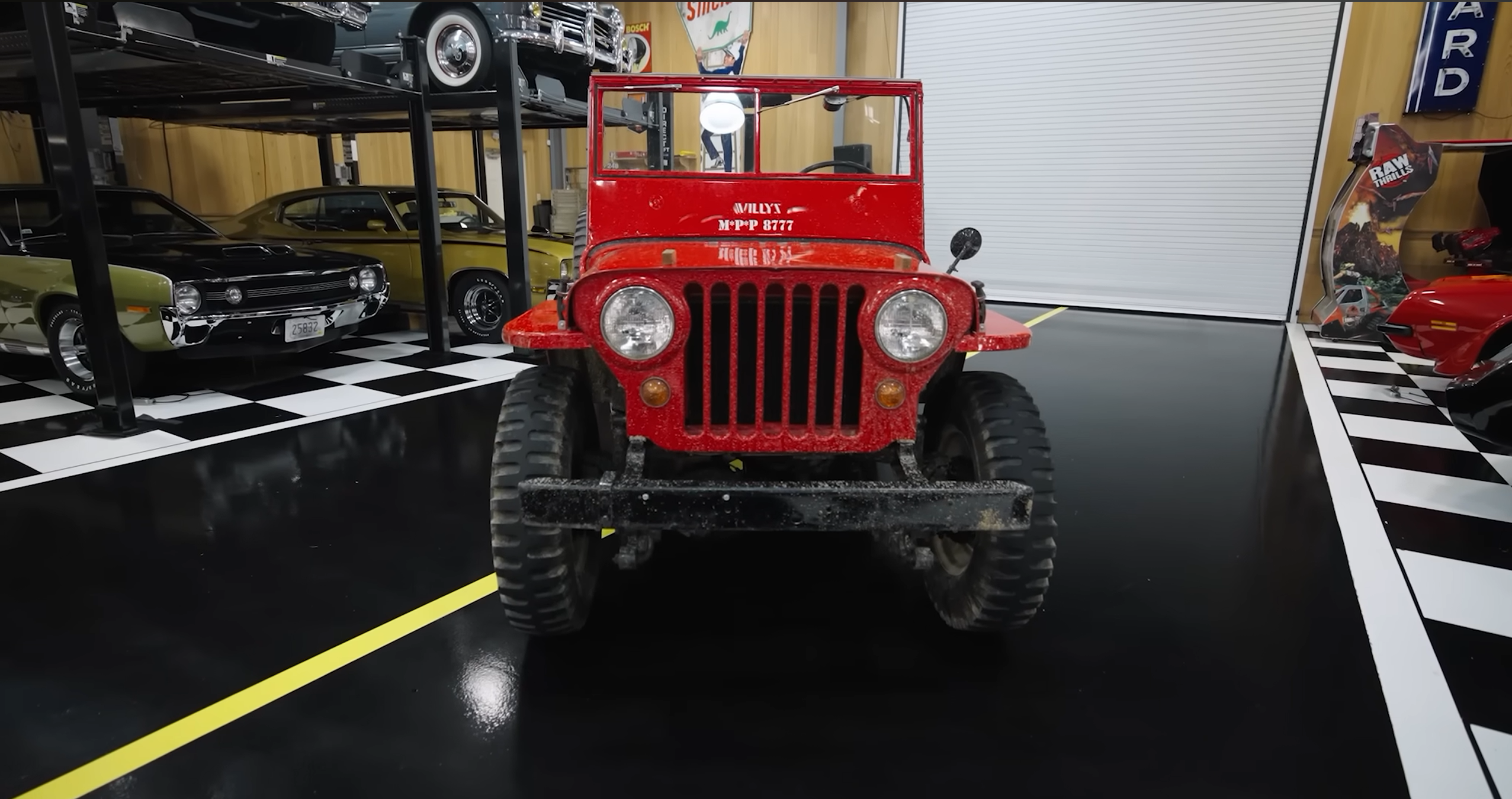
When the war ended, Willys-Overland faced the challenge of transitioning from military production to civilian sales. Recognizing that returning servicemen already understood the Jeep’s capabilities, the company saw an opportunity in America’s agricultural economy.
Introduced in 1945, the CJ-2A adapted the successful military formula for civilian customers. Its intended applications included farming, ranching, forestry, and general transportation.
Civilian Design and Practical Improvements
Although the CJ-2A retained the military MB’s recognizable proportions, Willys introduced several practical changes. Most notably, it received a rear tailgate, making it easier to load equipment and supplies. The spare tire consequently moved from the rear to the side of the vehicle.
Willys also offered the civilian Jeep in 21 different paint colors, often paired with contrasting wheels. This was a significant departure from the military vehicle’s familiar olive-drab appearance.
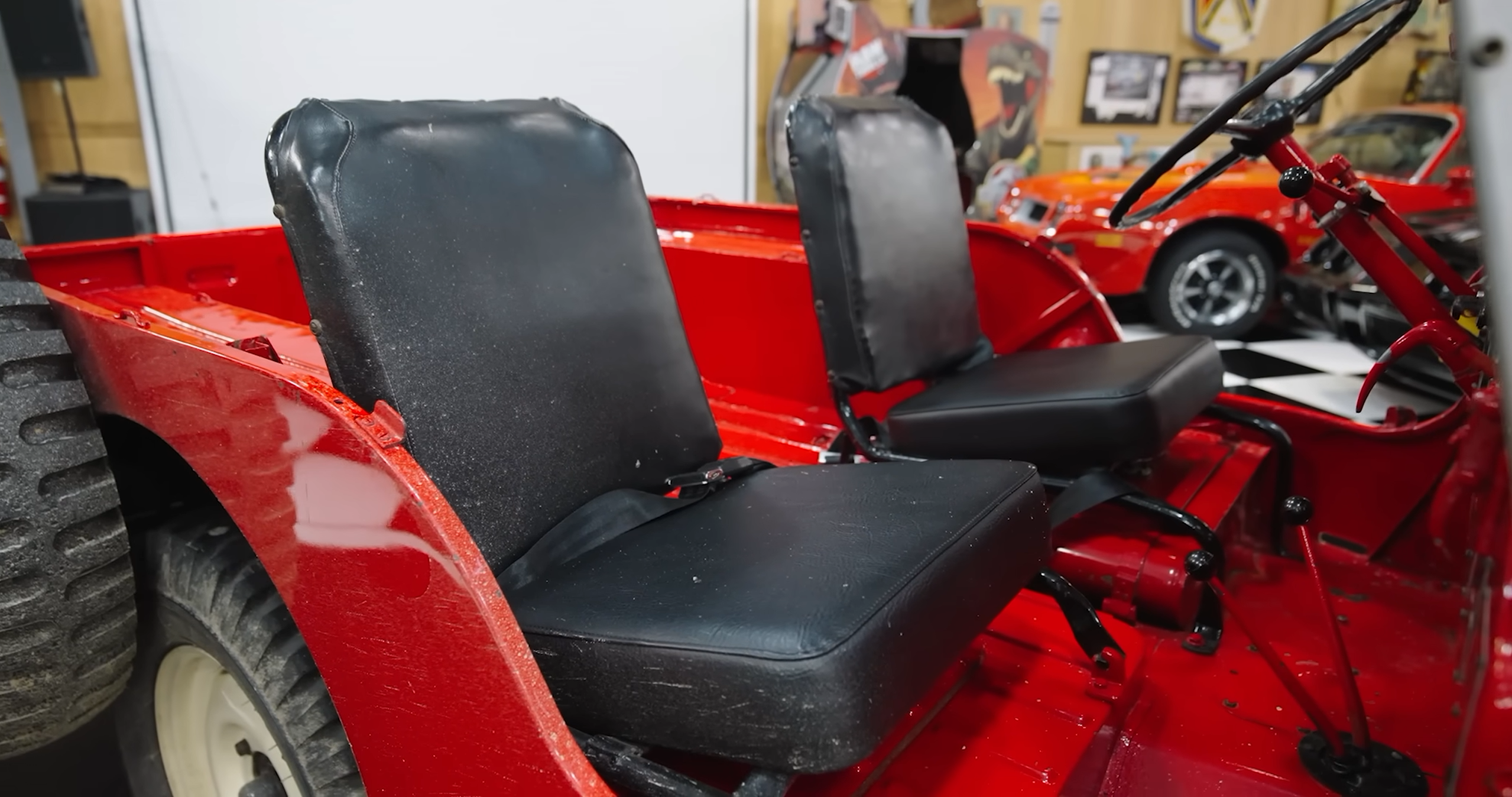
Additional options included a passenger seat, rearview mirror, extra taillights, and an optional top. These improvements made the CJ-2A more suitable for everyday civilian ownership without compromising its utilitarian character.
The Go-Devil Engine: Built for Reliability
Power came from Willys’ 134-cubic-inch (2.2-liter) Go-Devil inline-four engine, producing approximately 60 horsepower. Its flathead configuration prioritized durability, straightforward maintenance, and dependable low-speed performance.
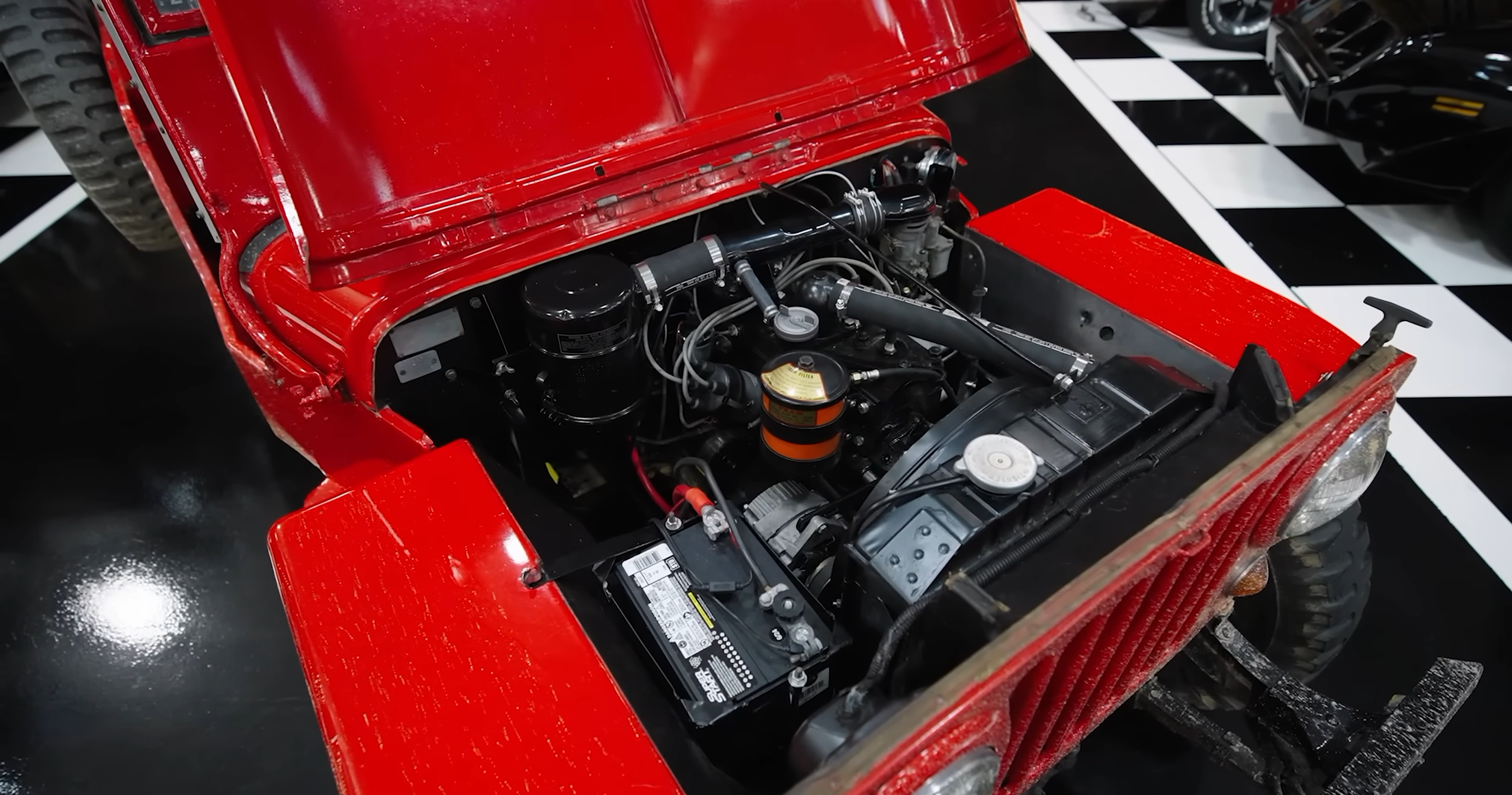
Originally developed for a prewar automobile project, the engine helped Willys secure the military Jeep contract by outperforming Ford’s proposed tractor-based engine, which produced approximately 40 horsepower.
Its mechanical simplicity made it particularly attractive to farmers and ranchers, who valued an engine that could be maintained and repaired without specialized equipment.
Adaptability Made It a Farm Essential
The CJ-2A’s greatest strength was its versatility. Willys offered accessories including front and rear power takeoffs, winches, and snowplows, allowing owners to adapt the vehicle to different working environments.
Its selectable four-wheel-drive system also made it useful on muddy tracks, uneven fields, and gravel roads. Rather than replacing every function of a conventional tractor, the Jeep offered a combination of transportation, hauling, and off-road mobility in one compact package.
Behind the Wheel: A Genuine Utility Vehicle
The Audrain Museum Network’s driving presentation highlights the CJ-2A’s distinctly agricultural character. Its elevated seating position, short wheelbase, and responsive steering recall the vehicle’s original role in replacing cavalry mobility.
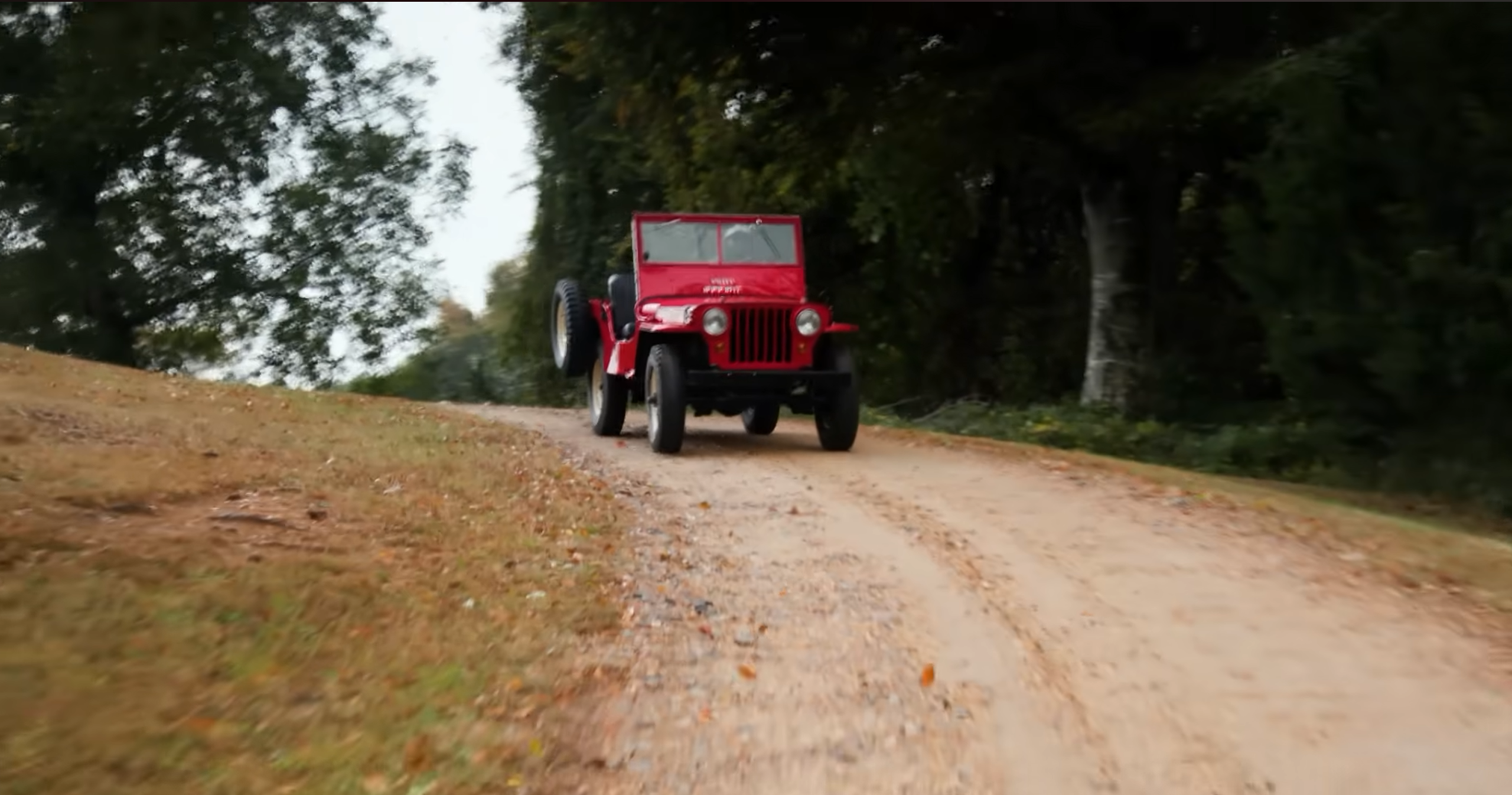
On paved roads, approximately 25–30 mph is described as a comfortable operating speed. However, the Jeep feels more naturally suited to gravel, mud, and unpaved surfaces.
Its rear-wheel-drive configuration can be supplemented by selectable four-wheel drive, with high- and low-range gearing providing additional flexibility across challenging terrain.
An Enduring Automotive Legacy
The 1946 Willys CJ-2A helped establish the foundation for the civilian Jeep market. Its combination of rugged construction, mechanical simplicity, and adaptability demonstrated that military engineering could serve an entirely different purpose during peacetime.
Although modern Jeep Wrangler models offer substantially greater comfort, safety, and technology, they retain the fundamental philosophy established by early civilian Jeeps.
The CJ-2A was never intended to be a luxury automobile or high-speed road vehicle. Its achievement was much simpler: delivering dependable mobility wherever conventional cars struggled. That practical philosophy helped turn the Jeep into an American automotive institution.
Source: Audrain Museum Network