

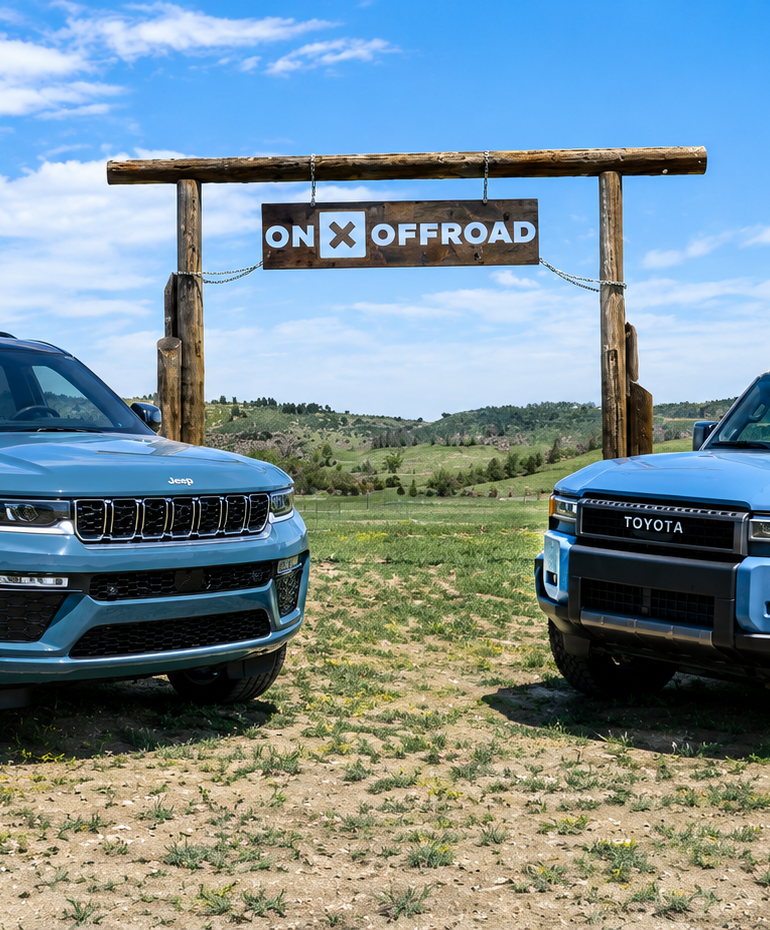
Tommy and Roman from The Fast Lane Car set out to determine which SUV delivers the superior balance of off-road capability and everyday usability: the Jeep Grand Cherokee or the Toyota Land Cruiser. Through a combination of technical slip tests, demanding off-road exercises, and comprehensive interior evaluations, the pair examined how each vehicle performs when pushed beyond ordinary driving conditions.
Four-Wheel-Drive Technology Put to the Test
The comparison began with TFL’s signature slip tests, which simulate extreme traction-loss scenarios using rollers. These controlled challenges reveal how effectively a vehicle’s drivetrain can redirect power to wheels with available grip.
The Jeep Grand Cherokee immediately showcased the sophistication of its Quadra-Trac II system, automatically transferring torque with minimal wheel slip and requiring little driver input. Its electronic traction management and automatic differential controls consistently delivered quick, confident responses.
The Toyota Land Cruiser, equipped with a full-time four-wheel-drive system and Torsen center differential, demonstrated a different approach. While initial results in standard mode required more intervention, engaging the center differential lock and specialized terrain settings dramatically improved performance, highlighting the system’s robust mechanical capabilities.

Advanced Traction Systems and Low-Range Performance
As the tests became more demanding, both vehicles were placed in low-range gearing to evaluate their maximum off-road potential.
The Grand Cherokee benefited from aggressive traction programming, an electronic limited-slip rear differential, and terrain-specific drive modes. Its system automatically adjusted to conditions, making difficult obstacles surprisingly manageable.
The Land Cruiser excelled when utilizing its full suite of off-road tools, including Multi-Terrain Select, Crawl Control, and a mechanical rear differential locker. Once activated, these systems delivered exceptional traction and stability, particularly in three-wheel and front-wheel slip situations.
Real-World Off-Road Evaluation
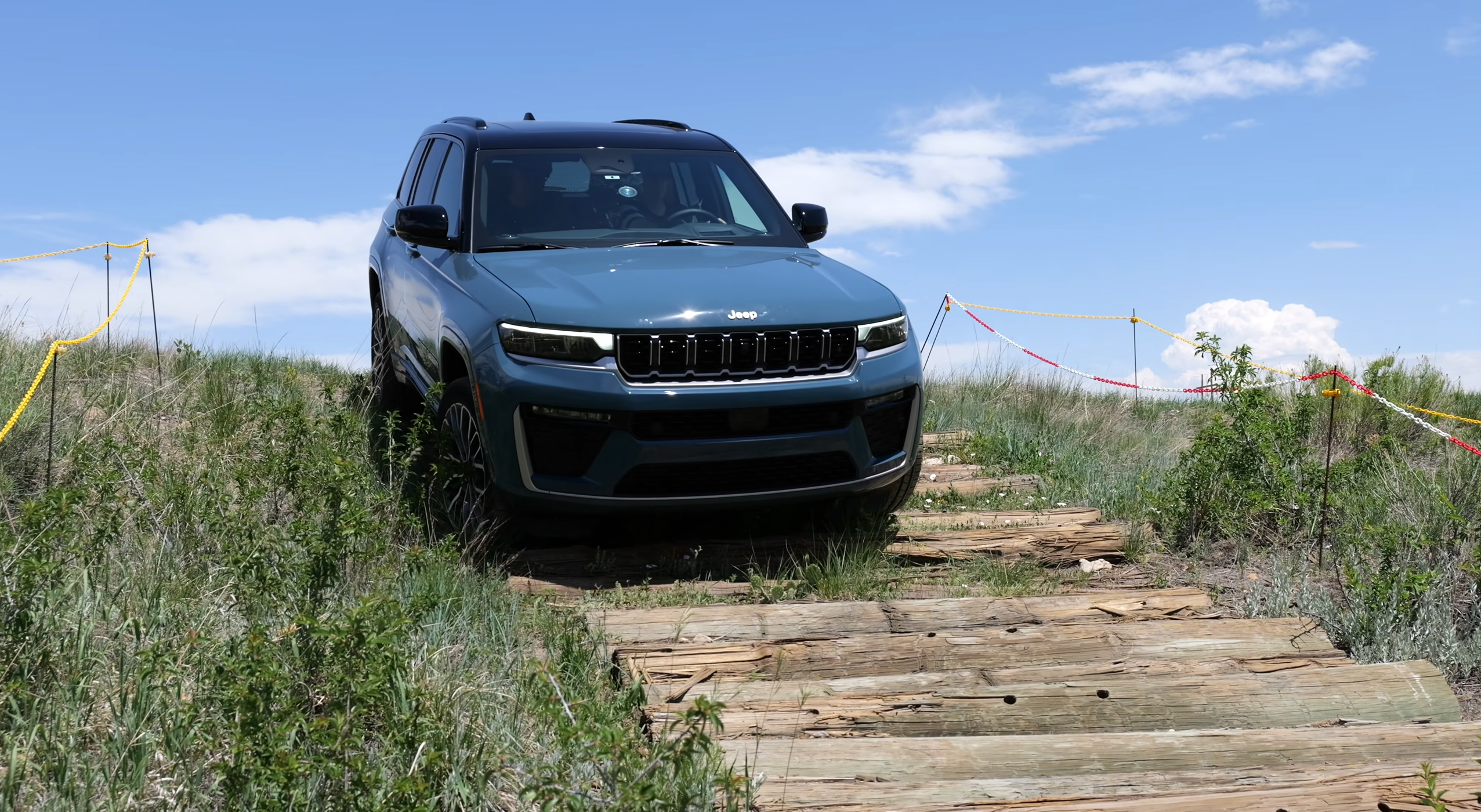
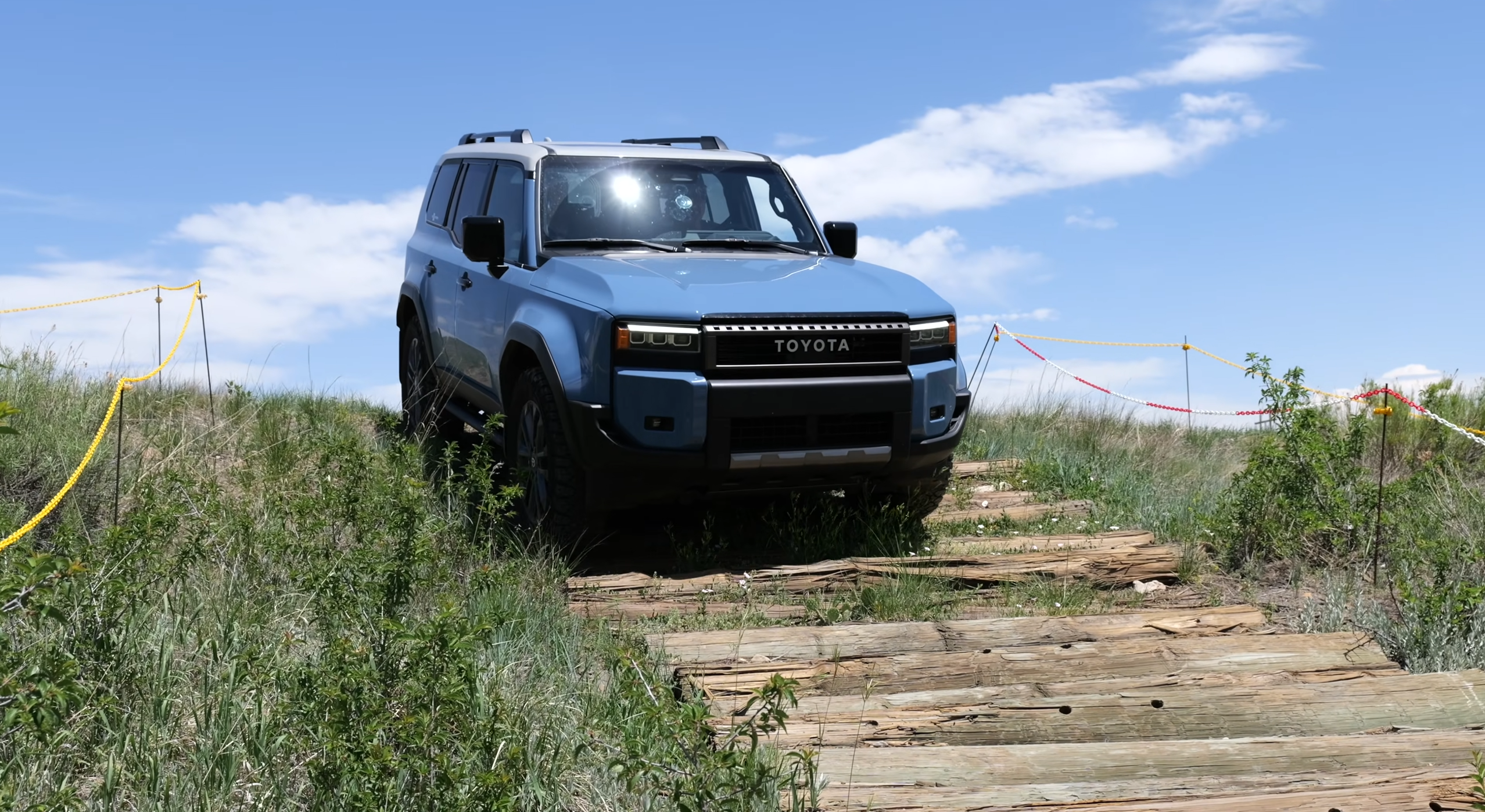
Moving beyond the test rollers, the team tackled logs, trenches, and articulation obstacles to observe how each SUV behaved in genuine off-road environments.
The Land Cruiser’s body-on-frame construction, traditional off-road architecture, and mechanical locking differentials provided a highly controlled and predictable driving experience. Drivers could feel directly connected to the terrain and vehicle response.
By contrast, the Grand Cherokee relied heavily on electronic assistance and adaptive air suspension. Its system continuously managed traction and suspension settings automatically, offering impressive capability while reducing the need for driver involvement.
Interior Design and Everyday Comfort
Inside, the two SUVs reflect very different philosophies.
The Grand Cherokee prioritizes luxury and technology, featuring premium materials, quilted leather upholstery, multiple digital displays, massaging seats, night vision technology, and an upscale cabin environment. It feels designed for drivers who spend most of their time on pavement but occasionally venture off-road.
The Land Cruiser takes a more utilitarian approach. Physical buttons, straightforward controls, and a durable cabin layout emphasize practicality and ease of operation. While less luxurious, the interior focuses on functionality and long-term dependability.
Daily Usability and Ownership Considerations
For everyday driving, the Grand Cherokee offers superior comfort, a more premium atmosphere, greater towing capacity, and a broader range of convenience features. Its highly automated systems make off-roading accessible to drivers of all skill levels.
The Land Cruiser counters with Toyota’s renowned reputation for reliability, simpler mechanical systems, and stronger off-road credentials. Its design prioritizes durability and confidence in remote environments where dependability is paramount.
Verdict: Luxury Adventurer vs Rugged Explorer
The comparison ultimately highlights two distinct interpretations of the modern adventure SUV.
The Jeep Grand Cherokee delivers an impressive blend of luxury, technology, and automated off-road capability, making it an ideal choice for drivers seeking comfort without sacrificing trail performance.
The Toyota Land Cruiser remains the more traditional off-roader, offering exceptional mechanical capability, greater driver control, and the durability that has defined the Land Cruiser name for generations.
While both vehicles are highly capable, the Grand Cherokee excels as a refined all-rounder, whereas the Land Cruiser stands out as a purpose-built explorer designed to thrive far beyond the pavement.
Source: The Fast Lane Car