

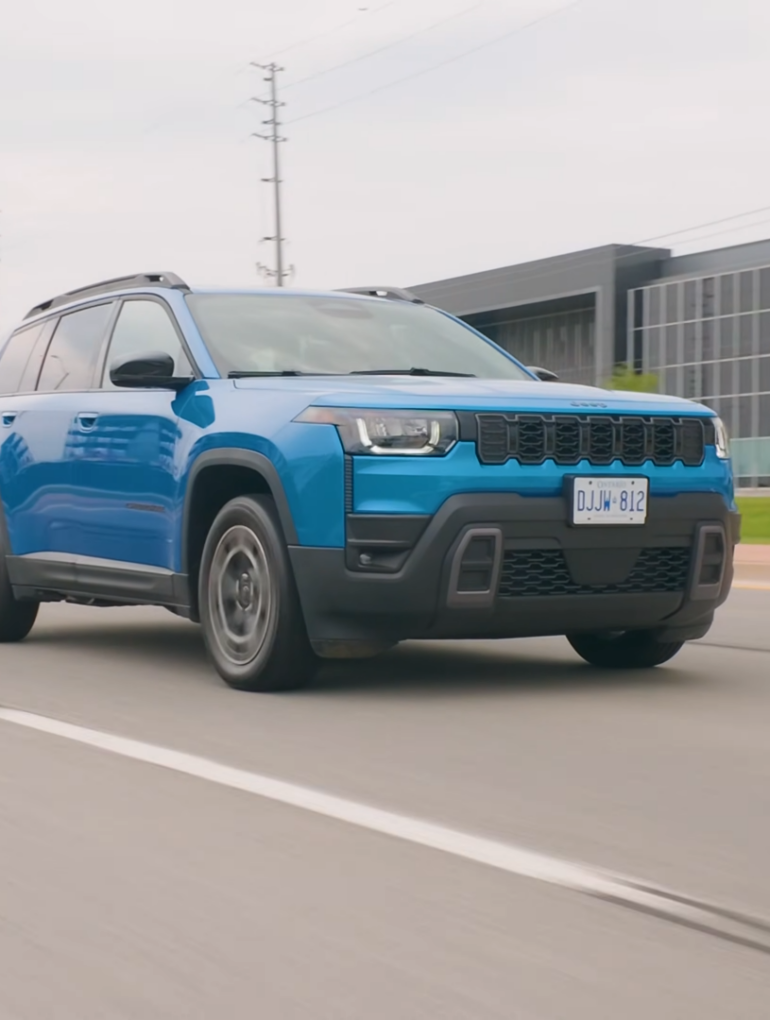
The 2026 Jeep Cherokee marks a significant change for the nameplate, introducing a hybrid powertrain and a substantially redesigned sixth-generation platform. Rather than simply updating the outgoing Cherokee, Jeep has moved the model toward a more upright, traditionally rugged SUV design while adding a powertrain engineered around both efficiency and responsive performance.
The result is a compact SUV that enters one of the industry’s most competitive segments with a clear objective: challenge established hybrid players such as the Toyota RAV4 and Honda CR-V while retaining the visual identity and all-weather capability expected of a Jeep.
A Return to a More Traditional Cherokee Design
The Cherokee name has a long history, but the model’s styling has changed considerably over the decades. The XJ generation, introduced in the 1980s, established the basic formula that would define the compact SUV: a relatively compact footprint, upright proportions, practical packaging, and genuine off-road capability. The XJ ultimately became one of the most influential compact SUVs of its era.
The 2014 Cherokee moved in a very different direction. Its distinctive front fascia and unusual proportions divided opinion, making the design one of the more controversial aspects of the model. The new Cherokee represents a deliberate departure from that approach. Jeep has returned to a boxier silhouette, larger body dimensions, a more substantial stance, and a more conventional interpretation of the brand’s design language.
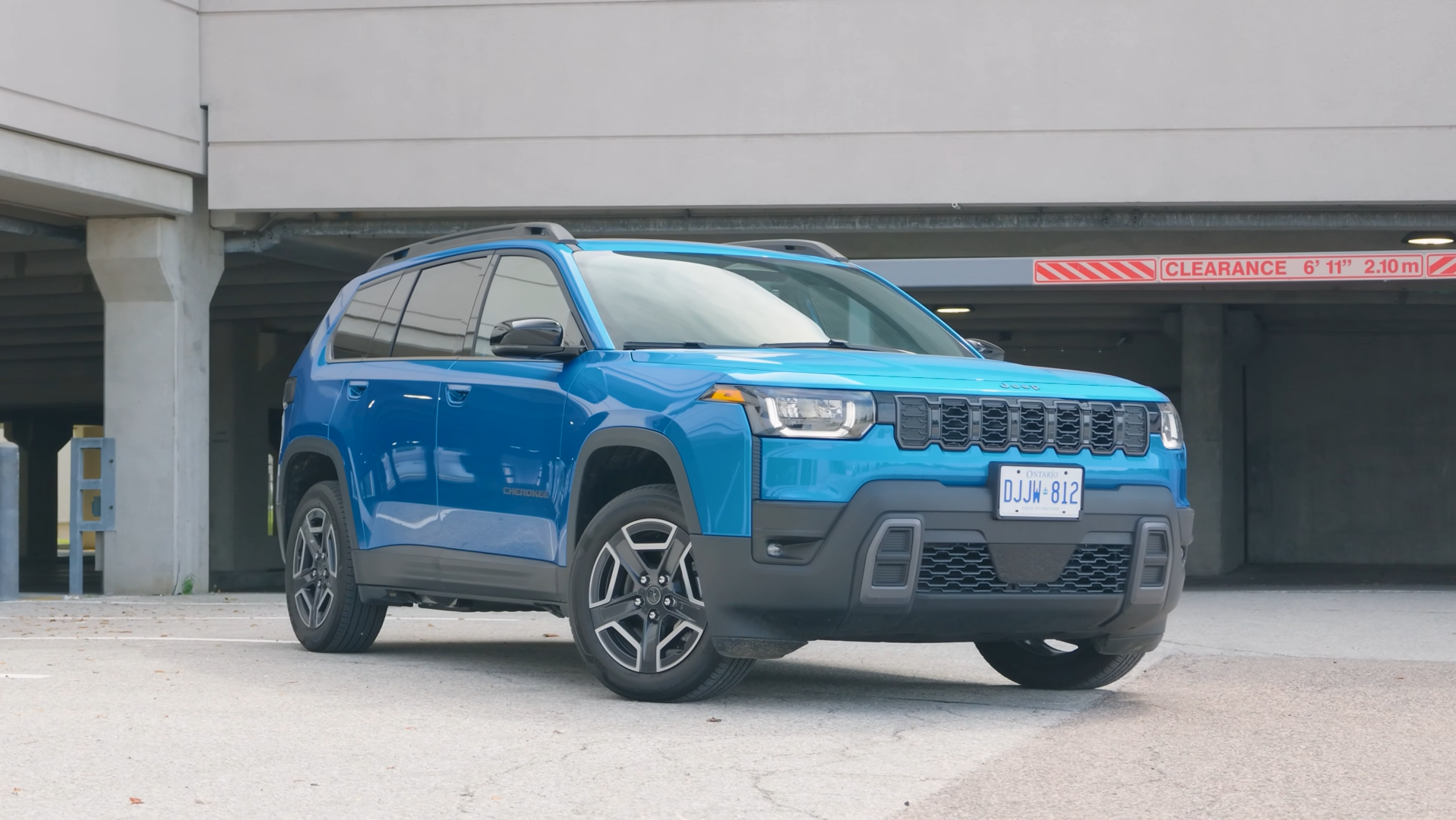
The front end is dominated by Jeep’s signature seven-slot grille, larger lighting elements, LED daytime running lights, substantial lower cladding, and a heavily sculpted bumper. The overall treatment is unmistakably Jeep, but it is considerably more mature than the outgoing design.
The Cherokee has also grown physically. Its longer body, wider proportions, extended wheelbase, larger doors, and more upright greenhouse contribute to a more substantial presence on the road. The trade-off is that some of the exterior volume does not translate directly into additional interior or cargo capacity.
Interior: More Technology, Better Packaging
Inside, Jeep has made a much more substantial technological investment. The cabin incorporates a digital instrument cluster, a large central infotainment display, wireless smartphone connectivity, wireless charging, USB-C ports, and a range of electronic vehicle-management functions. Apple CarPlay and Android Auto are also available wirelessly.
The infotainment system is particularly important because Jeep has used the screen to expose much of the Cherokee Hybrid’s underlying technology. Dedicated e-hybrid displays show how the vehicle is using its gasoline engine and electric motors, how energy is flowing through the system, and how the battery is being replenished. Jeep’s familiar off-road pages are also integrated into the system, providing information such as vehicle attitude and selectable terrain modes.
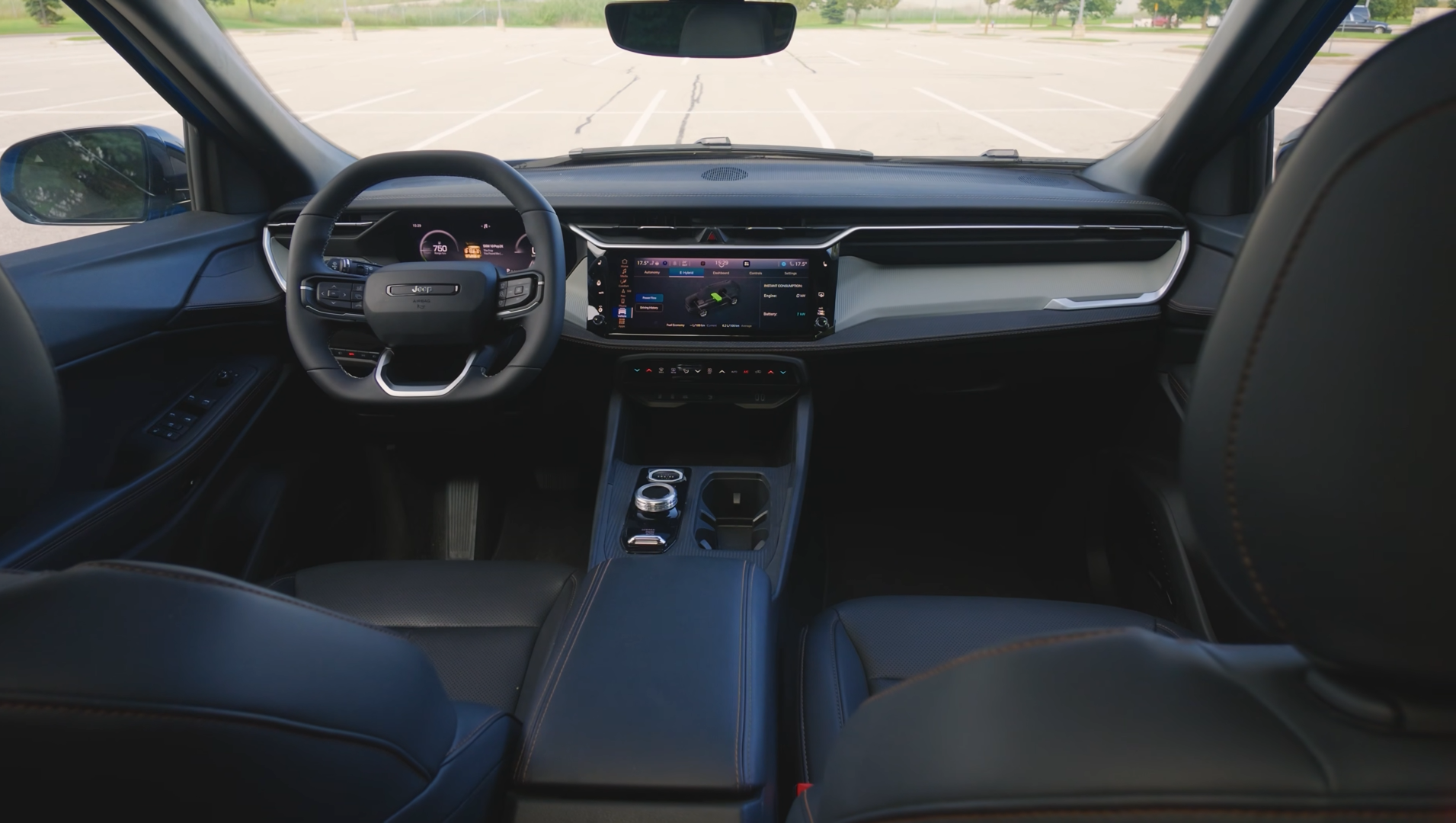
The interface also retains physical controls for important functions, including climate control, while the center console houses the drive selector, drive-mode controls, cupholders, and additional storage.
The available panoramic roof is another significant feature. It adds light to the cabin and makes the interior feel considerably more open, particularly from the rear seats. Heated front seats and a heated steering wheel are available on the tested configuration, although ventilated seats are not included.
One notable omission is a 360-degree camera. That is disappointing for a modern SUV positioned around both technology and off-road capability, particularly when maneuvering in tight spaces or on trails.
Rear-Seat Space and Practicality
The Cherokee’s larger exterior dimensions do not necessarily translate into class-leading interior packaging. Rear-seat occupants sit relatively high, creating what can be described as a theater-style seating position. Legroom is adequate, and the rear compartment provides useful amenities such as USB-C ports, air vents, a center armrest, and a 60/40 split-folding rear seat.
However, the Cherokee illustrates an important distinction between exterior size and usable volume. Despite its larger footprint, it does not deliver the enormous cargo area associated with some of its competitors.
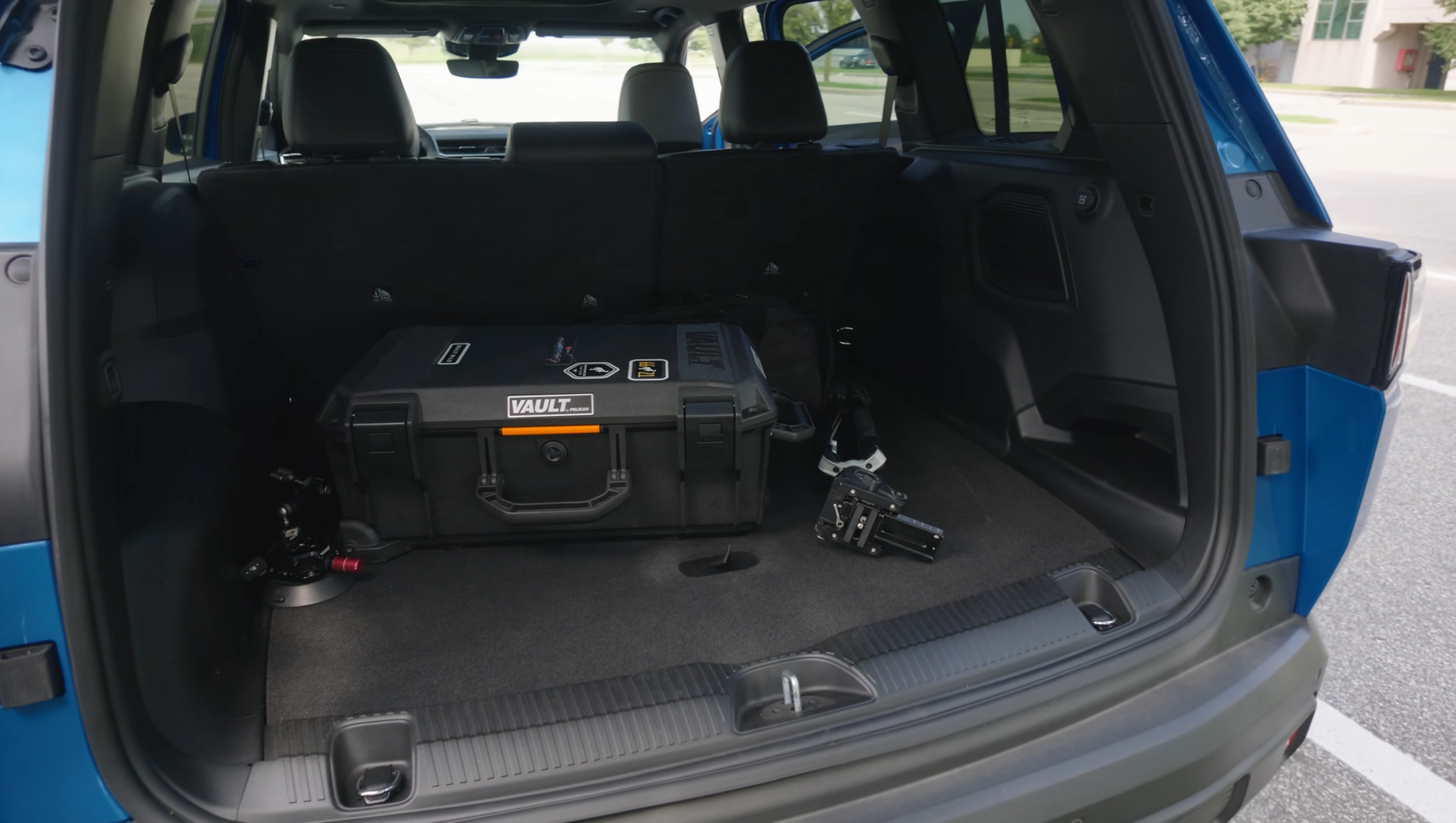
The hybrid system is partly responsible. The Cherokee combines its hybrid hardware with a proper all-wheel-drive system, both of which consume packaging space. As a result, cargo capacity is closer to the Toyota RAV4 than the particularly generous Honda CR-V, rather than establishing a new benchmark for the segment.
That compromise is significant because buyers in this category generally prioritize interior versatility. Jeep has effectively chosen to spend some of that available space on drivetrain capability and its more muscular exterior proportions.
The 1.6-Liter Turbocharged Hybrid Powertrain
The most consequential change is underneath the hood.
The 2026 Cherokee Hybrid uses a new 1.6-liter turbocharged four-cylinder engine integrated into a hybrid powertrain with dual electric motors. The system produces a claimed 210 hp and 230 lb-ft of torque, according to the supplied review material.
This configuration differs from the naturally aspirated gasoline engines commonly associated with many mainstream hybrid SUVs. Jeep’s decision to combine turbocharging with electrification is intended to address one of the inherent weaknesses of smaller naturally aspirated engines: performance when additional power is demanded at higher speeds.
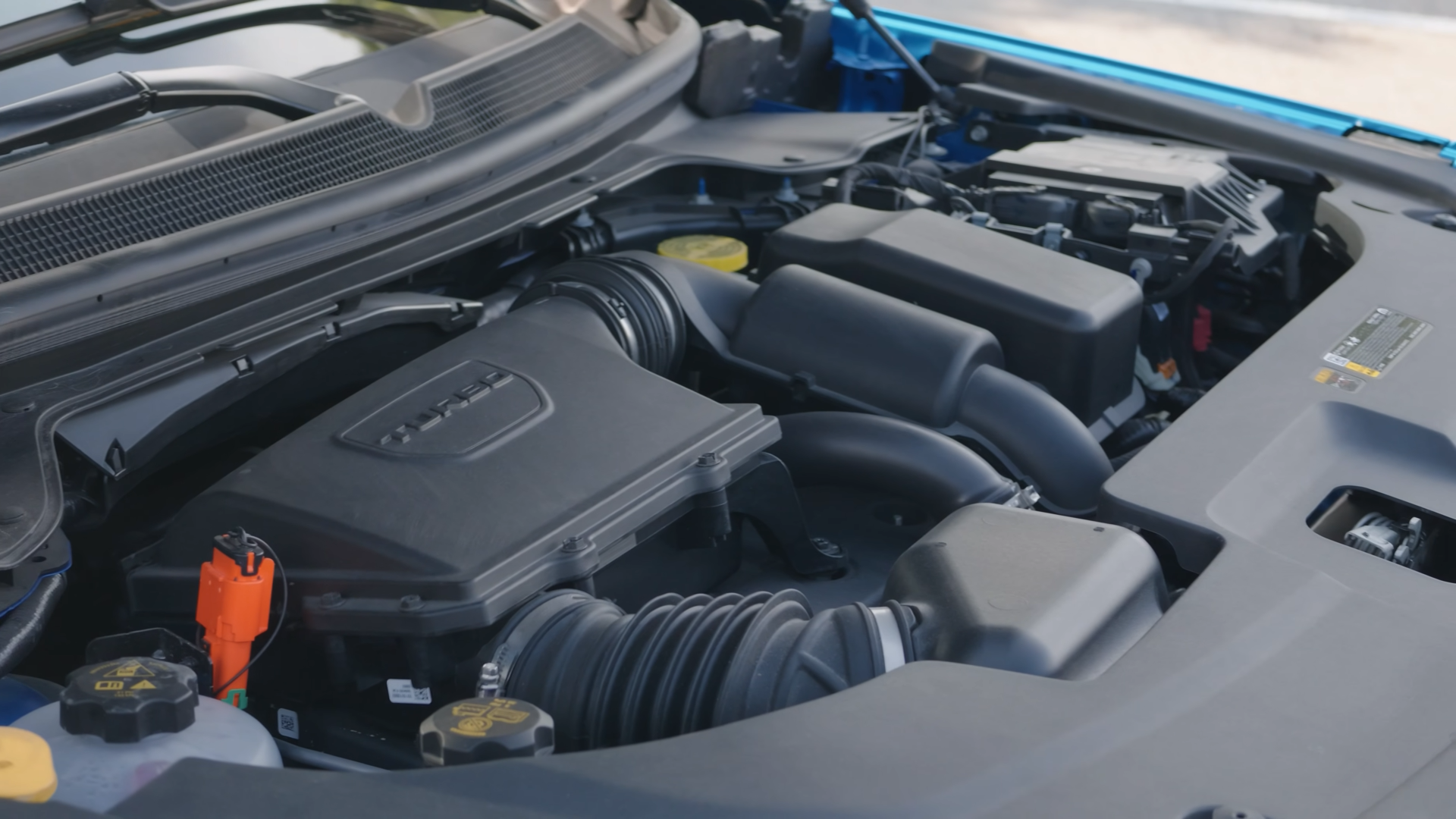
At lower loads and during urban driving, the electric motors can provide propulsion while reducing reliance on the gasoline engine. Electric motors also produce torque immediately, giving the Cherokee responsive initial acceleration. When greater sustained power is required, particularly during highway acceleration and passing, the turbocharged gasoline engine contributes additional output.
This produces a different driving character from a conventional naturally aspirated hybrid. Instead of depending almost entirely on engine displacement and continuously varying engine speed, the Cherokee can combine electric motor response with turbocharged combustion-engine output.
The New Electrified Transmission
Jeep pairs the powertrain with a new electronically controlled continuously variable transmission, or ECVT. The transmission was designed specifically to coordinate the gasoline engine and dual electric motors while maintaining smooth power delivery.
The underlying philosophy is straightforward. In normal city driving, electric propulsion can handle much of the work, prioritizing efficiency. During acceleration or highway passing, the electric motors provide immediate torque before the turbocharged engine contributes additional power when required.
This division of labor gives the Cherokee a powertrain that is designed less around a single source of propulsion and more around constantly optimizing how gasoline and electrical energy are converted into forward motion.
Fuel Economy and Driving Range
Efficiency is one of the Cherokee Hybrid’s strongest selling points.
The supplied material cites approximately 6.3 L/100 km combined, equivalent to roughly 37–38 mpg, depending on the testing standard and market. The Canadian figures provided are 6.1 L/100 km city and 6.7 L/100 km highway.
The system uses a relatively small 1.08-kWh, 400-volt battery, and unlike a plug-in hybrid, the Cherokee does not require an external charging connection. Instead, the battery is replenished through regenerative braking and energy recovery during deceleration and other operating conditions.
That approach is central to the vehicle’s appeal. Drivers receive many of the efficiency benefits associated with electrification without having to modify their routine around charging infrastructure.
The combination of efficiency and a large fuel tank also gives the Cherokee impressive theoretical driving range. The review reports a range exceeding 500 miles under favorable conditions, while the vehicle’s onboard estimate reached approximately 755 km on a full tank during the drive.
How Does It Drive?
On the road, the Cherokee Hybrid’s character is distinctly different from what its rugged exterior might suggest.
The vehicle is quiet under normal operation, particularly when the electric motors are doing most of the work. Pressing the accelerator harder brings the gasoline engine into the equation, with the turbocharger providing a noticeable change in response and engine character.
The steering is relatively light, body roll is controlled, and the vehicle feels composed as a daily driver. It does not deliver the extreme performance associated with Jeep’s high-output models, but that is not its purpose. Its strength lies in combining acceptable responsiveness with efficiency, comfort, and everyday usability.
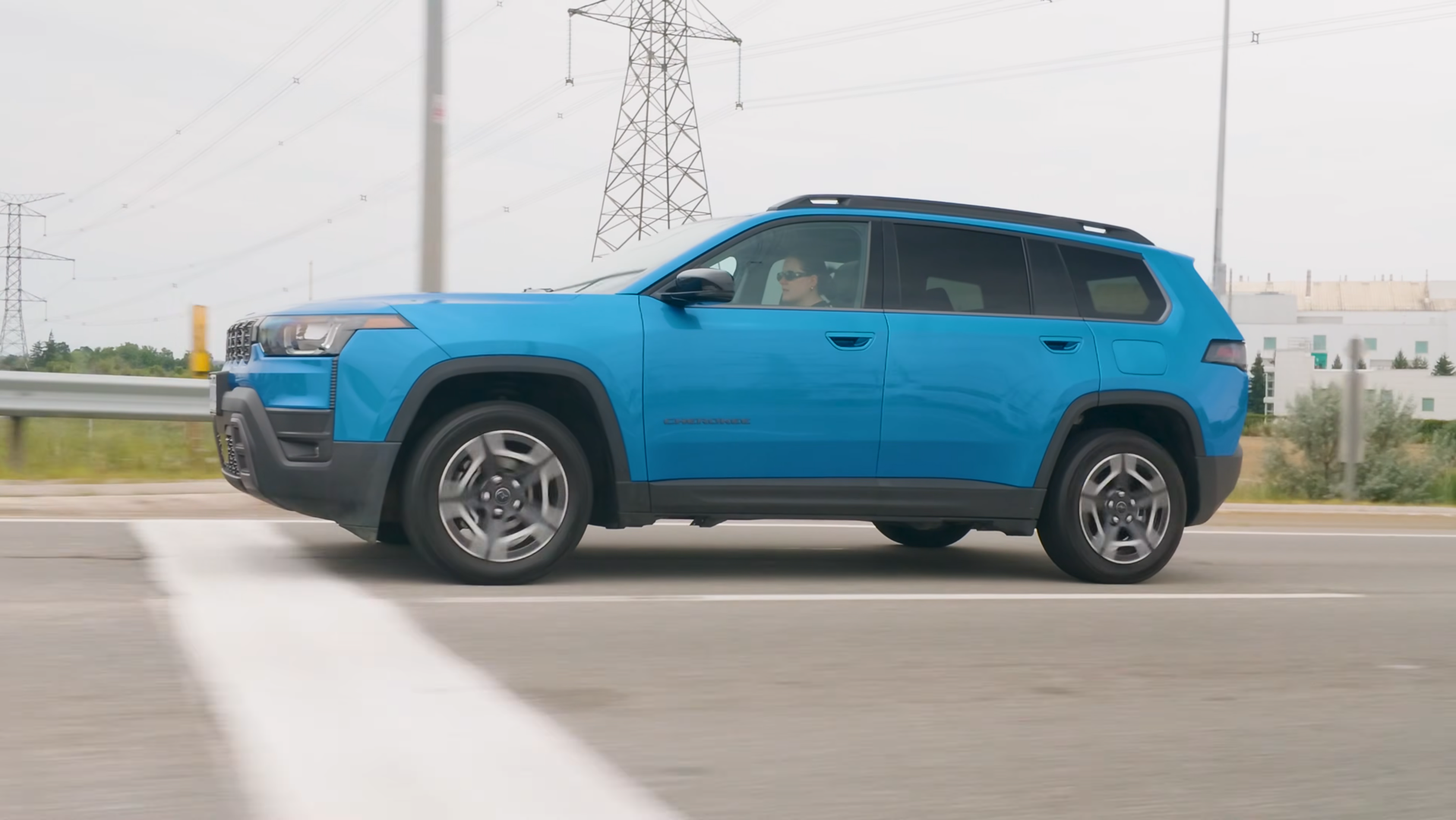
The Cherokee also retains meaningful off-road capability. Jeep’s terrain modes include settings for conditions such as sand, mud, and snow, while the vehicle retains the brand’s broader emphasis on all-weather and light off-road performance. The supplied review characterizes its capability as suitable for moderate or Level 1 off-roading rather than the much more demanding terrain intended for a Wrangler.
That distinction matters. The Cherokee does not need to replicate a Wrangler’s extreme trail performance. Its objective is to provide more capability than the average compact crossover without sacrificing the refinement and efficiency expected from a modern family SUV.
Reliability Remains the Big Question
For Jeep, the biggest uncertainty surrounding the new Cherokee Hybrid is not performance. It is long-term reliability.
The powertrain is substantially new, combining a turbocharged internal-combustion engine, dual electric motors, a high-voltage battery, and an electronically controlled transmission. More components and more complex interactions inevitably make long-term durability an important consideration. The supplied review explicitly identifies Jeep’s historical reliability record as the primary concern surrounding the vehicle.
At the same time, the review points to reliability concerns affecting competing hybrid vehicles, including reported problems involving certain Honda CR-Vs. Those comparisons should be treated as observations from the source rather than evidence that one manufacturer is categorically more or less reliable than another. The more important point is that the Cherokee’s new system has not yet accumulated the kind of long-term field history needed to make a definitive reliability judgment.
That will ultimately determine whether Jeep’s ambitious hybrid strategy becomes a genuine competitive advantage.
Pricing and Positioning
Pricing places the Cherokee directly into the heart of the compact hybrid SUV market. The supplied material cites a U.S. starting point of approximately $35,000 for the base hybrid, with the Laredo starting around $39,995 and the Limited around $41,995.
The tested, heavily equipped vehicle is considerably more expensive, reaching approximately $57,000 Canadian, or about $48,000 U.S., according to the review.
That distinction is important. The Cherokee’s base pricing makes the hybrid concept accessible, but adding equipment can move the vehicle into substantially more expensive territory. At that point, buyers have considerably more alternatives, including well-established hybrid competitors.
A Serious New Competitor
The 2026 Jeep Cherokee Hybrid represents a major strategic shift for the nameplate. Jeep has combined a more traditional Cherokee design with a completely new electrified powertrain, improved cabin technology, useful all-wheel-drive capability, and competitive fuel economy.
It is not perfect. The cargo area falls short of the best in the class, the absence of a 360-degree camera is difficult to justify, and the unconventional exterior door handles are an ergonomic choice that may frustrate some owners. More importantly, the long-term reliability of the new hybrid architecture remains unknown.
But the fundamental package is compelling.
The Cherokee offers the instant torque of electric motors, the sustained power of a turbocharged gasoline engine, all-wheel drive, light off-road capability, modern technology, and fuel economy approaching the upper end of the compact-SUV segment. Its greatest achievement may be that Jeep has not simply electrified the Cherokee—it has used electrification to reinforce the vehicle’s traditional strengths while making it substantially more efficient.
Whether that is enough to dethrone the Toyota RAV4 Hybrid or Honda CR-V Hybrid remains to be seen. But the Cherokee has finally returned to the compact SUV fight with a clear identity—and, for the first time, a hybrid powertrain capable of making that identity relevant to the modern market.
Source: Sam CarLegion