

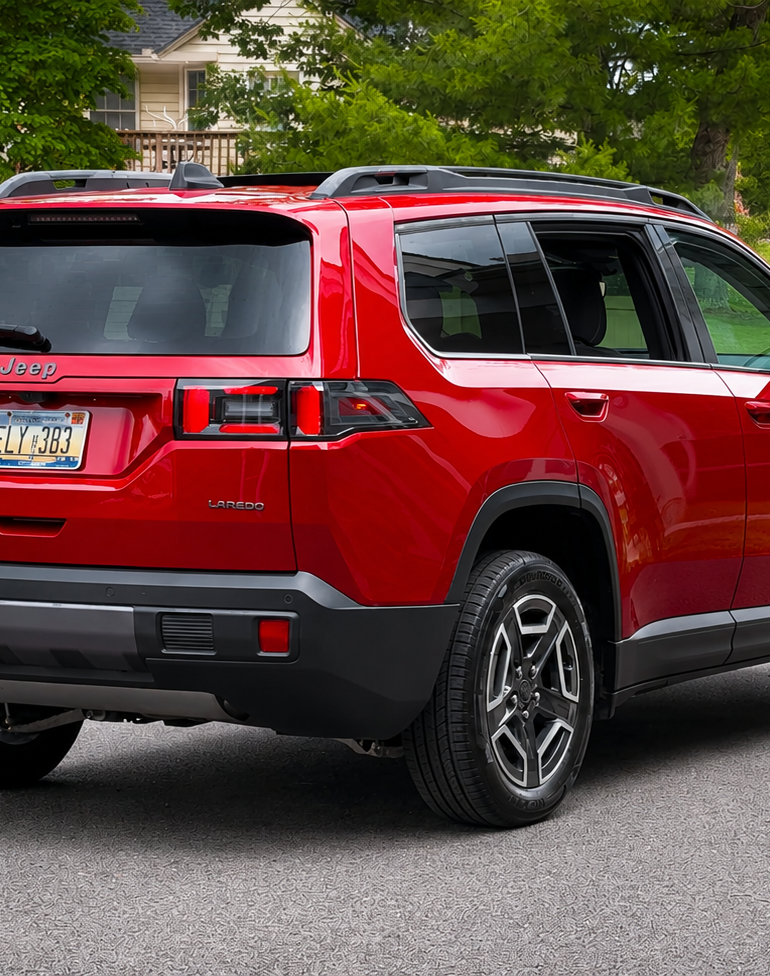
After a brief absence from Jeep’s lineup, the Cherokee makes its return for 2026 with a dramatically different philosophy. Once among Jeep’s best-selling vehicles in North America, the Cherokee disappeared after its fifth generation, leaving a noticeable gap between the Compass and Grand Cherokee. Now, Jeep has reinvented the model from the ground up, hoping to recapture buyers who increasingly prioritize efficiency, interior space, and everyday usability.
The sixth-generation Cherokee rides on Stellantis’ all-new STLA Large architecture, growing substantially in every key dimension. Longer, wider, and more spacious than before, the redesigned SUV adopts a more premium appearance while introducing Jeep’s first conventional hybrid powertrain in the United States.
Rather than emphasizing rugged off-road capability alone, the new Cherokee targets mainstream family SUV buyers shopping against established rivals such as the Toyota RAV4 Hybrid, Honda CR-V Hybrid, Subaru Forester Hybrid, and Mazda CX-50 Hybrid. The Laredo trim serves as the entry point into the lineup while still offering an extensive list of modern technology and safety equipment.
Exterior Design: Grand Cherokee Inspiration in a Smaller Package
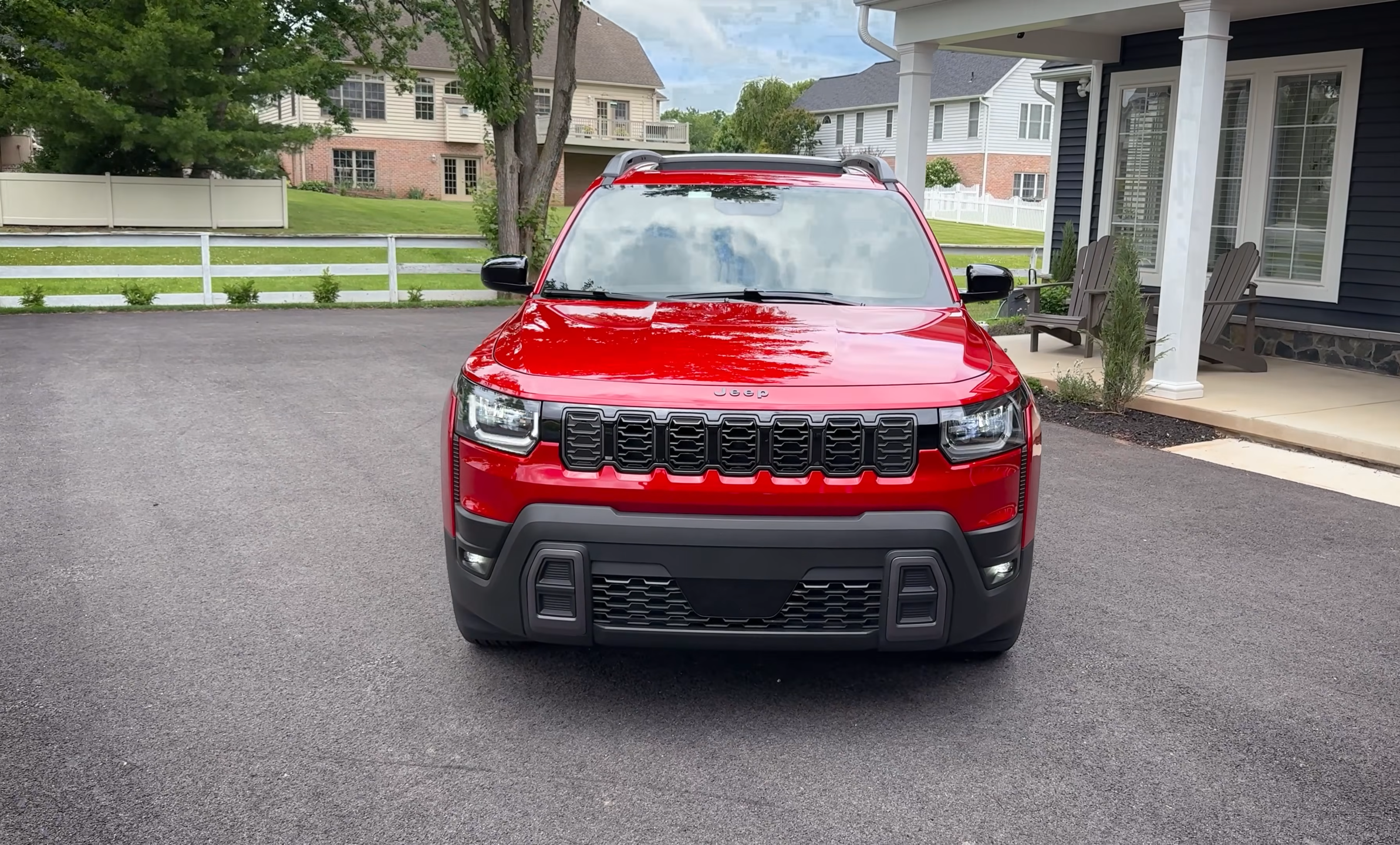
One of the biggest successes of the redesign is its styling. Instead of following the controversial appearance of the outgoing generation, Jeep has created a more upright, muscular SUV that clearly borrows design cues from the larger Grand Cherokee while paying subtle tribute to the beloved XJ Cherokee.
The signature seven-slot grille is slimmer and wider, helping give the front fascia a stronger stance. Standard full-LED headlights and LED fog lamps on the Laredo provide a premium appearance even without moving into higher trim levels.
Built on the new platform, the Cherokee now rides on a 113-inch wheelbase and stretches approximately 188 inches long—roughly six inches longer than its predecessor. The additional size not only enhances road presence but also translates directly into improved cabin accommodations.
The standard 18-inch alloy wheels strike an excellent balance between appearance and ride comfort, while practical roof rails, flush door handles, and protective body cladding reinforce the Cherokee’s blend of urban sophistication and outdoor capability. At the rear, LED lighting, squared-off proportions, and a cleaner tailgate design continue the upscale aesthetic. Although the Laredo lacks a power liftgate, the styling remains cohesive and distinctly Jeep.
Hybrid Powertrain: Efficiency Takes Priority
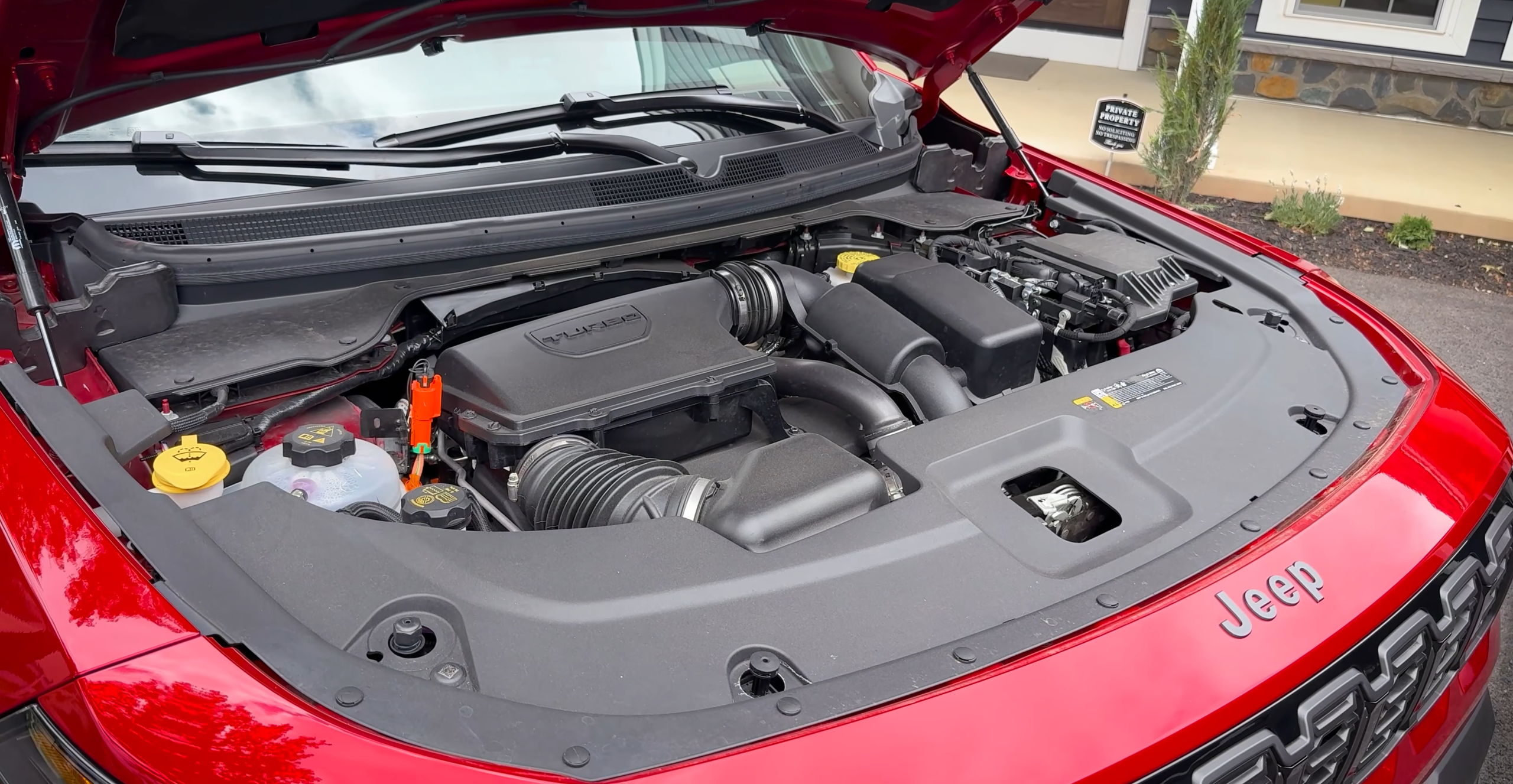
Perhaps the biggest transformation lies beneath the hood. The traditional V6 and turbocharged gasoline engines have been replaced by an entirely new hybrid powertrain centered around a 1.6-liter turbocharged four-cylinder engine paired with two electric motors and a 1.08-kWh battery pack. Combined output reaches 210 horsepower and 230 lb-ft of torque, delivered through an electronically controlled continuously variable transmission (eCVT).
The system emphasizes smoothness and efficiency rather than outright performance. EPA estimates of 39 mpg city, 35 mpg highway, and 37 mpg combined represent a dramatic improvement over the outgoing Cherokee. Jeep also estimates over 500 miles of driving range from its 13.7-gallon fuel tank while maintaining a respectable 3,500-pound towing capacity.
The hybrid transitions seamlessly between electric and gasoline operation, particularly during city driving and low-speed cruising, creating a refined everyday driving experience despite its relatively modest power output.
Driving Experience: Comfortable and Composed
On the road, the Cherokee reveals its priorities almost immediately. Acceleration is adequate rather than exciting, with independent testing showing 0–60 mph in approximately 7.8 seconds. While this trails several hybrid competitors, performance remains sufficient for daily commuting, highway merging, and family travel.
The hybrid system’s seamless transitions deserve praise, but the turbocharged engine itself lacks refinement. Under hard acceleration, noticeable vibration and engine noise enter the cabin, reminding drivers that this powertrain still has room for improvement. Ride quality, however, is one of the Cherokee’s greatest strengths.
Its independent suspension absorbs rough pavement with confidence, while the standard 18-inch wheels provide generous sidewall cushioning that contributes to impressive comfort. Steering is light and predictable, favoring relaxed commuting over sporty handling. Standard Active Drive I all-wheel drive automatically disconnects the rear axle during light-load cruising to maximize fuel efficiency before instantly reconnecting when additional traction is required.
Although enthusiasts may eagerly await the forthcoming Trailhawk model with more serious off-road hardware, the Laredo excels as a comfortable all-weather family SUV.
Interior: More Space and Better Everyday Practicality
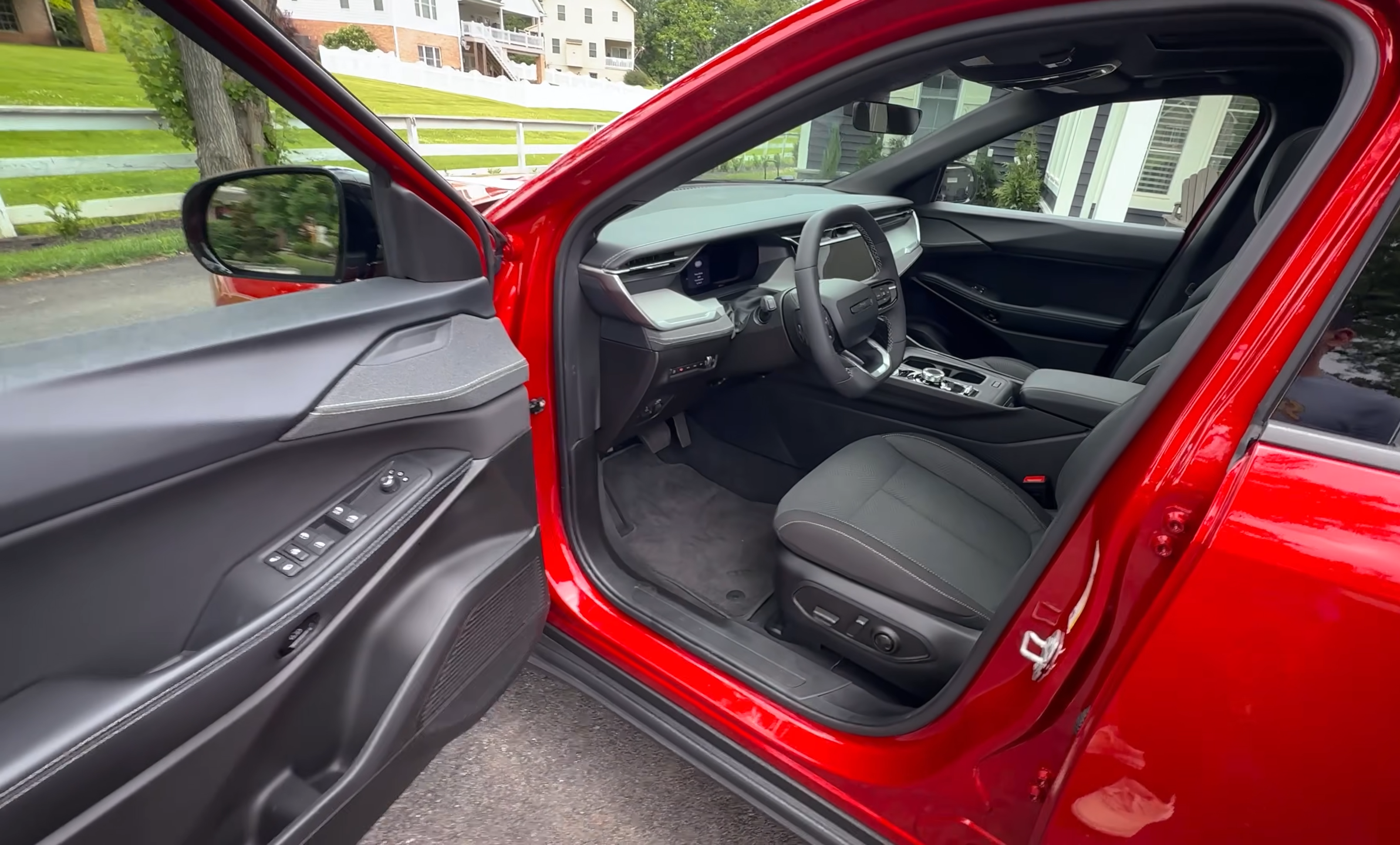
The larger platform has transformed the Cherokee’s interior. Passengers immediately benefit from noticeably improved legroom, shoulder room, and overall cabin openness. Rear-seat accommodations comfortably support adults, while the wide-opening rear doors simplify child-seat installation.
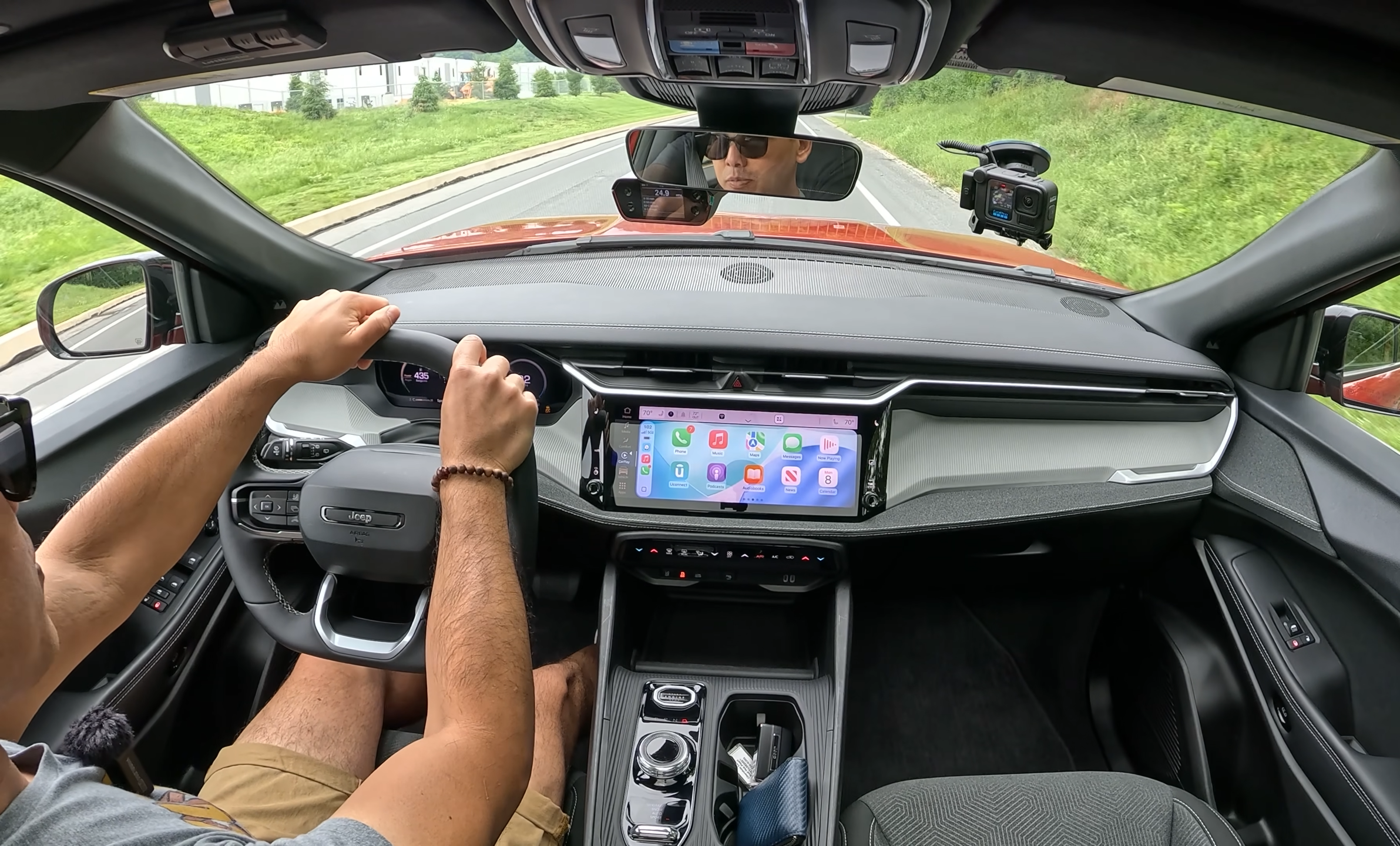
Material quality exceeds expectations for an entry-level trim. Soft-touch surfaces, textured fabric accents, and thoughtfully designed seating create a cabin that feels substantially more upscale than previous Cherokees. Standard heated front seats, a heated steering wheel, power-adjustable front seats, dual-zone climate control, remote start, and Jeep’s latest digital controls add meaningful everyday comfort.
Dominating the dashboard is a 12.3-inch Uconnect 5 infotainment display with wireless Apple CarPlay and Android Auto. The system is intuitive and responsive, although occasional software lag reminds drivers that refinement is still a work in progress. One disappointment is the absence of wireless smartphone charging and premium audio in the Laredo trim, features reserved for higher-grade models.
Cargo Space and Family Utility
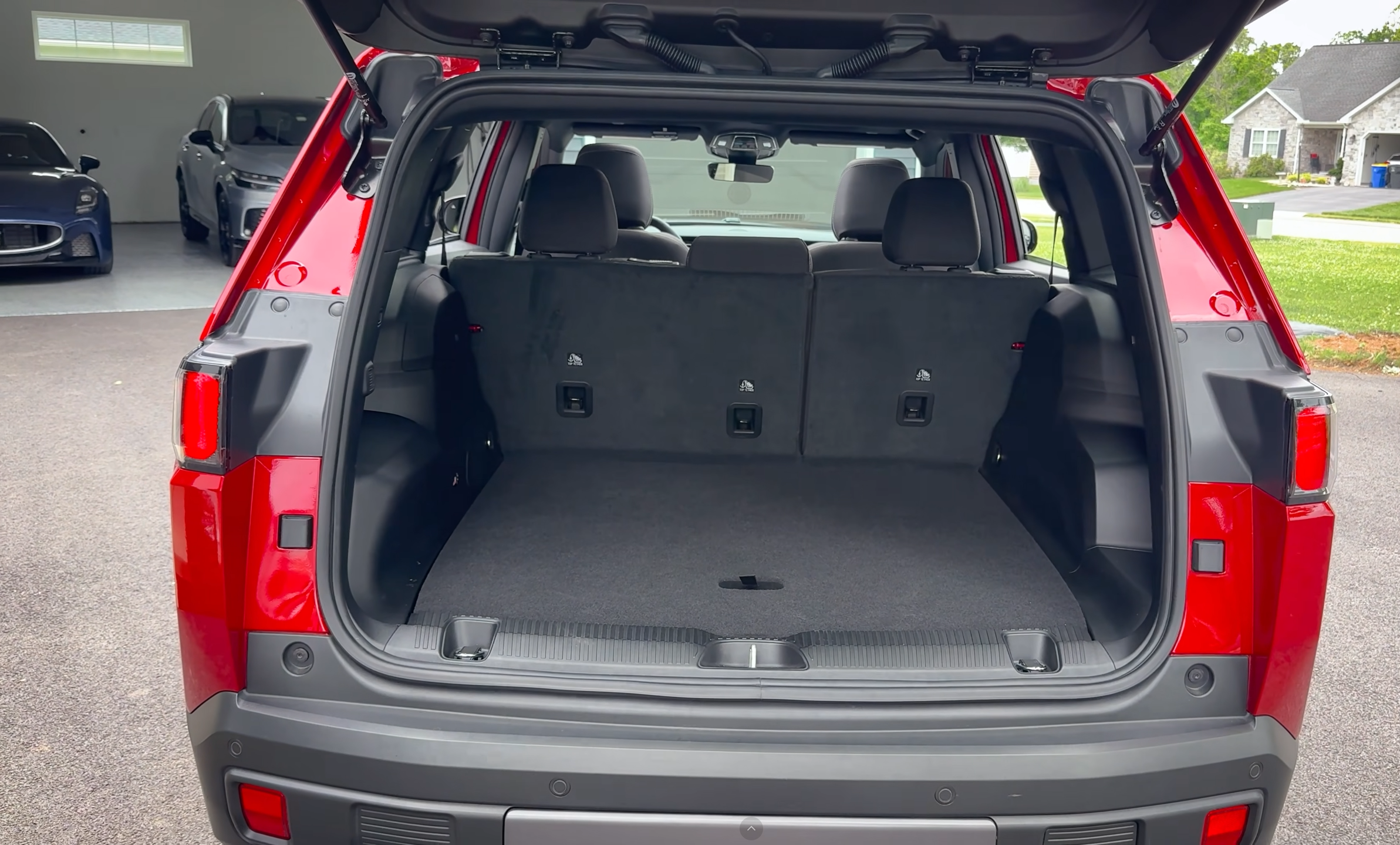
The Cherokee’s increased dimensions pay dividends in cargo capacity. Behind the rear seats, cargo space grows to 33.6 cubic feet—roughly five cubic feet more than the outgoing generation. Folding the second row expands total capacity to approximately 68.3 cubic feet, creating a practical load floor suitable for luggage, sports equipment, or larger household purchases.
A generous underfloor storage compartment further enhances everyday versatility, although buyers wanting a spare tire must select it as an additional option. Combined with improved rear-seat room, the new Cherokee finally offers the practicality expected from today’s family SUV buyers.
Safety and Technology
Even the Laredo arrives well equipped with modern driver assistance systems. Standard features include:
- Adaptive Cruise Control
- Automatic Emergency Braking
- Lane Keep Assist
- Blind Spot Monitoring
- Rear Cross Traffic Alert
- Front and Rear Parking Sensors
- Backup Camera
- Full LED exterior lighting
Higher trims introduce additional premium technologies such as a 360-degree camera, navigation, upgraded audio, ventilated seats, memory seating, and wireless charging.
Verdict: A Strong Comeback with Room to Grow
The 2026 Jeep Cherokee represents one of Jeep’s most important product launches in years. Its larger platform, dramatically improved interior packaging, efficient hybrid powertrain, and attractive styling successfully modernize a nameplate that had fallen behind its competitors. For buyers seeking a comfortable, spacious, and fuel-efficient SUV with standard all-wheel drive and unmistakable Jeep character, the Cherokee makes a compelling case.
However, the new hybrid powertrain still trails class leaders in outright performance, refinement, and real-world fuel economy. Rivals like the Toyota RAV4 Hybrid and Honda CR-V Hybrid remain benchmarks in hybrid smoothness and efficiency.
Even so, Jeep has built an excellent foundation. With future variants such as the Trailhawk and potential Hurricane-powered models on the horizon, the Cherokee lineup appears poised to become even more competitive. For most buyers, the Laredo delivers impressive value, but the Limited trim strikes the ideal balance by adding premium features such as leather seating, a power liftgate, wireless charging, and an upgraded audio system for a relatively modest increase in price.
Ultimately, the sixth-generation Cherokee succeeds where it matters most. It feels like a true evolution of the nameplate—larger, more refined, significantly more efficient, and far better suited to the expectations of today’s compact SUV buyers while still preserving the unmistakable identity that has defined Jeep for decades.
Source: Redline Reviews